Skip to content

QUALITY & PRODUCT MANAGEMENT

Quality managed from specification to delivery

Agreed technical specifications are the reference: sample records and supplied batches are matched to them for acceptance and traceability.

QUALITY IN PRACTICE

Product quality management

Agree the product specification

Composition, concentration, formulation and target market.

Define the composition, concentration, formulation and intended market, then agree quality parameters, units, test methods and acceptance limits for the product. Keep the specification version with the quotation and order; any later changes are reviewed against the same requirements.
Product-specific quality criteria

Active-ingredient content and formulation properties, microbial identity and viable count, or declared nutrients.

Conventional crop-protection products are reviewed for active-ingredient content, relevant impurities and formulation properties. For live microbial products, agree identity, viable-count methods, test timing and storage conditions; for nutrition products, confirm the declared nutrients and reporting units. The specification sets the applicable parameters and limits.

Sample traceability and test records

Sample identification, formulation version, batch reference, methods and results.

Link each sample to its formulation version, batch, preparation or sampling date and storage history. Evaluation records identify the method, conditions and results, together with the customer’s review. These references help specify the accepted material and any further testing needed before supply.

Review packaging and storage

Pack size and material, label version and storage conditions.

Review pack size, material, closure and label version alongside the formulation and available stability information. Confirm storage and transport conditions, batch marking and shelf-life information for the order. Packaging artwork is reviewed and confirmed before production.

Match delivery documents to the batch

Batch certificate of analysis, safety data sheet, packaging information and commercial documents.

Before delivery, the document requirements are agreed for the order. A batch certificate of analysis identifies the supplied batch and its reported results; the safety data sheet describes the relevant product formulation. Batch numbers, packaging information and commercial documents need to remain consistent. Where third-party testing is required, it can be commissioned from long-standing partners such as the Shanghai Research Institute of Chemical Industry Testing Centre or the Shanghai Institute of Quality Inspection and Technical Research.

Review delivery and application feedback

Order and batch references, photographs, and storage or application records.

Record the order, batch, date received, photographs and relevant storage or application conditions. Review packaging or transport damage separately from product quality and field-performance questions. With the responsible partner, agree any document review, retained-sample check or further evaluation, then record the outcome and follow-up action with the customer.

PRODUCT DOCUMENTATION

Product and quality documents

Product information

Specification, composition, formulation, relevant safety data and market-specific label information. These identify the product being considered.

Sample and study records

Sample identification, study conditions, methods and reported results. These support evaluation of the tested material; they do not replace quality records for a later shipment.

Order and batch documents

The agreed order specification, batch analysis and delivery documents identify what is supplied. Document availability and any additional testing are confirmed for the product and order.

APPLICATION FEEDBACK

Field feedback and technical review

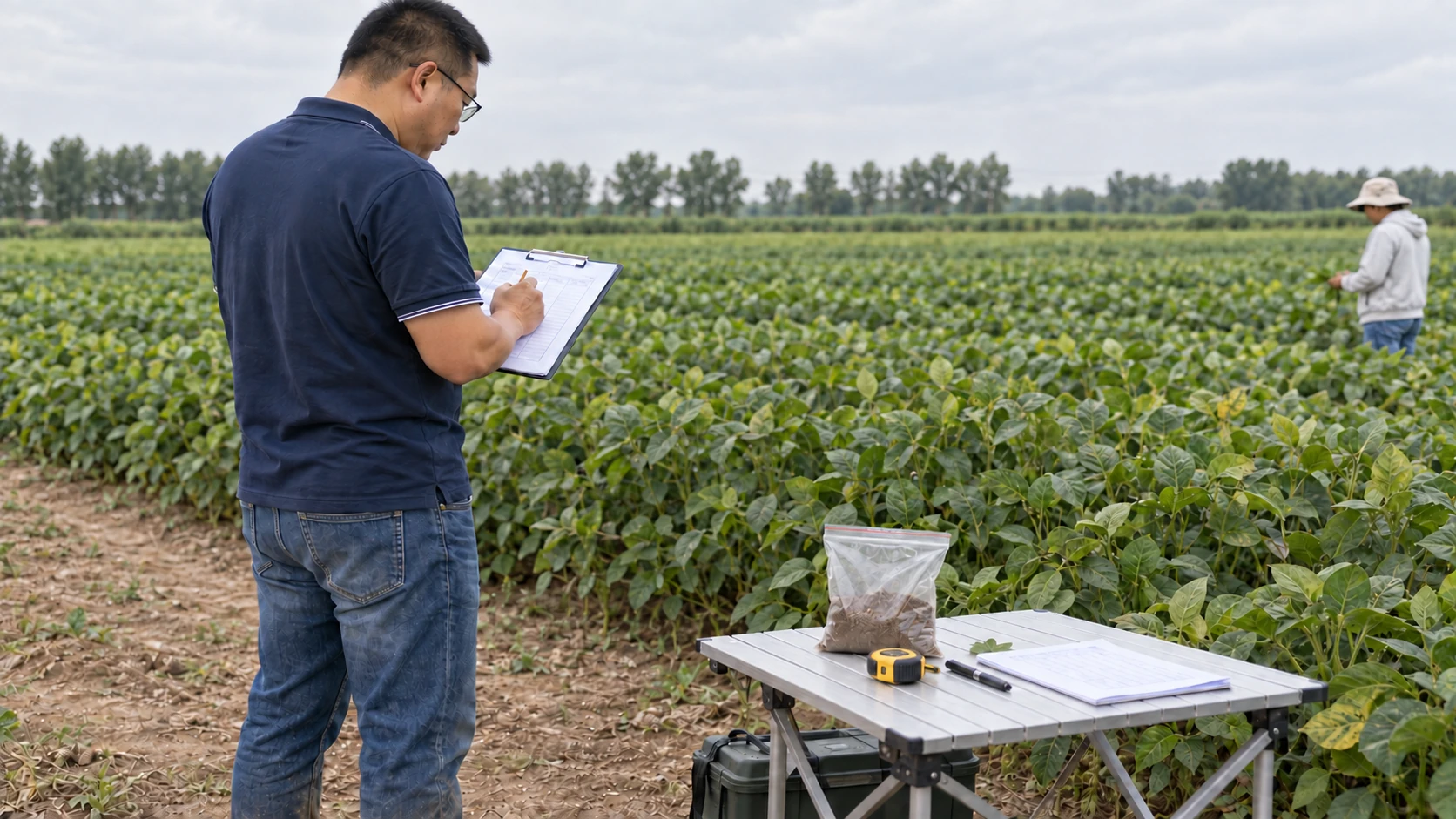
Field feedback is more useful when it identifies the product and batch, crop, application timing and conditions. Photographs and observations recorded over time help technical teams analyse the product, handling and growing conditions.

We bring these records into technical review with the relevant partners. The next step may be a document check, sample assessment or further field evaluation, depending on the question and the information available.

Discuss a technical question
A technician recording observations beside a soybean field.

Find the relevant product information

Explore the portfolio by use, or share a specification and destination market to discuss documentation and supply requirements.

HUASHENG BIO

Good products. Lasting partnerships

Contact Huasheng about products, technology development or partnerships.

Contact Huasheng