Skip to content

Choose products for the crop and the conditions

What does the crop need, and how can the product help? We consider suitability, evidence, quality and appropriate use.

PRODUCT SUITABILITY

Assess each product on its merits

Our portfolio includes agrochemicals and biological inputs. We consider their role in the crop programme by looking at the specific problem, the formulation, the available evidence and the conditions of use.

Agrochemicals

Start with the crop and target problem, then assess the active ingredient, formulation, locally permitted uses and application requirements. Consider how the product fits with other protection or nutrition measures, including timing, rotation and the grower’s existing programme.
Biological products

Review the strain or active component, viable counts or activity, formulation and stability. Storage, temperature, application timing and compatibility with other inputs can influence performance. Assess safety, efficacy and environmental effects using evidence for the actual product and use conditions.

Before adding an input, consider whether it addresses the underlying problem.

QUALITY & APPROPRIATE USE

Clear information for delivery and use

Product stewardship connects what is ordered, what is delivered and how it is used. Specifications, labels, technical information and batch records help partners check the supplied material, store and apply it appropriately, and report issues with enough context for follow-up.

Product identification & traceability

Confirm the product name, declared composition, formulation, agreed specification, pack size and batch identification with manufacturing or supply partners. Match the delivery and batch documents to the material received, retaining information needed for later enquiries.

Handling & application

Review the product label and relevant information on dose, timing, compatibility, storage and protective measures. Application and disposal follow the approved label and local requirements. Practical guidance should reflect the grower’s equipment and intended application method.

Application feedback & follow-up

When reviewing performance or a product issue, record the batch, crop, dose, timing and storage or field conditions. Relevant photographs and comparison records help identify what needs checking. Findings inform further technical work, use information and subsequent supply.

THOUGHTFUL RESOURCE USE

Use inputs within a complete crop-management plan

The value of an input depends on how it is used within the farming system. Consider timing, dose, equipment, irrigation and existing nutrient supply together, rather than treating the product as a separate decision.

Supply planning also affects how efficiently an input is used. Match pack sizes and delivery quantities to seasonal demand, check storage conditions and remaining shelf life, and arrange replenishment around the growing season. These decisions help partners manage stock and reduce avoidable deterioration or unused material.

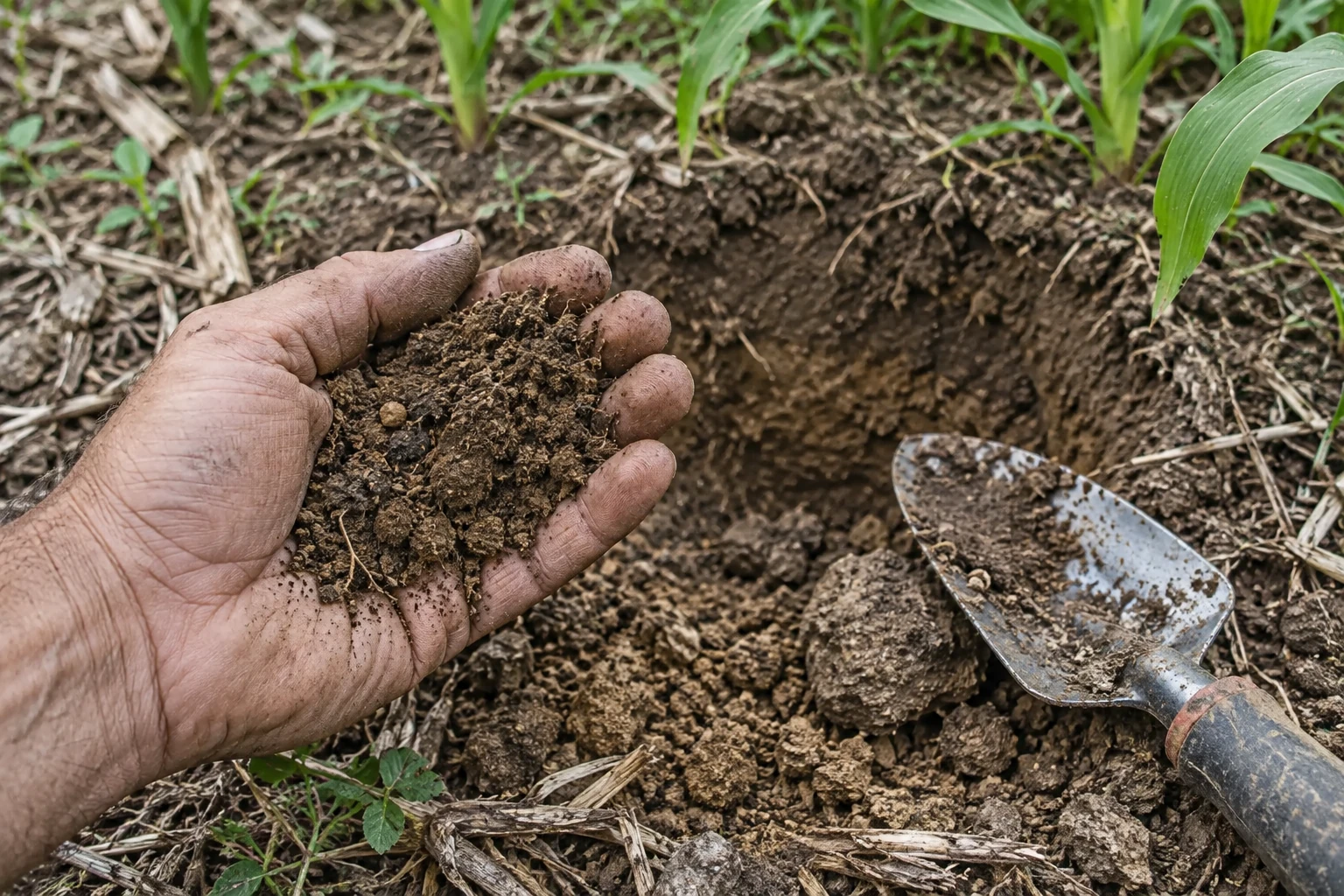
A hand holding a soil sample beside a trowel and a small pit among maize seedlings.