When inoculation pays — and when it does not
Inoculation is one of the cheapest inputs in legume farming, but the size of the return depends on the crop and the field. This is a realistic guide to where a bag of rhizobia pays its way — and where it pays less.
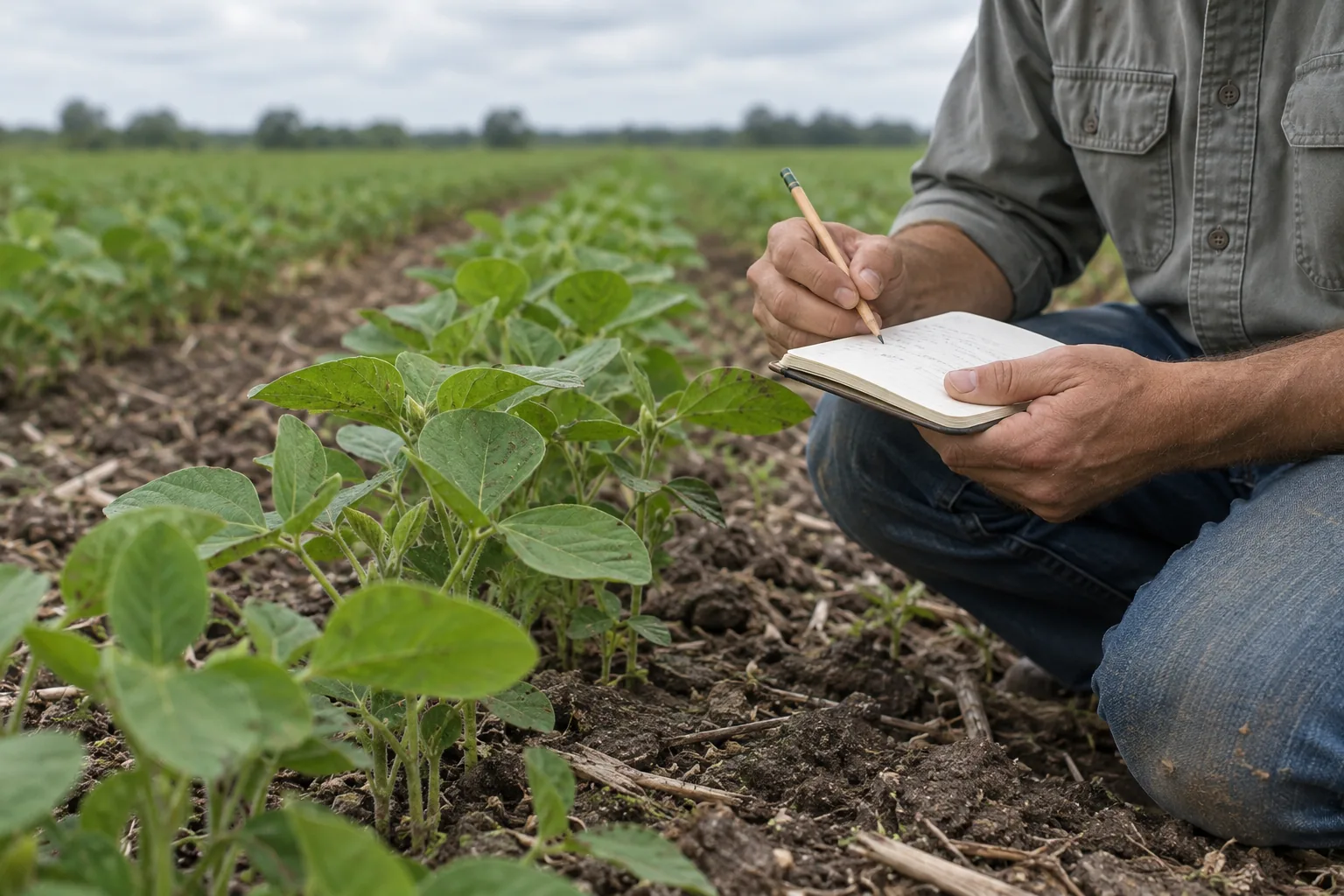
A packet of rhizobia costs very little next to the nitrogen it can supply and the yield it can protect. But “cheap” is not the same as “worth the same everywhere”. In practice, the return varies enormously — from transformative on some fields to marginal on others — and it is worth knowing which kind of field is in question.
The two factors that set the return
Almost the whole answer comes down to two questions. First, how specific is the crop’s rhizobial partner? Specific hosts such as soybean and alfalfa often lack their exact partner on new ground; promiscuous ones such as peanut and cowpea usually find some partner already present. Second, are effective rhizobia already present and alive in this field? That depends on cropping history, soil type, pH and salinity.
Where the return is largest
| Setting | Expected return from inoculation |
|---|---|
| Specific host (soybean, alfalfa) on new ground | Highest — often the difference between a fixing and a failing crop |
| Any legume on newly reclaimed or saline-alkali land | High — effective native strains are scarce |
| Promiscuous host, long-cultivated field | Lower — a compatible partner is usually present |
| Field that nodulated well recently | Modest — insurance and a top-up of the resident population |
Quantifying the return
How big can the return be? Our multi-site field trials indicate the upper range: matched biology lifted yield by roughly +12% to +20% across the eight legumes — up to +19.9% on peanut and +16.1% on soybean — with the largest gains, as expected, on specific hosts and responsive ground. Against a bag that costs a small fraction of one per cent of the crop’s value, even the low end of that range is a large return on the input. Yield is only part of the return: in multi-year trials, matched biology maintained a yield gain above 10% while using 20–40% less synthetic nitrogen — so part of the return comes as fertiliser that no longer needs to be bought.
Returns that do not appear on the invoice
Two benefits are easily left out of the calculation. Biological nitrogen replaces purchased fertiliser nitrogen, so part of the return is an input cost avoided, not just yield gained. And a well-nodulated legume leaves nitrogen-rich residues that benefit the following crop — a rotational gain that appears in the next season’s accounts.
Measure it on your own field: the check strip
The surest way to establish the return is to leave an untreated strip. Inoculate the field as normal but skip a few passes; at flowering, dig plants from both areas and compare nodulation, and at harvest compare yield. One season of a check strip says more about a given field than any general rule — and turns “should I inoculate?” into a measured figure.