Getting inoculation right: timing, rate, and compatibility
An inoculant is a bag of living bacteria, and it works only if they reach the root alive. A few practical rules separate strong nodulation from wasted product.
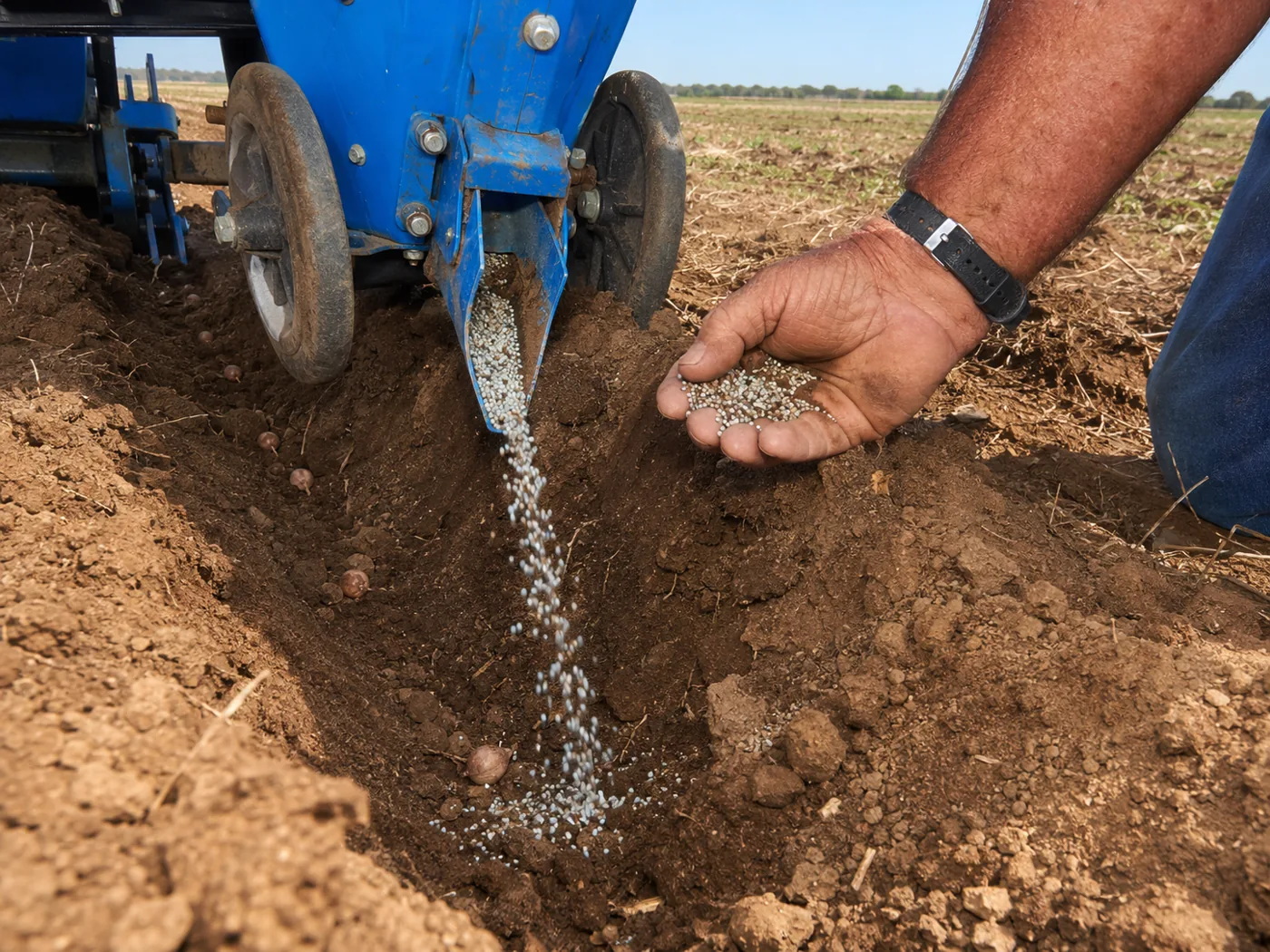
An inoculant is not a chemical — it is a population of living bacteria, and that single fact governs every aspect of how it is handled. A live product is sold on the number of viable cells it delivers, usually expressed as CFU (colony-forming units) per gram or per seed, and from the day of manufacture that count only falls. Handled well, a good inoculant is one of the highest-return inputs in legume farming; handled badly, even an excellent product disappoints — not because it is weak, but because most of its bacteria are dead before they reach a root. A few practices matter more than everything else combined, and they are the subject of this guide.
Keeping the bacteria alive comes first
Four things kill rhizobia: heat, ultraviolet light (direct sun), drying out, and time. The carrier — peat, liquid, or a granule — exists to shelter the cells from these, and every step between the bag and the furrow is about slowing the die-off until the bacteria reach the root. In practice that means storing the product cool and dark, never letting it freeze or overheat, and using it well within its shelf life (commonly 6 to 18 months depending on the product and form; always check the date). An afternoon in a hot vehicle can undo months of careful manufacturing, so the practical details of where the product is kept, for how long, and at what temperature decide how many live cells actually arrive.
Choose the formulation to fit the job
Inoculants come in several forms, and the choice is not only a matter of convenience: it affects how many bacteria reach the root and how well they survive contact with seed treatments.
Formulations at a glance
| Form | Strength | Best when |
|---|---|---|
| Peat / powder (on seed) | Low cost, convenient, good cell protection | Untreated seed, straightforward conditions |
| Liquid (on seed or in-furrow) | Even coverage, easy to apply | High-throughput sowing, careful handling |
| Granular (in-furrow) | Highest dose; never touches seed coatings | Treated seed, difficult or new soils, maximum insurance |
The pattern is simple: seed-applied forms are the cheapest and work well in easy conditions, while granular in-furrow application costs more but delivers far more bacteria and keeps them away from hostile seed chemistry. That makes it the safer choice on treated seed, on first-time ground, and wherever the widest margin for error is needed.
Apply at sowing — and understand the infection window
Timing is not arbitrary. The decisive infection happens in the first days after germination, through young root hairs, while the seedling is still regulating how many nodules to form. If that window is missed, the crop sets its nodulation low and does not revisit the decision. The bacteria must therefore already be next to the root as it emerges: place the product close to the seed at sowing — Nodu™ applied to the seed, or Orvan™ as a granule, an in-furrow liquid, or a seed coat, depending on the equipment available. Inoculating a crop that has already emerged rarely helps.
Rate — enough live cells, evenly spread
The label rate is set to deliver a target number of live cells to each seed — high enough to win nodule sites against whatever native rhizobia are present. Two failures are common: under-dosing, which leaves too few cells to compete, and uneven coverage, which leaves some of the seed effectively untreated. When slurrying onto seed, use enough sticker and water to coat every seed evenly, but not so much that seeds clump or the coating sloughs off. Above the label rate, more is not better; below it, less is genuinely worse — especially where the inoculant must compete with an established native population.
Compatibility — especially fungicides and water
Incompatibility is the most common cause of unnoticed inoculation failure. Many seed-applied fungicides and insecticides are, by design, biocides: they damage microbial cell membranes on contact and do not distinguish beneficial bacteria from the pathogens they target. The damage increases with contact time, so the rule is to minimise how long live cells sit against a fresh chemical coating. Apply the inoculant last, after any seed treatment has dried, and sow treated-and-inoculated seed promptly — often within a few hours — rather than storing it. Where the chemistry is aggressive or the seed heavily treated, avoid the conflict altogether: switch to a granular in-furrow inoculant that never touches the coating.
Water also matters and is easily overlooked. Chlorinated tap water and hot water both kill rhizobia, so mix inoculant slurries with cool, clean, non-chlorinated water — and never with fertiliser solutions or any product not confirmed as compatible.
Do and don’t
| Do | Don’t |
|---|---|
| Apply at sowing, close to the seed | Mix inoculant into hot or chlorinated water |
| Add the inoculant last, after fungicide has dried | Co-mix with fungicide or pesticide without checking compatibility |
| Sow treated-and-inoculated seed promptly | Leave inoculated or treated seed sitting in the sun or a warm hopper |
| Keep product cool, dark, and unfrozen | Assume “more is better”, or use last season’s expired bag |
A worked example: treated soybean seed on a new field
Consider a common case. Soybean is being sown on a field for the first time, and the seed arrives pre-treated with a fungicide. Soybean’s specific partner is absent from this soil, so inoculation is essential — but the fungicide coating is hostile to the bacteria, and a seed-applied inoculant would sit against it. The sound plan is to skip the seed coat and use a granular in-furrow inoculant at an adequate rate, so the bacteria arrive in large numbers and never touch the fungicide; to keep the product in the shade until it is applied; to sow into moisture rather than hot, dry surface soil; and to dig a few plants at early flowering to confirm pink, active nodules. Every choice follows the same logic: deliver living bacteria to the emerging root, and keep them away from everything that kills them.
Common causes of failure
- Fungicide or chemical contact killing the bacteria before they reach the root
- Hot or sunny storage — or treated seed left in the sun or a warm hopper
- Expired product, or last season’s bag, with too few live cells left
- Under-dosing or uneven coverage of the seed
- The wrong crop-specific product — a host mismatch that cannot nodulate
- Very high soil nitrate, which suppresses nodulation however good the inoculant
Then check the result
Do not assume — verify. A few weeks after emergence, around early flowering, dig up several plants and read the nodules: their number, their position on the root, and their internal colour. Pink to red indicates active fixation; white or green does not. This is the quickest way to find out whether inoculation succeeded while there is still a season to learn from and, over time, to build a record of what works on each field.