Rhizobia are local: why the right nitrogen-fixing bacteria are not always in your soil
Rhizobia are not one bacterium but many, each adapted to particular legumes and particular soils. Understanding host specificity — and the hidden competition within the root zone — is the key to making inoculation pay.
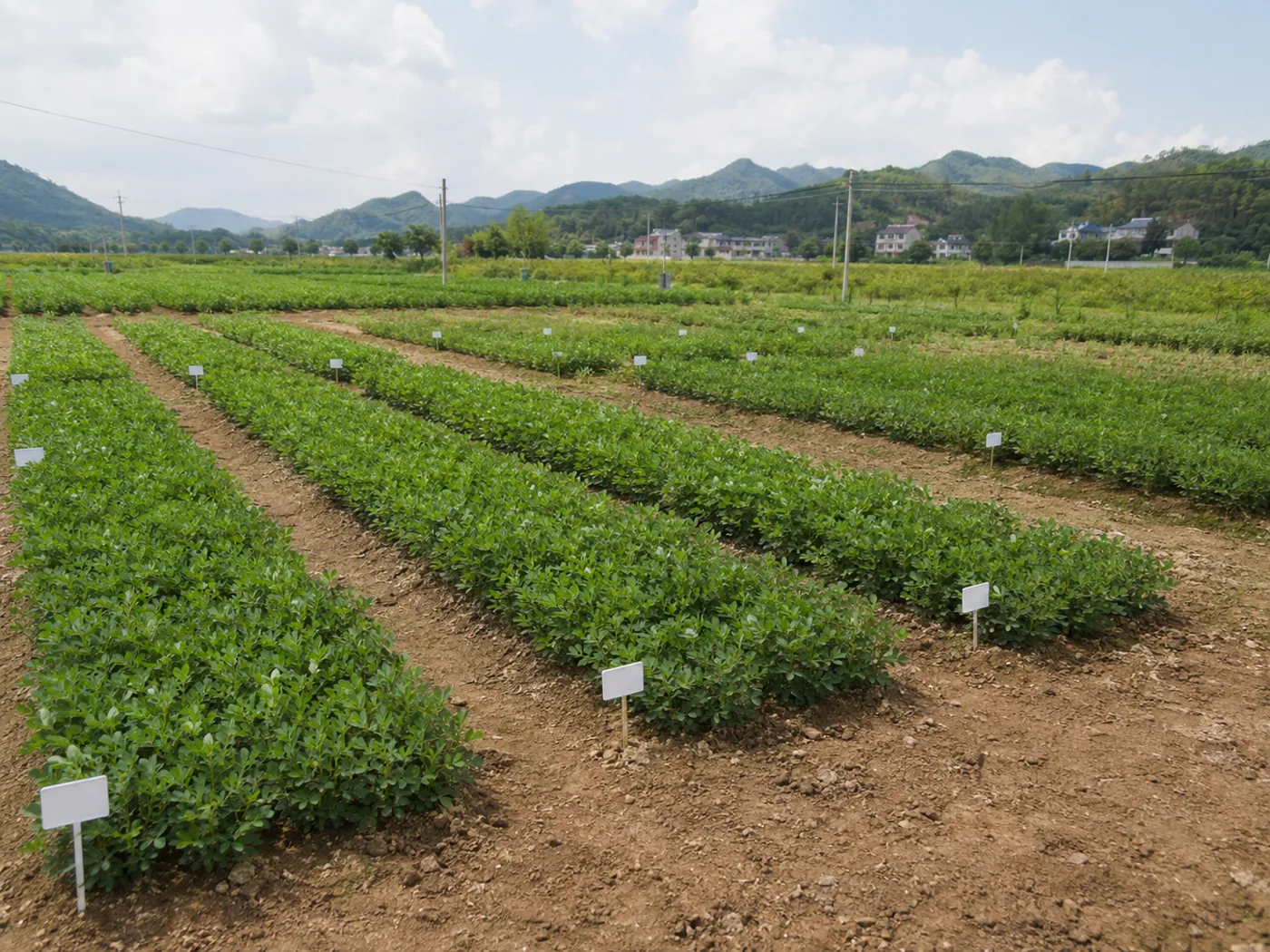
Rhizobia are not a single bacterium but many species, each adapted to particular legumes. This host specificity is the single most important thing to understand about inoculation: a strain that nodulates one crop well may do nothing at all for another.
Legumes and their rhizobial partners (general groupings)
| Legume | Typical rhizobial partner |
|---|---|
| Peanut, cowpea, pigeon pea, mung bean, black gram | Slow-growing Bradyrhizobium (cowpea-miscellany group; e.g. BR 3267-type) |
| Soybean | Bradyrhizobium japonicum / diazoefficiens (USDA 110-type) |
| Common bean | Rhizobium (R. tropici CIAT 899-type; R. l. bv. phaseoli) |
| Alfalfa | Sinorhizobium meliloti |
The molecular handshake — and cross-inoculation groups
Specificity is a matter of chemistry. The legume root releases flavonoids; compatible rhizobia answer with strain-specific signal molecules called Nod factors; and the plant admits only bacteria whose signal it recognises. Legumes that share compatible rhizobia form “cross-inoculation groups”. Peanut, cowpea, pigeon pea, mung bean, and black gram belong to the notably promiscuous cowpea-miscellany group; soybean, by contrast, is highly selective and needs its own Bradyrhizobium. That is why soybean grown on new ground so often fails to nodulate without inoculation — the specific partner it requires is not yet present.
Region matters as much as species
Even the right species varies in effectiveness from place to place. Native populations may be sparse, poorly matched to modern varieties, or simply weak nitrogen fixers. This is especially common in soils that are alkaline, saline, or acidic, and in fields that have never grown the legume before. The result is nodules that form late or fix very little, so the plant spends carbon hosting bacteria that give little back.
The hidden problem: competition for the nodule
This point often comes as a surprise. Even an excellent inoculant strain does not have the root to itself. It must compete with whatever rhizobia are already in the soil for a limited number of nodule sites. An abundant but poorly fixing native strain can occupy most of the nodules and exclude the elite strain, so the crop looks well nodulated yet fixes disappointingly little. This “competition for nodulation”, or nodule occupancy, is why a superior strain in the bag is not enough on its own: to perform, it must also outcompete the strains already resident in that field.
What makes a strain worth using as an inoculant
For these reasons, selecting an inoculant strain is genuine scientific work, not a commodity purchase. A strain earns its place only if it meets four criteria at once:
| Criterion | What it means |
|---|---|
| Infective | Reliably forms nodules on the target crop |
| Effective | Fixes a large amount of nitrogen once nodulated |
| Competitive | Wins nodule sites against the strains already in the soil |
| Persistent | Survives the carrier, storage, and field conditions to reach the root alive |
Selecting for all four — and confirming the result against the region’s resident populations — is how Nodu™ is developed: one crop-specific formulation per legume, matched to local conditions rather than sold as a one-size-fits-all product. Where effective native rhizobia already exist, Orvan™ takes a different route: rather than competing with them, it improves the environment for nodulation and amplifies the rhizobia already present, helping the crop make better use of the existing population.