Soil organic matter and humic products: different roles in the same field
Separate long-term soil management from the role of an individual input, and ask better questions about composition, crop response and value.
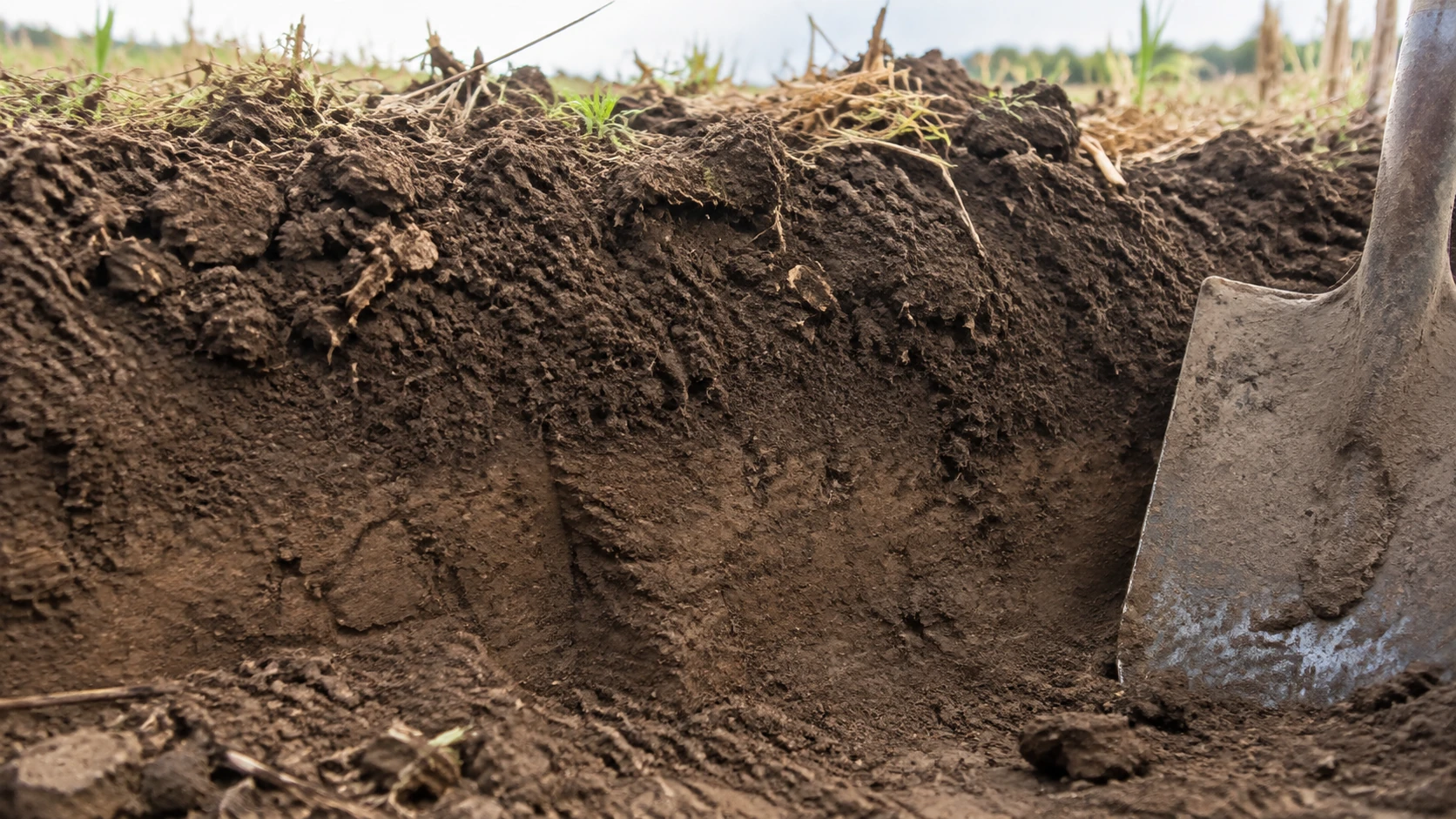
Soil organic matter, humic acid and fulvic acid often appear in the same conversation about agricultural inputs. They can sound interchangeable, yet they describe different things. Soil organic matter is part of a living soil system. A commercial humic product is a particular input with its own source, composition and intended application. Distinguishing those scales helps identify a useful role for a product without expecting one purchase to do the work of an entire soil-management programme.
Organic matter reflects continuing inputs and transformation
Soil organic matter includes biological residues at different stages of decomposition, living organisms and materials they produce. It contributes to soil structure and to water and nutrient retention, and provides resources for soil organisms. Some fractions turn over relatively quickly; others are protected through association with minerals or within aggregates. Consequently, the organic-matter percentage on a soil report cannot describe every aspect of its composition, turnover or contribution to soil function.
Humic and fulvic acids are not single pure chemicals
Names such as humic acid and fulvic acid describe fractions defined by their solubility and separation behaviour under specified analytical conditions, rather than by a single molecular formula. Commercial materials differ in source, processing and final formulation. Product colour therefore says little about whether two products are equivalent. Nor is a large headline percentage enough: the analytical method, reporting basis and accompanying nutrient content are needed to interpret what the figure represents.
Separate the soil programme from the seasonal objective
Two scales of management and evaluation
| Question | Soil organic-matter management | Evaluation of a humic product |
|---|---|---|
| What is being managed? | Organic inputs and retention across the soil system | A defined input and intended application |
| What are the main tools? | Residues, cover crops, rotation and appropriate disturbance management | Integration with the existing crop programme |
| What outcomes matter? | Long-term organic matter, structure, infiltration and crop performance | Specified root, nutrition or marketable-output objectives |
| What makes a fair comparison? | Consistent depth, methods and records over time | Comparable crop conditions, base nutrition and total cost |
An input used at a modest rate may have an agronomic role, but the quantity of material it supplies has to be accounted for separately. An improvement in crop performance does not by itself demonstrate a substantial increase in the soil organic-matter stock. Conversely, an unchanged organic-matter percentage over a short period does not show that every seasonal practice was ineffective. The observation needs to match the claim being evaluated.
Research defines possibilities; products need specific evidence
Research on humic substances examines plant-growth and nutrient-related responses under varied conditions. The meta-analysis and review by Rose and colleagues places those responses in the context of material characteristics and experimental conditions. A category-level average therefore cannot simply be assigned to every commercial formulation. For a specific input, the useful evidence describes the material tested, crop and environment, background nutrition, comparison treatment and measured outcome.
This changes how a technical discussion should proceed. Rather than starting with whether humic products work in general, ask which response is relevant to the field in question and whether the available evidence addresses that response. A root-growth observation, a nutrient measurement and a harvested yield are related, but each answers a different question.
What a useful product file should make clear
- Source and composition: how humic, fulvic and other organic fractions are defined and measured.
- Reporting basis: dry basis or as supplied, by mass or by volume, and any accompanying potassium, sodium or other constituents.
- Intended objective: a specified crop or root-zone outcome that can be observed.
- Evidence context: crop, soil background, base nutrition, comparison and assessment criteria.
- Total cost: product and application costs considered alongside marketable output.
For purchasing decisions, retain the actual specification and the version of the technical documentation used in the comparison. This keeps subsequent batches and updated claims connected to the original assessment. A change in the source material or composition deserves attention even when the product name remains unchanged.
Keep long-term management and seasonal results in one record
A practical record can follow two timelines: residues, rotations and soil-test trends over years, alongside individual product performance within each season. The first describes the continuing condition of the soil; the second helps decide whether a particular input deserves a place in the crop programme. In neither case should one field be treated as representative of all soils and climates. When composition, intended role and assessment criteria are clear, humic inputs can be evaluated on their own merits and considered alongside the practices that build and maintain soil function over time.
Further reading
- University of Maryland Extension — Soil Basics
- USDA NRCS — Role of Organic Matter
- International Humic Substances Society — Isolation of IHSS Samples
- Rose et al. (2014) — A Meta-Analysis and Review of Plant-Growth Response to Humic Substances
- University of Minnesota Extension — Biostimulants: What are they and do they work?