Beyond pH: what irrigation water tells you about root-zone nutrition
Alkalinity, conductivity and individual ions answer different questions. Reading them together makes a nutrition programme easier to interpret and improve.
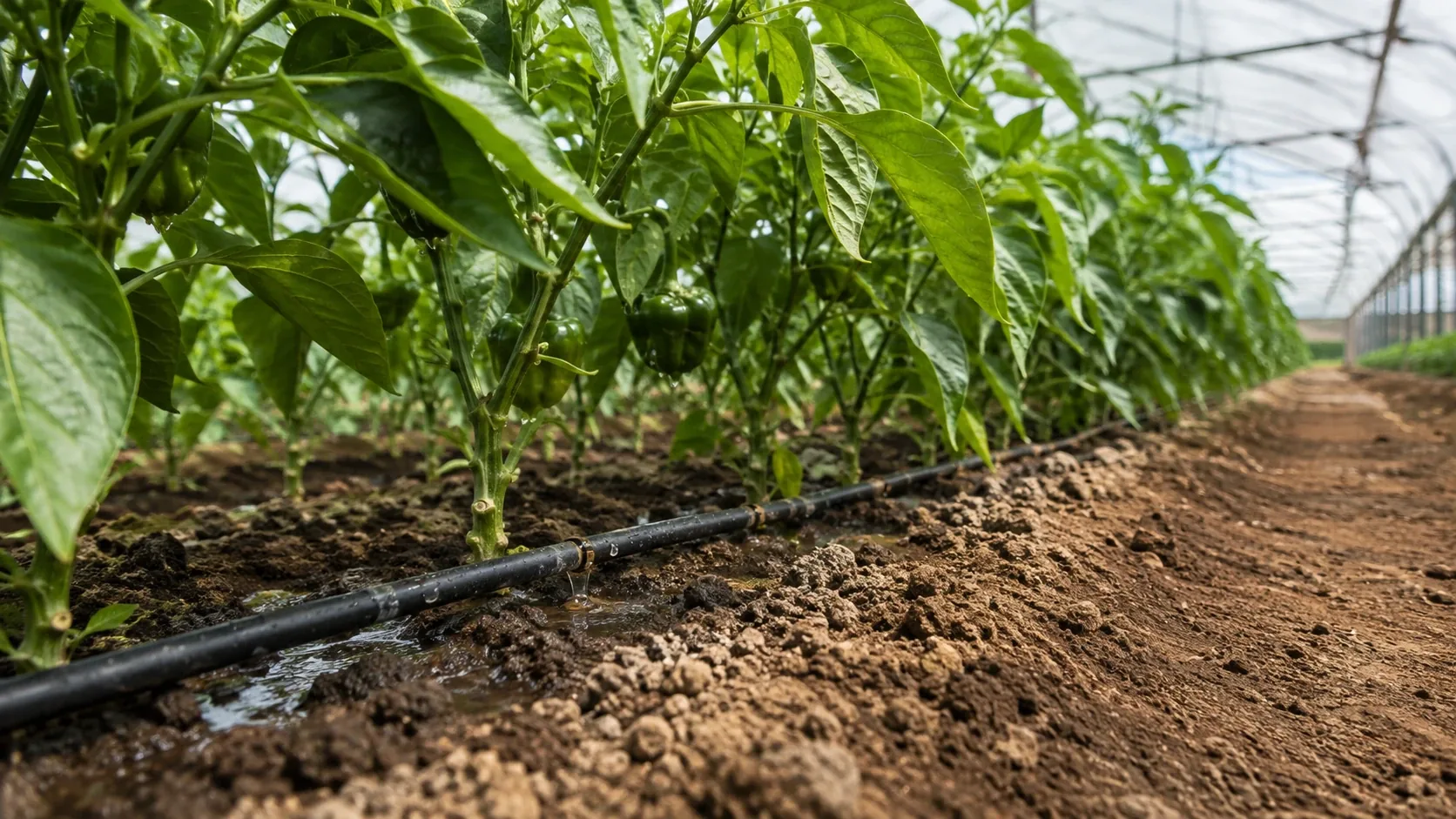
The same crop, grown with a familiar fertiliser programme, can respond differently after a change in water source. Irrigation brings more than moisture: it repeatedly adds dissolved substances and influences root-zone chemistry. A useful water report therefore helps explain the production system, rather than simply assigning the water a pass or fail. Three groups of measurements make that explanation much more complete.
pH and alkalinity describe different properties
Water pH describes its acid–base condition at the time of measurement. Alkalinity describes its capacity to neutralise acidity, a property commonly associated with bicarbonates and carbonates. Two water sources can have similar pH but different alkalinity. Repeated irrigation with higher-alkalinity water can increase growing-medium pH and affect the availability of nutrients such as iron and manganese. A single pH result therefore cannot fully predict the longer-term nutritional influence of the water.
EC indicates the overall salt load
Electrical conductivity, or EC, measures how readily a solution conducts electricity and is used to estimate its overall dissolved-salt level. It does not identify which ions are responsible. A rise should prompt a second question: is the increase due mainly to useful nutrient ions, or to constituents such as sodium and chloride that may become limiting? Salt accumulation can make water harder for roots to extract even when soil appears moist. Interpretation must reflect the crop, developmental stage and growing medium rather than one universal threshold.
Read the measurements together
Connecting water measurements with agronomic questions
| Measurement | Main question answered | Additional context needed |
|---|---|---|
| pH | What is the current acid–base condition? | Alkalinity and root-zone pH trends |
| Alkalinity | How strongly can the water neutralise acidity? | Medium volume, irrigation and fertiliser programme |
| EC | How is the overall dissolved-salt load changing? | Ion composition and crop sensitivity |
| Calcium, magnesium, sodium, chloride | Which elements does the water supply? | Nutrient budget, soil structure and toxicity risk |
Reading the measurements together has a practical value. It prevents a high pH from being taken automatically as a sign of high alkalinity, and an EC reading from being taken to mean that all the dissolved salts come from fertiliser. Each measurement narrows the next question; none replaces the rest of the report.
Source water and the root zone are different sampling points
A source-water report describes water before it has passed through the complete production system. Fertilisation adds ions, crops remove some nutrients, and evaporation and drainage change salt distribution. The soil or substrate also buffers chemical changes. Record source-water and root-zone results separately, so that a reading taken at the well is not used to explain root-zone conditions over an entire season. In container production, medium type, container volume and crop duration shape the cumulative influence of water quality.
Soil-grown crops introduce an additional consideration: the proportion of sodium relative to calcium and magnesium can affect soil structure and infiltration. This is different from the osmotic effect of overall salinity. Keeping these questions separate helps show whether attention should go to nutrient supply, water movement or both.
Build records that remain comparable
Note changes of water source, the transition between wet and dry seasons, and any change in the share of recycled water. Keep sampling date, location, laboratory method and units with every result. In particular, distinguish EC units and confirm whether alkalinity is expressed as calcium carbonate equivalent. Root-zone tests should also use a consistent sampling and extraction method; otherwise, a change in the number may reflect the method rather than a change in the crop environment.
- Label source-water and fertiliser-solution samples separately.
- Link water results to the root-zone records from the same crop block.
- Investigate persistent EC increases using ion composition, fertiliser inputs and drainage observations.
- Keep follow-up results after changing a nutrition programme, so the response can be assessed.
Use water quality to improve product evaluation
Documenting water and root-zone conditions makes a biological nutrition or biostimulant evaluation more informative. If the objective is improved nutrient use, examine the nutrient inputs, crop response and environmental limitations together. Before attributing a difference to a new product, ask whether the compared blocks had similar source water and root-zone conditions. A useful input earns its place by addressing an identifiable limitation in the production system. Water analysis helps define that limitation and gives subsequent observations a more reliable context.