Grey mould (Botrytis cinerea): symptoms, disease cycle and resistance management
How to recognise grey mould on grapes, strawberries, tomatoes and cut flowers, when infection happens, and how to combine climate control, hygiene, FRAC rotation and biologicals so that fungicides keep working.
Technical review: Wang Liqun, Researcher; Chen Zhiyuan, Senior Agronomist
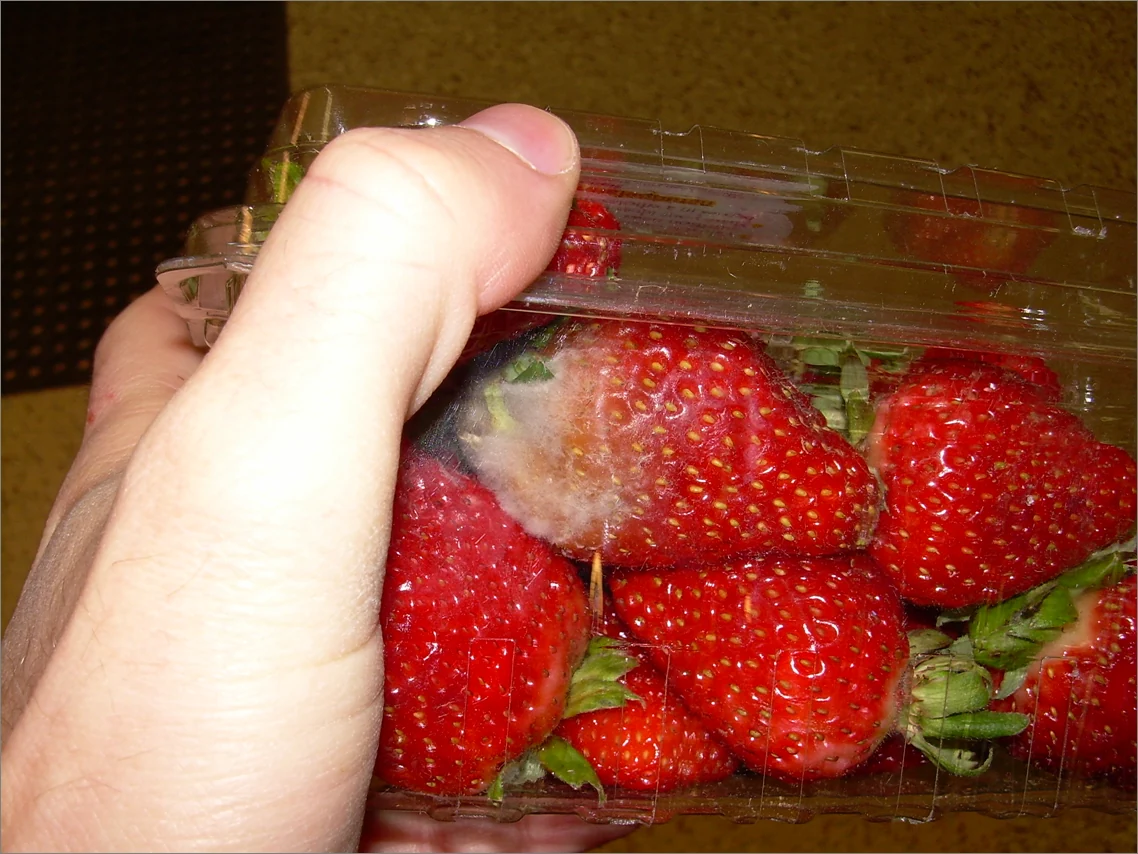
Grey mould is caused by the fungus Botrytis cinerea (sexual stage Botryotinia fuckeliana) [1]. It is reported on more than 240 plant species, and a more recent count exceeds 1,400 [2][3]. Grapes, strawberries, tomatoes and ornamental flowers are among the most affected crops, with losses before and after harvest [2]; in strawberry, yield losses occasionally exceed 50% [4]. Its short life cycle and abundant sporulation make it a classic high-risk pathogen for fungicide resistance [2].
1. How to recognise it
The clearest sign is a fuzzy, grey-brown layer of spores on the affected tissue. Spores can look whitish at first and turn grey as they mature [5], infected strawberries release grey puffs of spores when disturbed [4], and under a hand lens the spore-bearing structures resemble bunches of grapes [6]. The fungus prefers tender growth, fresh wounds and ageing tissue, and sporulates heavily on plant debris and cull piles [5].
Not every fruit rot is grey mould. In grapes, injured berries can be invaded by other fungi with black, brown or green spores, and such rots often end in sour rot, spread by Drosophila flies [7]. The related species B. pseudocinerea also infects grapes and strawberries [2].

2. Symptoms by crop
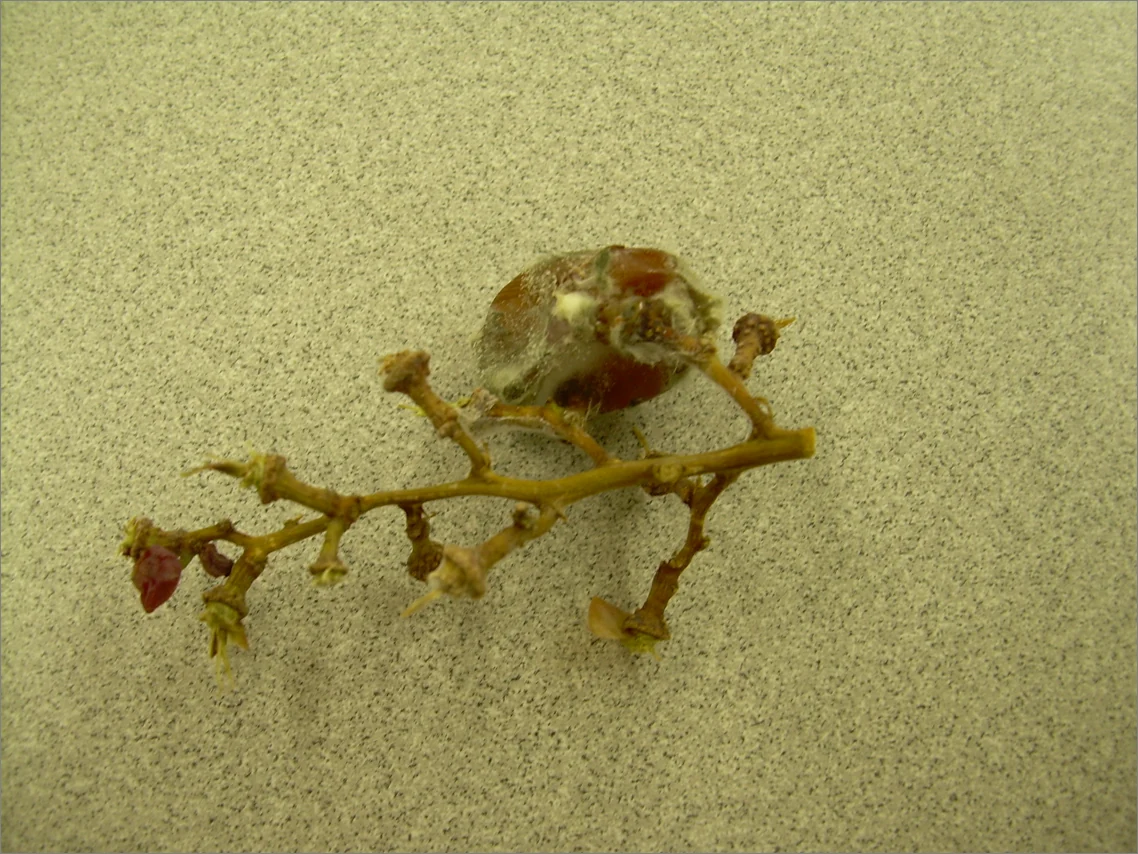
Grapes. Warm, wet springs can cause shoot blight, often at the leaf axils. At veraison, infected berries turn brown in white cultivars and reddish in red and black ones; in humid, still weather the fungus grows out through skin cracks, giving the grey, velvety look [8].
Strawberries. Flowers are highly susceptible, but symptoms usually appear 2 to 4 weeks after infection, as light brown spots under the calyx that spread and leave mummified fruit. Field infections keep developing in cold storage and transit [4].
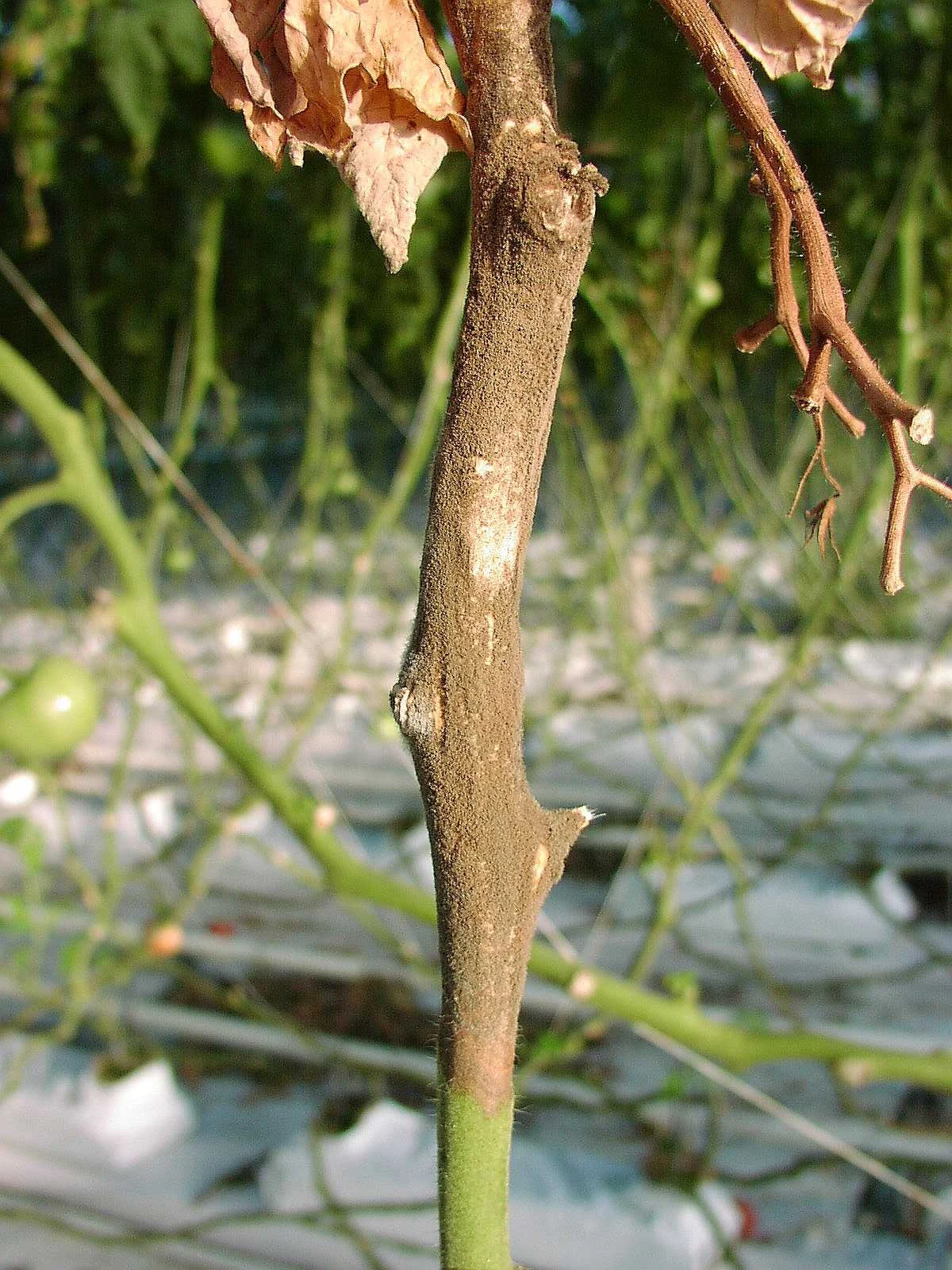
Tomatoes. Infection moves from dying flowers or fruit into the stem, which turns white and develops a canker that may girdle it; in greenhouses, lesions form where wires and strings wound stems. Green fruit rots where it touches infected tissue, while airborne spores can leave white 'ghost spots' on small green fruit [6].
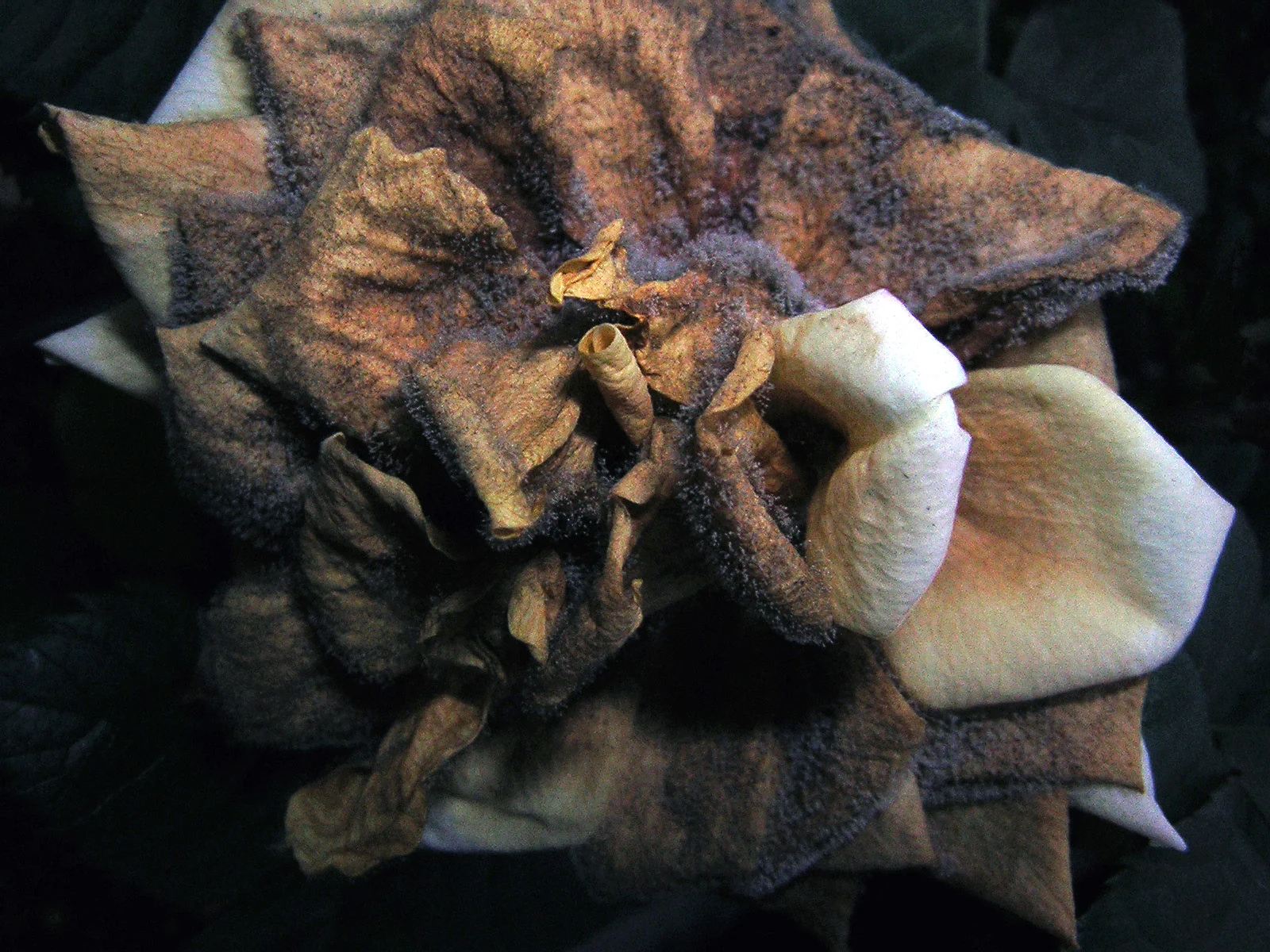
Cut flowers. Petals develop water-soaked or tan spots that turn grey; badly infected petals stick together, ageing flowers are the most susceptible, and buds can blight during storage and shipping [9].
3. Disease cycle
How grey mould develops
| Phase | What happens | What favours it |
|---|---|---|
| Survival | Sclerotia in mummies, canes and debris; mycelium in debris; infected transplants [4][8] | Debris left in the crop or greenhouse [5][8] |
| Spread | Spores on air currents and water splash, on harvesters' hands and by contact [4][5] | Rain, irrigation, handling [4][8] |
| Infection | Through flowers, ageing or dying tissue and wounds [5][6][8] | A film of moisture for 8 to 12 hours and relative humidity of 85% or more [5]; roughly 13 to 28 °C, depending on crop and source [4][5][6][8] |
| Latent phase | Grape flower infections stay dormant until sugar rises in the berry; strawberry symptoms appear 2 to 4 weeks after infection [4][8] | Ripening fruit [8] |
| Secondary cycles | Diseased fruit, mummies and dead flowers produce new spores, and disease builds up through the season [4] | At least 13 hours of leaf wetness at about 17 to 25 °C (Florida strawberry); relative humidity above 92% (late-season grape) [4][8] |
| After harvest | Rot continues in storage and transit, even under refrigeration [4][9] | Packing wet produce; condensation [9] |
Because Botrytis completes many cycles in a season, FRAC counts its limits over the whole season's Botrytis programme rather than spray by spray [10][11].
4. Monitoring and when to act
Fungicides protect healthy tissue but do not suppress an established infection [6], and once Botrytis has developed in a greenhouse flower crop, fungicides alone cannot control it effectively [9]. Time protection to risk: flowers, ripening fruit or fresh wounds combined with wet or humid weather.
In California vineyards, UC IPM advises scouting for flagging shoots and leaf lesions in spring and surveying for Botrytis at harvest; research shows a trend towards better control from applications at bloom, before bunch closure and at veraison [8]. In Florida strawberries, the Strawberry Advisory System times sprays from leaf wetness duration and temperature; in commercial-field trials it cut sprays by about 50% without affecting disease or yield [4]. In greenhouses, watch for evening dew, which forms as warm air cools and humidity rises [5]. Quick culture-based and molecular tests show which fungicide groups still work locally [2].
5. Prevention: canopy, climate and hygiene
Vineyard canopy. Balanced vines with moderate vigour keep clusters exposed. Removing basal leaves right after berry set has significantly reduced disease incidence and severity, and exposed berries develop a thicker cuticle. Avoid unnecessary irrigation and nitrogen, and control insects that wound berries [8].
Greenhouse climate. Heating and venting together lower humidity better than either alone and prevent dew; horizontal air flow removes cool spots where condensation forms. Water early, by drip or at the base of plants, and space plants so the canopy dries [5][9]. A 2026 county-level plan for winter protected vegetables in Shanxi, China, targets relative humidity below 80%, with short morning and evening ventilation [12].
Hygiene. Bag and remove spent flowers, dying leaves and debris, and keep cull piles away from crops [9]. In strawberry, removing diseased fruit reduces inoculum, whereas leaf pruning helps only modestly [4]. Discard tomato transplants with active lesions [6] and avoid overfertilisation [5]. After harvest, sanitise cool rooms and do not pack wet flowers or move them straight from cool to warm rooms [9]. Host resistance is limited: no commercial strawberry cultivar is highly resistant [4].
6. Resistance is documented
FRAC, the Fungicide Resistance Action Committee, lists Botrytis cinerea among pathogens with a high risk of fungicide resistance [13]. Each new fungicide class against grey mould has been followed by field resistance, and an efflux mechanism, often called multidrug resistance (MDR), lowers sensitivity to several unrelated fungicides at once [2][14].
Resistance is documented to benzimidazoles (Group 1) [15], dicarboximides (Group 2) and anilinopyrimidines (Group 9) [16], SDHIs (Group 7) [17], QoIs (Group 11), with high levels in soft-fruit samples from Poland, the Netherlands and Spain in 2025 [18], and fenhexamid (Group 17) [2]. Field resistance to fluazinam (Group 29) has been claimed in Japan [19]. Fludioxonil (Group 12) is the exception so far: highly resistant field strains are very rare, although low to medium, efflux-based resistance is common [2].
Multiple resistance builds up where spraying is intensive. French vineyards sprayed two or rarely three times a season kept resistance low to moderate, unlike heavily sprayed vineyards in southern Italy and German strawberry fields [2]. A 2010 survey of strawberry and small-fruit isolates in northern Germany found resistance frequencies from 14.7% (cyprodinil) to 76.8% (QoIs) across seven fungicide groups [2], Florida nursery transplants have carried resistance to two to six fungicides [4], and FRAC finds anilinopyrimidine resistance more frequent in strawberries than in grapes [14].
7. Rotate modes of action
FRAC's Botrytis guidance caps how often each cross-resistance group is used per crop and season, scaled to the total number of Botrytis sprays. Across groups, a mixture partner must have a different mode of action and control the disease alone at the rate used [11][20]. Sprays against other diseases count: in grapes, FRAC allows at most three SDHI sprays a year over all diseases and at most four QoI sprays, no more than 33% of all applications [11][21]. Mixtures of two SDHIs, or of two QoIs, are not an anti-resistance measure [11][21].
FRAC groups used against grey mould
| FRAC group | Class | Examples | What the source says |
|---|---|---|---|
| 1 | Benzimidazoles (MBC) | Carbendazim, thiophanate-methyl | High risk; field resistance in Botrytis on vines since 1971 [15]; thiophanate-methyl no longer recommended in greenhouses owing to resistance [5] |
| 2 | Dicarboximides | Iprodione, procymidone | Resistance common in Botrytis [16]; no more than two to three applications per crop per season, at high infection pressure [22] |
| 3 | DMIs (azoles) | Prochloraz | Azoles are generally not very active against Botrytis [2]; commonly used on Colombian roses, where prochloraz-resistant isolates were found [3] |
| 7 | SDHIs | Boscalid, fluopyram, isofetamid; bixafen is in the same group | All cross-resistant; in grapes, 1 to 3 SDHI sprays depending on the number of Botrytis sprays [11] |
| 9 | Anilinopyrimidines (AP) | Cyprodinil, pyrimethanil | Max. 1 with up to 3 Botrytis sprays, 2 with 4 to 6, 3 with 7 or more; no more than 2 in a row [10] |
| 11 | QoIs (strobilurins) | Pyraclostrobin, azoxystrobin, trifloxystrobin | High risk [16]; less effective against Botrytis than against many other fungi [2]; high resistance levels in soft fruit [18] |
| 12 | Phenylpyrroles | Fludioxonil | Max. 2 with 2 to 5 Botrytis sprays, 3 with 6 or more; strict alternation if solo; post-harvest use counted separately [23] |
| 17 | Keto-reductase inhibitors (KRI) | Fenhexamid, fenpyrazamine | Grapes and berries: max. 1 in programmes of up to 3 sprays, 2 in 4 or 5, one third above that; protective only, strict alternation [11] |
| 29 | Uncouplers | Fluazinam | Low risk, but resistance claimed in Botrytis in Japan [16]; for high-risk pathogens, mix where possible, max. 50% of applications [19] |
| M | Multi-site | Chlorothalonil (M05), captan (M04), thiram, mancozeb (M03) | No FRAC limit within the label [24]; used as tank-mix partners [5]; minor role today [2] |
The table describes FRAC groups and published guidance. It is not a list of registered uses. Which products may be used, on which crops and at what rate and interval is set by each country's registration and by the product label.
Co-formulations such as cyprodinil with fludioxonil (Groups 9 and 12) or pyraclostrobin with boscalid (Groups 11 and 7) [8] count towards both groups' limits [11][21]. FRAC finds no clear evidence that either alternation or mixtures is better in general, but with many sprays and few modes of action, alternation may reduce selection pressure more [20].
8. Biological options in the same programme
FRAC codes microbial biologicals as BM02 and some plant extracts as BM01, regards them as low risk and sets no limit on their use within the label [16][24]. Products marketed against grey mould include Bacillus, yeasts such as Aureobasidium pullulans, Trichoderma and laminarin; they often work well in controlled environments but less reliably in open fields, and Hahn sees them as alternating treatments with chemical fungicides [2]. The Shanxi plan lists Bacillus subtilis, Trichoderma, eugenol and carvacrol for grey mould [12].
Huasheng's Baciva™ is based on Bacillus amyloliquefaciens D747, a strain FRAC lists in Group BM02 [16]. Its documented scopes include Botrytis control on grape, tomato, pepper and highbush blueberry, and suppression of grey mould on strawberry. Botria™, based on Bacillus velezensis BJ-1, is in development; the BJ-1 strain is documented in China for grey mould on tomato.
9. Regional notes
China
Tomato isolates collected around Beijing in 2009 and 2010 were resistant to carbendazim (96.3%), procymidone (80.7%) and diethofencarb (58.7%) [25]. In laboratory tests, grape isolates from Ningxia were most sensitive to fluazinam, then boscalid and fludioxonil, and most resistant to carbendazim [26]. FRAC found a low frequency of SDHI resistance in vegetable samples from Zhejiang in 2019 and 2020 [17]. The Shanxi plan combines humidity control, removal of diseased leaves and fruit, smoke formulations in closed houses and product rotation [12]. Registered uses are published by ICAMA, the national pesticide authority [27].
Latin America
In Chile, 79% of 526 isolates from 'Thompson Seedless' table grape flowers resisted at least one of five fungicides tested and 25.4% resisted both azoxystrobin and pyrimethanil, but none resisted fludioxonil [28]; FRAC has also found SDHI-resistant isolates in Chilean grapes since 2015 [17]. In Colombian roses, control relies on intensive fungicide use, with systemic sprays up to three times a week, and isolates from Cundinamarca showed resistance to fenhexamid, carboxin and prochloraz [3].
10. A practical sequence
- Before the season, check which FRAC groups still work locally.
- Reduce inoculum: remove debris, mummies, diseased fruit and spent flowers.
- Keep tissue dry: open canopies, heat and vent greenhouses, and irrigate by drip or early in the day.
- Protect flowers and ripening fruit ahead of wet or humid periods, using a forecasting tool if available.
- Count every Botrytis spray in the season and keep each FRAC group within its limit; count both groups of a mixture.
- Use multi-site and biological products to reduce single-site applications.
- Follow the local label for crop, rate and interval.
Frequently asked questions
What is the best fungicide for botrytis?
There is no single best product. Resistance is documented to most single-site groups, so use an effective, locally registered product and keep each FRAC group within FRAC's Botrytis limits [10][13][23].
How do you control grey mould on strawberries?
Remove diseased fruit, time sprays to infection risk and rotate FRAC groups, because multiple resistance is common in strawberry [2][4].
How do you prevent botrytis bunch rot in grapes?
Keep clusters open and dry: moderate vigour, basal leaf removal right after berry set, no excess nitrogen or irrigation, and insect control [8].
Why has my botrytis fungicide stopped working?
Most likely resistance, which is documented in Botrytis to benzimidazoles, dicarboximides, anilinopyrimidines, QoIs, SDHIs and fenhexamid. A resistance test shows which groups still work [2][16].
Does carbendazim still control grey mould?
Often not. FRAC rates benzimidazoles as high risk, and 96.3% of tomato isolates sampled around Beijing resisted carbendazim [15][25].
Can biological fungicides control botrytis?
They help, mainly in controlled environments, but are less reliable in open fields. Bacillus products are low risk (BM02) with no FRAC limit, so they fit into rotations [2][16][24].
Further reading
- Enquire about fluazinam, pyraclostrobin and chlorothalonil
- Fluazinam: formulations and supply
- Pyraclostrobin: formulations and supply
- Chlorothalonil: formulations and supply
- Baciva™ (Bacillus amyloliquefaciens D747)
- Botria™ (Bacillus velezensis BJ-1, in development)
- [1] EPPO (2026). EPPO Global Database: Botrytis cinerea (BOTRCI).
- [2] Hahn, M. (2014). The rising threat of fungicide resistance in plant pathogenic fungi: Botrytis as a case study. Journal of Chemical Biology 7(4), 133-141.
- [3] Giraldo, D. et al. (2024). Genotypic and phenotypic characterization of resistance to fenhexamid, carboxin, and prochloraz, in Botrytis cinerea isolates collected from cut roses in Colombia. Frontiers in Microbiology 15, 1378597.
- [4] Mertely, J. C., Oliveira, M. S. and Peres, N. A. (2025). Botrytis fruit rot or gray mold of strawberry. UF/IFAS Extension, PP152.
- [5] Wick, R. L., revised by Madeiras, A. (2019). Botrytis blight of greenhouse crops. UMass Extension Greenhouse Crops and Floriculture Program.
- [6] UC IPM (2013). Tomato pest management guidelines: gray mold (UC ANR Publication 3470). University of California.
- [7] UC IPM (2016). Grape pest management guidelines: summer bunch rot (sour rot). University of California.
- [8] UC IPM (2016). Grape pest management guidelines: Botrytis bunch rot (UC ANR Publication 3448). University of California.
- [9] Smith, T., updated by Madeiras, A. (2019). Botrytis blight of cut flowers. UMass Extension Greenhouse Crops and Floriculture Program.
- [10] FRAC. AP Fungicides Working Group: recommendations for resistance management, including Botrytis guidelines.
- [11] FRAC. SDHI Fungicides Working Group: recommendations for resistance management, including Botrytis and KRI guidelines.
- [12] Yangcheng County Agriculture and Rural Affairs Bureau, Shanxi (2026). Notice on technical guidance for safe pesticide use on winter vegetables, with annex: technical plan for the control of the main pests and diseases of winter protected vegetables.
- [13] FRAC (2019). FRAC Pathogen Risk List.
- [14] FRAC (2025). Minutes of the 2025 AP meeting: recommendations for 2025.
- [15] FRAC. Benzimidazoles Expert Forum: background information and resistance management recommendations.
- [16] FRAC (2026). FRAC Code List 2026: fungal control agents sorted by cross-resistance pattern and mode of action.
- [17] FRAC (2026). Minutes of the 2026 SDHI Working Group meeting and recommendations for 2026.
- [18] FRAC (2026). Minutes of the 2026 QoI Working Group meeting and recommendations for 2026.
- [19] FRAC (2020). Group 29 (C5) fluazinam resistance management recommendations.
- [20] FRAC (2010). FRAC recommendations for fungicide mixtures designed to delay resistance evolution.
- [21] FRAC. QoI Fungicides Working Group: recommendations for resistance management.
- [22] FRAC. Dicarboximides Expert Forum: background information and resistance management recommendations.
- [23] FRAC (2020). Group 12 (E2) phenylpyrrole (fludioxonil) resistance management recommendations.
- [24] FRAC. Fungicide resistance management with/of multi-site fungicides, biological control agents and plant defence inducers.
- [25] Qiao, G., Yan, H. and Yao, Y. (2011). Detection of multiple fungicide resistance in Botrytis cinerea from tomato in Beijing. Plant Protection 37(5), 176-180 (FAO AGRIS record).
- [26] Jiang, C. et al. (2020). Evaluation of resistance levels of Botrytis cinerea to different fungicides in eastern Helan Mountain. Journal of Agricultural Science and Technology (China) 22(10), 119-128 (in Chinese, English abstract).
- [27] Institute for the Control of Agrochemicals, Ministry of Agriculture and Rural Affairs (ICAMA). China Pesticide Information Network.
- [28] Esterio, M. et al. (2017). Frequency of fungicide-resistant Botrytis cinerea populations isolated from 'Thompson Seedless' table grapes in the Central Valley of Chile. Ciencia e Investigación Agraria 44(3).
Products in this article