Damping-off and seedling root rots: diagnosis, seed treatment and resistance management
How to recognise pre- and post-emergence damping-off caused by Pythium, Phytophthora, Rhizoctonia and Fusarium, which conditions favour each, and how to build a seed treatment that covers both oomycetes and true fungi without wearing out the chemistry.
Technical review: Wang Liqun, Researcher; Chen Zhiyuan, Senior Agronomist
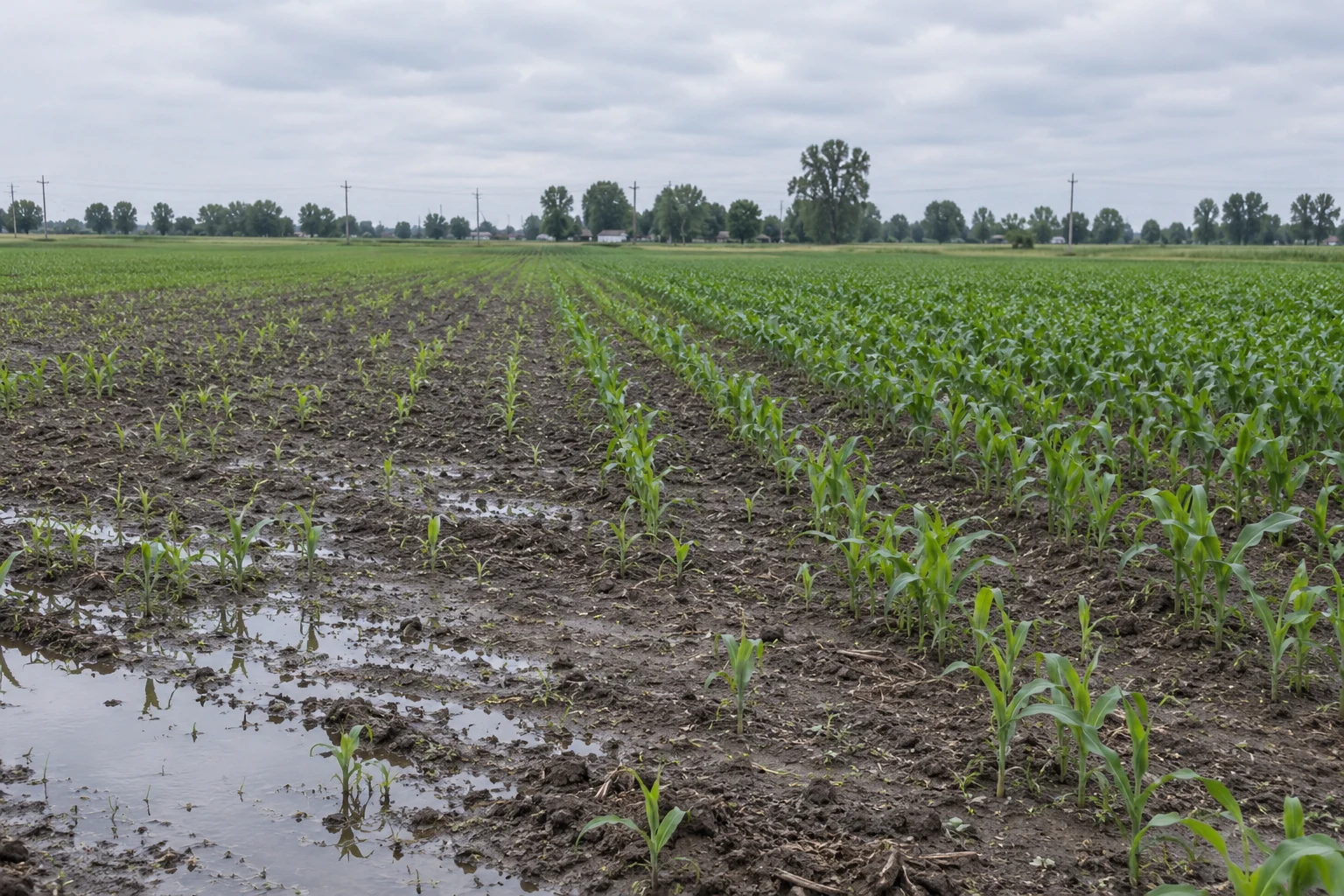
Damping-off is a general term for the death of seedlings, before or after emergence, under damp conditions [1]. Pythium is most often responsible, but Rhizoctonia, Fusarium and Phytophthora also cause it, and these pathogens are present in virtually all soils [2]. In soybean, seedling diseases reduce stands and cause significant losses each year [3]; maize, cotton and direct-seeded vegetables such as cucumber and beans are attacked by the same pathogens [4][5][6]. Pythium and Phytophthora are oomycetes, once classed as fungi and now placed in the kingdom Straminipila [7], and fungicides that control them generally do not control Rhizoctonia or Fusarium, and the reverse [3].
1. How to recognise it
Field diagnosis is difficult: symptoms are similar, affected seedlings decompose quickly, and several diseases can occur together [3]. Typical signs:
- Pythium (many soybean species are now placed in Globisporangium): rotten, mushy seed or seedlings with poor roots, and water-soaked lesions on the hypocotyl or cotyledons [3].
- Phytophthora: mushy, water-soaked stems; seedlings wilted and stunted [3].
- Rhizoctonia solani: a reddish-brown, sunken, dry lesion at soil level that can girdle the stem [3]; in cotton it is called soreshin [5].
- Fusarium: stunted, spindly plants with brown to black root lesions and poor root systems [3].
A Chinese extension note offers a quick rule: with Pythium the stem base turns water-soaked and the seedling falls over, while with Rhizoctonia the stem base becomes sunken and constricted and the seedling dies standing [8]. Treat this only as a first sort; Pythium and Fusarium are difficult to tell apart in the field [9].
Rule out look-alikes: herbicide injury is uniform across treated plants, whereas seedling blights occur in patches; frost leaves roots healthy; planting faults leave gaps between healthy seedlings [3]; and cutworms, slugs and root maggots also damage seedlings [2].
2. Symptoms
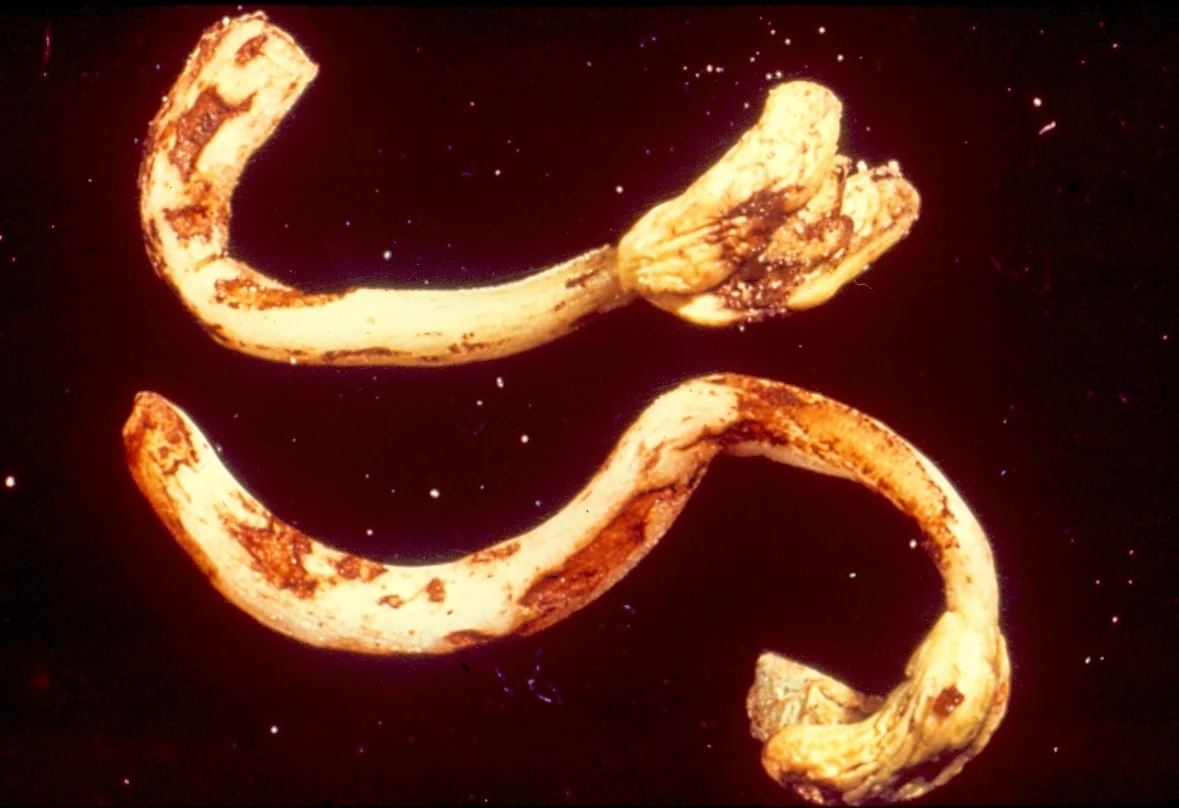
Before emergence, seeds rot or shoots decay below ground. Infected seeds become soft, mushy and dark brown, and soil may cling to them [2]. In maize the first sign is often an area with poor or no stand [4].
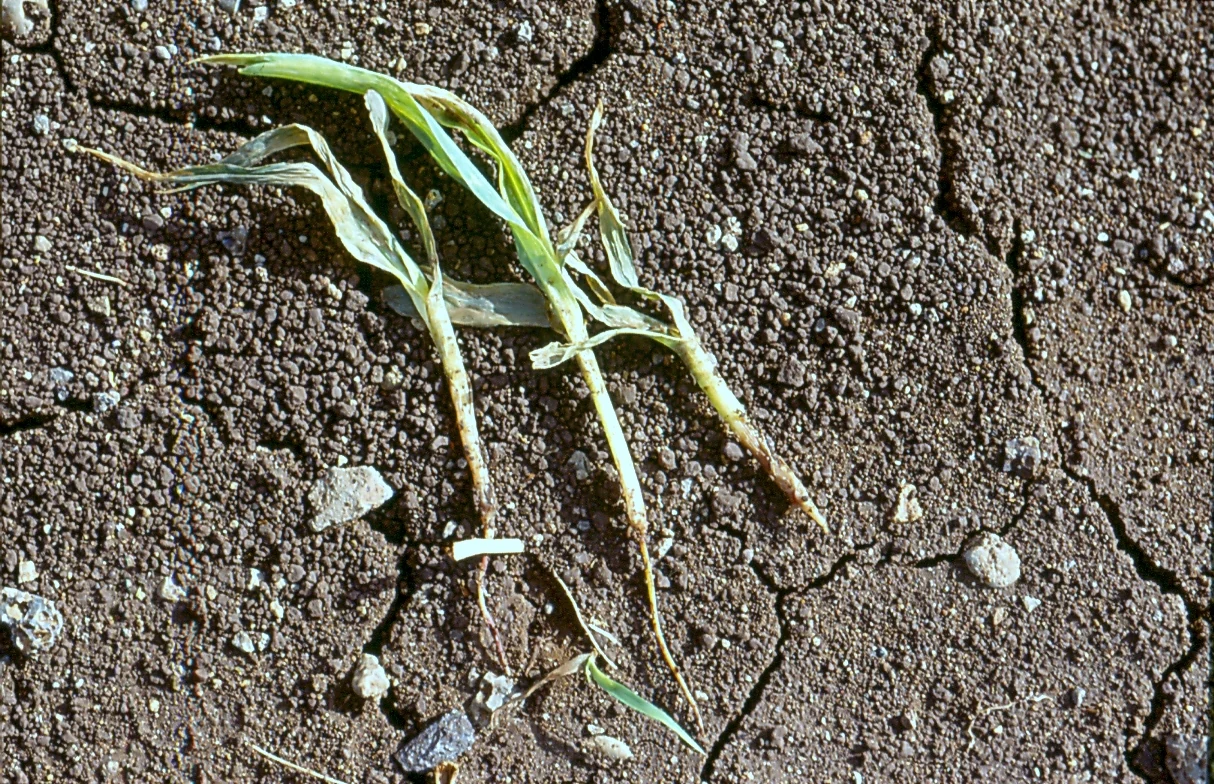
After emergence, the stem decays near the soil line and the seedling topples [2]; maize seedlings yellow, wilt and collapse [4]. Survivors are stunted, yellowed and behind in growth stage; soybean compensates for weak neighbours, but weak maize plants usually produce small ears or none [9]. Losses concentrate where drainage is poor or soil is compacted, but whole fields can be affected, especially early plantings exposed to rain [1].
3. Disease cycle
The pathogens persist in soil between crops. Germinating seeds leak nutrients that attract Pythium and Fusarium [9], and seedlings growing slowly in cold, wet soil are more likely to be infected [2].
Main seedling pathogens
| Pathogen | Survives as | Favoured by |
|---|---|---|
| Pythium, Globisporangium (oomycetes) | Oospores, persisting for many years in soil [10] | Saturated soil, poor drainage, no-till; northern species infect at about 10 to 25 °C, southern species at 30 to 35 °C [3][10] |
| Phytophthora (oomycete) | Oospores, persisting for years in soil [11] | Saturated soil, heavy clay with poor drainage; most common above about 15 °C [3][11] |
| Rhizoctonia solani (true fungus) | Mycelium in crop residue, or sclerotia in soil [12] | Warm, moist but not saturated soil, though Ohio isolates infect across about 16 to 35 °C and wide moisture ranges [3][12] |
| Fusarium spp. (true fungi) | Chlamydospores in soil; also residue, weeds and seed [13] | Moist to wet soil at 10 to 20 °C early in the season; compaction; stressed plants [3][13] |
For oomycetes, saturated soil is the trigger: oospores germinate to form sporangia that release swimming zoospores, which are attracted to roots [10][11]. Susceptibility falls as plants grow: tomato is no longer susceptible to Pythium or Rhizoctonia from the two- or three-leaf stage, although Phytophthora can infect at any stage [1].
4. Monitoring and when to act
Management is preventive. Seed treatments and soil-applied fungicides at planting are the best ways to manage damping-off [6], and for soybean Fusarium root rot no foliar fungicide is currently effective [13]. Scouting shows whether replanting is needed [1] and what to change next time.
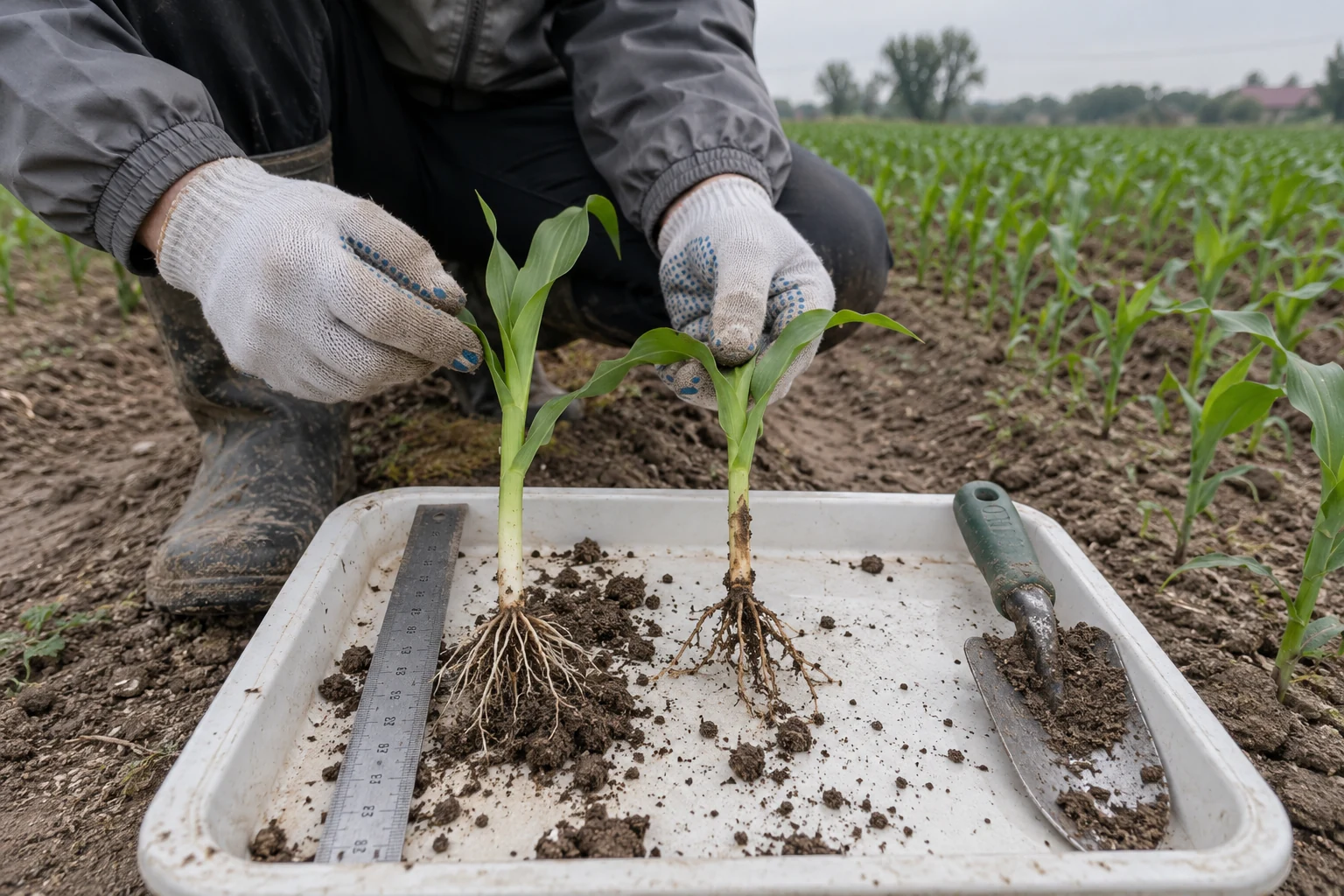
Count stands soon after emergence and again a couple of weeks later. Dig up seed at skips, dig plants that lag behind and examine the roots, and in maize check the mesocotyl. Send seedlings with a range of symptoms, plus some healthy ones, to a diagnostic clinic [9]. Identification to species helps, because fungicide efficacy and varietal resistance can differ [3].
There is no spray threshold; field history plays that role. In California cotton, extra soil fungicide at planting is advised when cool, wet weather is likely, in fields with severe seedling disease in the past, and in replanted fields [5].
5. Prevention
- Drainage: seedling diseases are most common when wet weather follows planting and in compacted or poorly drained soils [3]. Planter firming wheels run in wet soil can create a compacted layer that aggravates disease [5].
- Planting date: planting maize when soil is above 10 °C and not too wet may reduce risk [4]; avoid planting just before several days of forecast rain or cold [5][10].
- Seed: use the highest-quality seed available, ideally with high germination in a cold test, and do not plant too deep [5].
- Rotation: the pathogens survive for years and infect other crops, so rotation alone may not suffice, but short soybean rotations let them build up [3]. Rotating cotton with sorghum and small grains reduces Pythium and Rhizoctonia inoculum [5].
- Inputs: use only mature compost and avoid excess nitrogen [2]; in tomato, green manure worked in just before planting may increase Pythium damping-off [1].
- Varieties: partial resistance to many Pythium species and to Rhizoctonia exists in soybean [10][12].
6. Resistance is documented
FRAC, the Fungicide Resistance Action Committee, places the phenylamides, including metalaxyl and metalaxyl-M (mefenoxam), in Group 4 with high resistance risk; resistance and cross-resistance are well known in various oomycetes [14]. Cross-resistance is complete among phenylamides, but absent with other classes such as QoIs, propamocarb, fluazinam and multisite fungicides [15].
Some Pythium populations in Ohio are resistant or have reduced sensitivity to metalaxyl and mefenoxam [16], current US ratings warn of lower efficacy where such populations occur [17], and resistance has been reported in Argentina in P. irregulare and P. ultimum [7]. Pythium individuals with disruptive resistance cannot be controlled with phenylamides [15].
FRAC also rates the MBC (Group 1) and QoI (Group 11) fungicides used on seed as high risk, with MBC resistance common in many fungal species [14].
7. Rotate and combine modes of action
FRAC's general rules: use an at-risk fungicide in a mixture with an unrelated partner or in rotation, keep the recommended dose, and integrate resistant varieties, biological control and crop rotation [18]. For phenylamides, use them preventively; seed treatment carries lower risk than foliar use, but phenylamide sprays or drenches in a previous vegetable crop can shift soil Pythium sensitivity, so plan rotation and phenylamide use together and use mixtures rather than straight phenylamides on seed [15]. FRAC counts an SDHI cereal seed treatment against the season's SDHI total only if it also controls moderate- or high-risk foliar pathogens [19].
Cover both organism groups. Ingredients that control Pythium and Phytophthora generally do not control Fusarium or Rhizoctonia, and the reverse [3], which is why seed treatments combine several active ingredients [17].
FRAC groups used against seedling pathogens
| FRAC group | Class | Examples | What the sources say |
|---|---|---|---|
| 4 | Phenylamides | Metalaxyl, metalaxyl-M | Excellent on Pythium and Phytophthora in soybean, less where insensitive populations occur; not labelled for Rhizoctonia or Fusarium [17]. High risk [14] |
| 22, 49 | Thiazole carboxamides; OSBPI | Ethaboxam, oxathiapiprolin | Ethaboxam excellent on Pythium and Phytophthora; oxathiapiprolin on Phytophthora only [17] |
| 12 | Phenylpyrroles | Fludioxonil | Good on Rhizoctonia, fair to very good on Fusarium, poor to good on Pythium [17]. Low to medium risk [14] |
| 11 | QoI | Azoxystrobin, pyraclostrobin | Azoxystrobin very good on Rhizoctonia, poor to good on Pythium [17]; strobilurins act on some Pythium species only [16]. High risk [14] |
| 7 | SDHI | Thifluzamide, sedaxane | Sedaxane excellent on Rhizoctonia [17]; thifluzamide strongly inhibited R. solani from maize [20]. Medium to high risk [14] |
| 3 | DMI | Tebuconazole, difenoconazole, prothioconazole | Prothioconazole good on Rhizoctonia and Fusarium [17]; DMI seed treatments listed for Rhizoctonia in California cotton [5]. Medium risk [14] |
| 1 | MBC | Carbendazim, thiophanate-methyl | Carbendazim plus thiram gave about 4% control of Pythium in an Argentine trial [7]. High risk [14] |
| BM02 | Microbials | Trichoderma T-22, Bacillus D747 | Multiple modes of action; resistance not known [14] |
The table summarises mode of action groups and published ratings, mostly from US soybean; it is not a list of registered uses. Which products may be used, on which crops and at what rate is set by each country's registration and by the product label.
8. Biological options in the same programme
FRAC places microbial fungicides in Group BM02, with mechanisms such as competition, mycoparasitism, antibiosis, lytic enzymes and induced plant defence, and no known resistance. The group includes Trichoderma afroharzianum T-22, formerly T. harzianum, and Bacillus amyloliquefaciens D747 [14]. Extension advice describes Trichoderma and Bacillus products as competing with damping-off pathogens for root space [6]. Establishment matters: Argentine research found that laboratory results for antagonists did not always match results in plants [21].
Huasheng supplies two of these strains. Triva™ (T-22) has a documented scope of preventive root protection against Pythium, Rhizoctonia and Fusarium in crops including tomato, cucumber, lettuce, soybean, common bean and peanut. Baciva™ (D747) has a documented scope covering damping-off and root and crown diseases involving Pythium, Rhizoctonia, Fusarium and Phytophthora in crops including tomato, cucumber, lettuce, soybean, beans and peanut. These are documented scopes, not registered uses in a given country; for T-22, genus-level data do not establish control of every wilt disease.
9. Regional notes
China
China's 2025 national control plans centre seedling disease control on seed treatment. For soybean they call for rotation, no early sowing into cold soil, screened high-quality seed and seed treatments containing metalaxyl-M with fludioxonil, or pyraclostrobin; seed coatings for soybean and maize strip intercropping also include thifluzamide. In cotton, seedling diseases (立枯病 and 猝倒病, Rhizoctonia and Pythium damping-off) were forecast in all cotton regions; the plan relies on seed coating with fludioxonil, metalaxyl-M or azoxystrobin, with Bacillus subtilis, polyoxin or hymexazol sprays at early onset in cold, rainy weather [22].
Latin America
In Argentina's Pampas region, Rhizoctonia solani is the main cause of soybean damping-off. INTA links seedling death to cold soil and too much or too little water, frequent with early sowing, and advises avoiding early sowing into cold soil, using vigorous seed and treating it with fungicides against soil fungi [23]. Pythium seedling disease has been associated with reduced tillage, and Argentine no-till grew from 9 to 25 million hectares between 1999 and 2009. In tray tests, preventive metalaxyl gave about 100% control of Pythium, against 61% for azoxystrobin (in a formulation not intended for seed) and 4% for carbendazim plus thiram [7].
Europe
In Europe, FRAC monitoring found Pythium broadly sensitive to phenylamides, with resistance mainly in Belgium, mostly in P. ultimum, and chiefly after vegetables such as spinach, leek or bean; none was found after cereals, sugar beet, oilseed rape or grassland [15].
10. A practical sequence
- Review field history: past stand losses, drainage, compaction, the previous crop and its phenylamide use [3][15].
- Have problem seedlings diagnosed by a laboratory, to species where possible [3][9].
- Plant high-quality seed into warm soil that is moist but not saturated, not just before cold rain [2][5][10].
- Choose a seed treatment with an oomycete-active ingredient plus ingredients for Rhizoctonia and Fusarium, avoiding straight phenylamides [3][15].
- Where replanting was needed before, use two chemistries against water moulds [10].
- Count stands after emergence and two weeks later, digging skips and lagging plants [9].
- Follow the label for crop and rate and keep the recommended dose [18].
Frequently asked questions
What is the best treatment for damping-off?
There is no single best product. Pythium and Phytophthora need oomycete-active ingredients such as metalaxyl-M or ethaboxam; Rhizoctonia and Fusarium need others, such as fludioxonil, strobilurins or SDHIs. Seed treatments combine both, matched to the diagnosis [3][17].
How can I tell Pythium from Rhizoctonia damping-off?
Pythium causes soft, water-soaked rots in saturated soil; Rhizoctonia leaves a reddish-brown, sunken, dry lesion at the soil line, most often in warm, moist soil. Symptoms overlap, so confirm with a laboratory [3].
Is Pythium resistant to metalaxyl?
Some populations are, in Ohio, parts of Europe and Argentina. FRAC rates phenylamides high risk and advises mixtures on seed [7][14][15][16].
How long does a seed treatment protect seedlings?
About 14 days, according to Iowa State. In cold soil, where emergence is slow, protection can run out while seedlings are still susceptible [9].
Can damping-off be cured once seedlings are infected?
Management is preventive. Seedlings with decayed roots may grow slowly or die, and replanting may be needed when losses are extensive [1][2].
Do biological seed treatments work against damping-off?
They can contribute. FRAC lists strains such as T-22 and D747 as biologicals with multiple modes of action, and they compete with pathogens for root space, but laboratory results do not always predict field performance [6][14][21].
Further reading
- Enquire about metalaxyl-M, fludioxonil, azoxystrobin and thifluzamide
- Metalaxyl-M: formulations and supply
- Metalaxyl: formulations and supply
- Fludioxonil: formulations and supply
- Azoxystrobin: formulations and supply
- Thifluzamide: formulations and supply
- Triva™ (Trichoderma harzianum T-22)
- Baciva™ (Bacillus amyloliquefaciens D747)
- [1] Davis R.M. et al. (2013). UC IPM Pest Management Guidelines: Tomato. Damping-off. University of California.
- [2] Perry E.J., Farrar J.J. (2024). Pest Notes: Damping-off Diseases in the Garden. UC ANR Publication 74132.
- [3] Wise K. et al. (2026). An Overview of Soybean Seedling Diseases. Crop Protection Network, CPN-1008.
- [4] Crop Protection Network (2018). Seed Decay and Seedling Blight of Corn.
- [5] Davis R.M. (2013). UC IPM Pest Management Guidelines: Cotton. Seedling Diseases. University of California.
- [6] Jones J. (2020). Managing damping off in direct seeded vegetables. University of Delaware Weekly Crop Update 28:8.
- [7] Grijalba P.E., Ridao A. del C. (2017). Control químico de Pythium spp. en plántulas de soja. RIA, Revista de Investigaciones Agropecuarias 43(1): 67-71. INTA.
- [8] Huaihua Municipal Forestry Bureau (2019). Control of damping-off and Rhizoctonia seedling blight in herbaceous flowers (草本花卉猝倒病和立枯病的防治).
- [9] Robertson A. (2025). Scouting tips for seedling disease. Iowa State University, Integrated Crop Management.
- [10] Ohio State University Soybean Pathology and Nematology Lab (Dorrance A.). Pythium seed and root rot (extended version). OSU Soybean Diseases.
- [11] Ohio State University Soybean Pathology and Nematology Lab (Dorrance A.). Phytophthora seedling damping-off and root rot (extended version). OSU Soybean Diseases.
- [12] Ohio State University Soybean Pathology and Nematology Lab (Dorrance A.). Rhizoctonia damping-off and root rot (extended version). OSU Soybean Diseases.
- [13] Rafi N. et al. (2025). An Overview of Fusarium Root Rot. Crop Protection Network, CPN-1031.
- [14] FRAC (2026). FRAC Code List 2026: Fungal control agents sorted by cross-resistance pattern and mode of action.
- [15] FRAC Phenylamides Expert Forum. Phenylamides: background information and recommendations for resistance management (general use recommendations last updated March 2020).
- [16] Dorrance A. (2017). Seed treatments for watermolds and fungi that affect soybean in Ohio. Ohio State University C.O.R.N. Newsletter 2017-1.
- [17] NCERA-137 (2026). Fungicide Efficacy for Management of Soybean Seedling Diseases. Crop Protection Network, CPN-1020.
- [18] FRAC. Fungicide resistance management: background information.
- [19] FRAC SDHI Working Group. SDHI fungicides: recommendations for resistance management.
- [20] Yao X. et al. (2020). Establishment of baseline sensitivity of Rhizoctonia solani to thifluzamide in maize and its field application. Journal of Agricultural Science 158: 163-172.
- [21] Rivera M.C., Wright E.R. (2014). Control biológico de enfermedades de plantas en Argentina. In: Bettiol W. et al. (eds.), Control biológico de enfermedades de plantas en América Latina y el Caribe. Universidad de la República, Montevideo.
- [22] National Agro-Tech Extension and Service Centre (2025). 2025 technical plans for the control of major pests and diseases of oilseed and cash crops (2025年油料经济作物重大病虫害防控技术方案). Ministry of Agriculture and Rural Affairs of China.
- [23] Ivancovich A., Lavilla M. (2015). Problemas sanitarios relacionados a la germinación de la semilla de soja a campo. INTA EEA Pergamino.
Products in this article