Sourcing agrochemicals from China: specifications, quality checks, documents and transport
What importers and distributors should specify, check and receive when they source agrochemical technical materials and formulations from China, from the destination market's registration to the documents that travel with each batch.
Technical review: Wang Liqun, Researcher; Chen Zhiyuan, Senior Agronomist
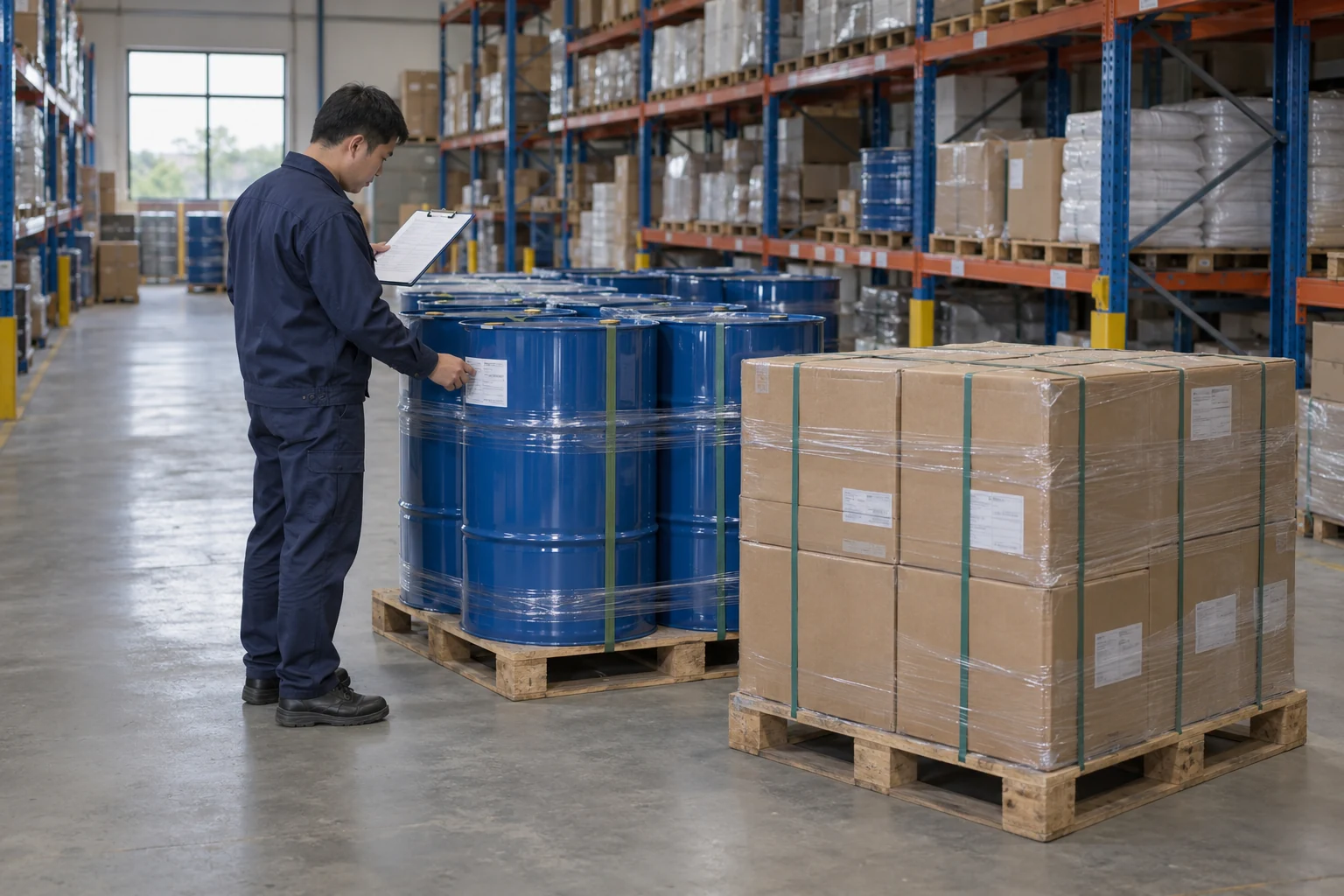
In FAOSTAT's pesticide trade data for 2024, mainland China was the largest exporter by both value and quantity: about USD 9.0 billion and 3.2 million tonnes, ahead of the United States (USD 4.8 billion) and India (USD 4.1 billion), and about a fifth of world export value [1]. The series covers pesticides in finished or packaged form under customs heading 38.08, which also includes disinfectants, plus a small set of chemicals listed under the Rotterdam Convention [2]. Many active ingredients are declared under other headings: China's own list of controlled pesticides gives azoxystrobin and glyphosate, for example, codes in Chapter 29 of the customs nomenclature rather than heading 38.08 [4]. Trade in technical materials is therefore not fully captured by these figures.
Importers and distributors buy two kinds of material from China. A technical material (TC) is the active ingredient isolated, as far as practicable, from the materials used to make it; it is traded between manufacturers and formulators and is formulated before use [7]. A formulated product, such as a suspension concentrate (SC) or an emulsifiable concentrate (EC), is the product the end user applies.
1. Start from the destination market
What can be shipped is decided in the destination market, not at the factory. A registration is valid only for the specific formulation that the authority approved, and changes to that formulation have to be notified to it [8]. Labels must meet the registration requirements of the country of sale and carry instructions and warnings in the appropriate language or languages [6]. If the product is not yet registered, an experimental use permit may be needed to import a limited quantity for local trials [8].
Registration dossiers name the manufacturer of the active ingredient and the formulator of the product [8]. Where a generic product uses technical material from a new source, the authority may first determine whether it is equivalent to one already registered, by comparing impurity and toxicological profiles and physical and chemical properties [8]. The source of the technical material is therefore part of the registration, not only part of the purchase. On the Chinese side, pesticides covered by the Rotterdam Convention, and those banned or severely restricted in China, need the Convention's procedures to be completed before export [4].
2. What to specify
A specification is the set of parameters and criteria that define the appearance and the physical and chemical properties of a technical or formulated pesticide [6]. FAO and WHO note that it can be used as part of a contract of sale, so that the buyer has some guarantee of the quality expected [7]. Agree it in writing before the first order, with a test method and an acceptance criterion for each clause. It usually covers:
- Active ingredient: the ISO common name and the exact chemical form. Where an active ingredient exists as different salts or esters, the description must identify which one [7].
- Content: a declared minimum for a TC; for a formulation, a declared content with a tolerance. FAO and WHO tolerances narrow as the content rises, for example ±6% of the declared content between 100 and 250 g/kg or g/L [7].
- Formulation type and its international code, such as SC, EC or WG [8].
- Relevant impurities: by-products of manufacture or storage that are of toxicological or environmental concern compared with the active ingredient, are phytotoxic or affect stability. Each one needs its own maximum limit in the specification [7][8].
- Physical properties for the formulation type: for an SC, for example, pourability, suspensibility and the wet sieve test; for an EC, emulsion stability [7].
- Storage stability: after accelerated storage at 54 °C for 14 days, the average content should not fall below 95% of the initial value. Under proper storage, FAO and WHO expect products to remain fit for use for at least two years in unopened original containers [7].
- Packaging and label: pack sizes and materials compatible with the product [8], and the label text approved in the destination market, in the required languages, with batch number, release date and expiry date [6].
Catalogue names carry part of this, for example azoxystrobin 98% TC or azoxystrobin 250 g/L SC, but a name is not a specification. Where an FAO or WHO specification exists, it is a useful reference. It applies, however, only to the products of manufacturers whose technical material has been evaluated, and it does not replace national registration requirements [7].
3. Samples and approval
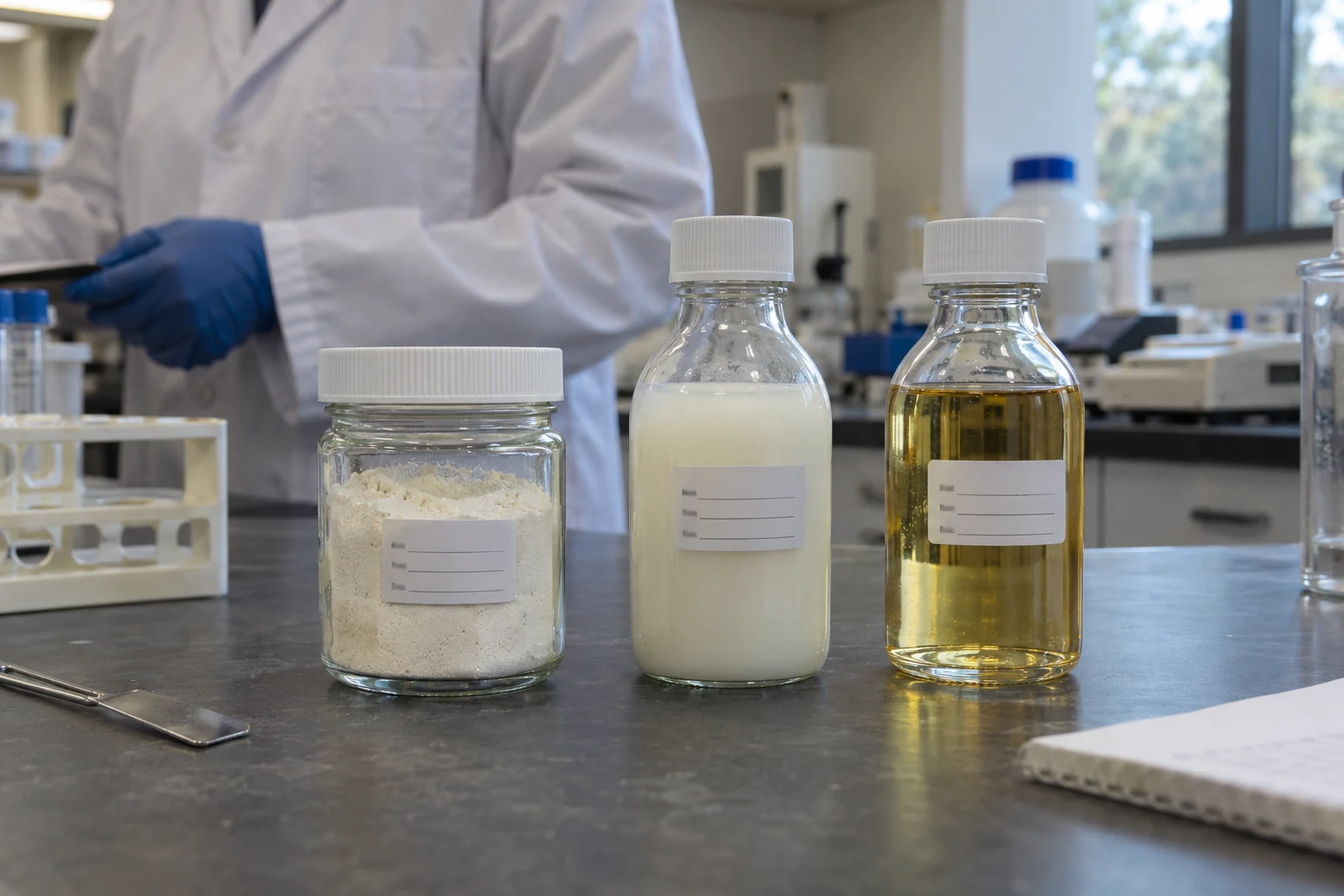
Ask for a sample drawn from a production batch, with its certificate of analysis (COA), and have it tested against the agreed specification before the first order. A sample tested for compliance should, as far as practicable, represent the entire lot [7]. Registration may require samples as well: a sample of the technical material that complies with the submitted specification, analytical standards, and sometimes a small sample of the formulated product [8].
Once the sample is approved, keep part of it as the reference, and agree in the contract that any change to the source of the technical material, the co-formulants or the production site is notified before goods are shipped. A registration covers only the authorised formulation, and a change of co-formulant may have to be reported to the authority [8]; for FAO and WHO specifications, batch data are required from every production site [7].
4. Quality checks before shipment
In China, every pesticide manufacturer must hold a production licence, which requires staff, instruments and equipment for quality management and quality testing [3]. Products must be made to their quality standard and may leave the factory only after passing inspection, with a quality certificate. The manufacturer keeps a record of each release, with the batch number and test results, for at least two years [3]. Where production is contracted out, the contract manufacturer must hold a production licence, and the commissioning company is responsible for quality [3][4].
For each shipment, compare the batch COA with the specification clause by clause: identity, content within tolerance, relevant impurities and the physical properties for the formulation type. Where the contract provides for it, an independent inspection company can draw samples, arrange testing and check packing and marks before loading. Some importing countries require pre-shipment inspection, so ask at the start which checks and documents clearance will need [11].
If the product is listed in China's Catalogue of Hazardous Chemicals, Chinese customs inspect it before export. The exporter provides a declaration of conformity from the manufacturer, a hazard classification report, packaging performance test results, and samples of the hazard label and SDS, with a Chinese translation of any foreign-language version. Customs check the composition, hazard class, labels and SDS against international rules and the importing country's technical regulations [5]. International guidance also expects pesticides made for export to meet the same quality requirements as comparable domestic products [6].
5. Documents
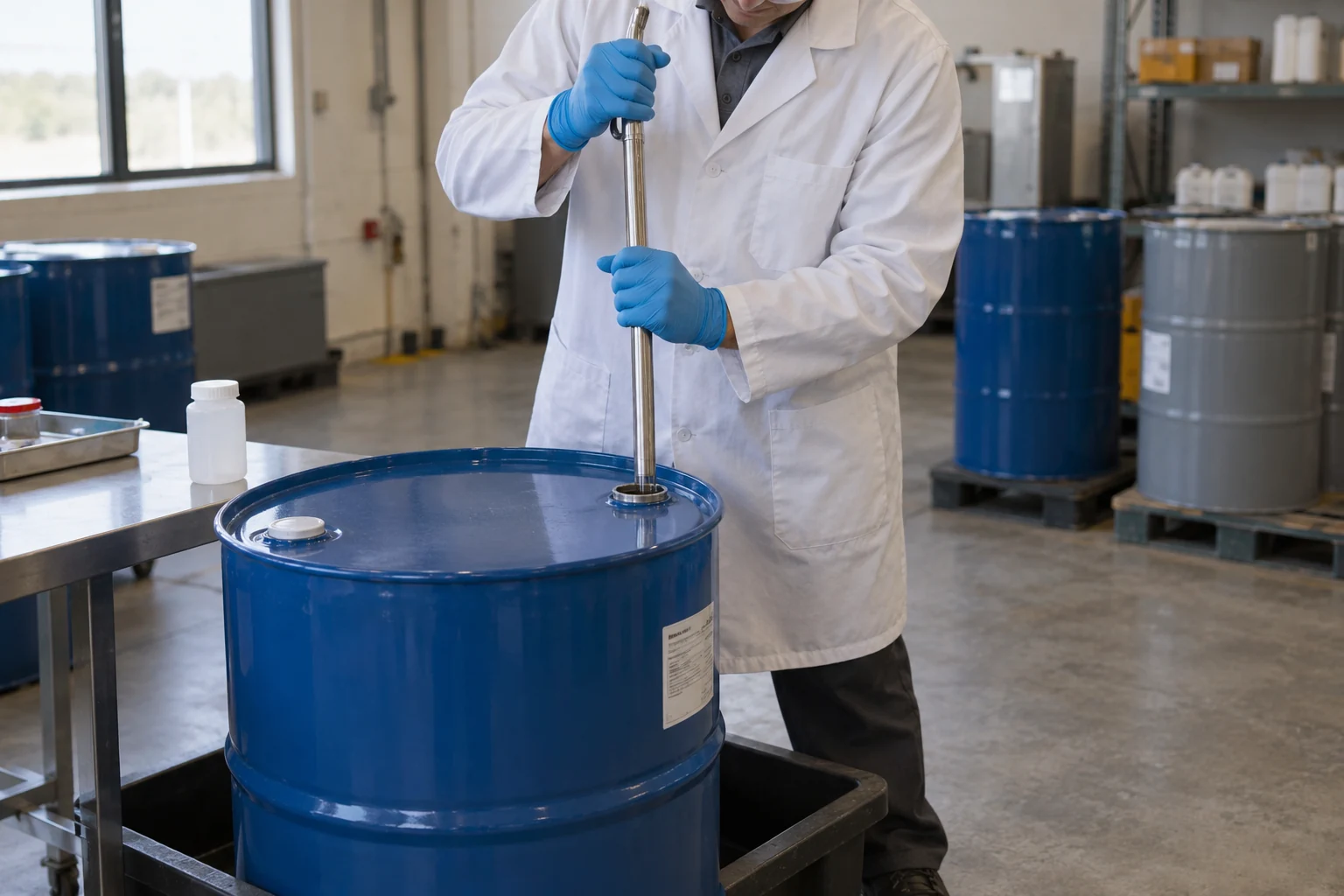
Check that every document carries the same product name, batch numbers and quantities as the goods delivered.
Documents for a pesticide shipment from China
| Document | What it is for |
|---|---|
| Agreed specification | The quality reference for the contract and for acceptance [7] |
| Certificate of analysis (COA) | The test results of the batch against the specification. In China, each batch leaving the factory must pass inspection and carry a quality certificate [3] |
| Safety data sheet (SDS) | Hazard, handling, emergency and transport information in 16 standard sections [9]; registration authorities normally ask for it too [8] |
| Label | The text approved in the country of sale, in the required languages, with batch number, release date and expiry date [6] |
| Commercial invoice | States the goods and the amount to be paid; one of the main documents customs use to determine duties [11] |
| Packing list | Itemises packages, quantities, weights and marks; customs may use it to check the cargo [11] |
| Bill of lading or air waybill | The contract of carriage; for sea freight, the buyer usually needs the original bill of lading to take possession of the goods [11] |
| Certificate of origin | Required by some importing countries [11] |
| Pesticide export notice (China) | Obtained through China's Single Window for pesticides on the national list: one per batch and customs declaration, valid for three months [4] |
6. Transport
The transport classification comes from the SDS. Section 14 gives the UN number, the UN proper shipping name, the transport hazard class and the packing group where one applies, all taken from the UN Model Regulations, and states whether the product is a marine pollutant under the IMDG Code or environmentally hazardous for transport. Where an item is not available or not relevant, the SDS should say so [9].
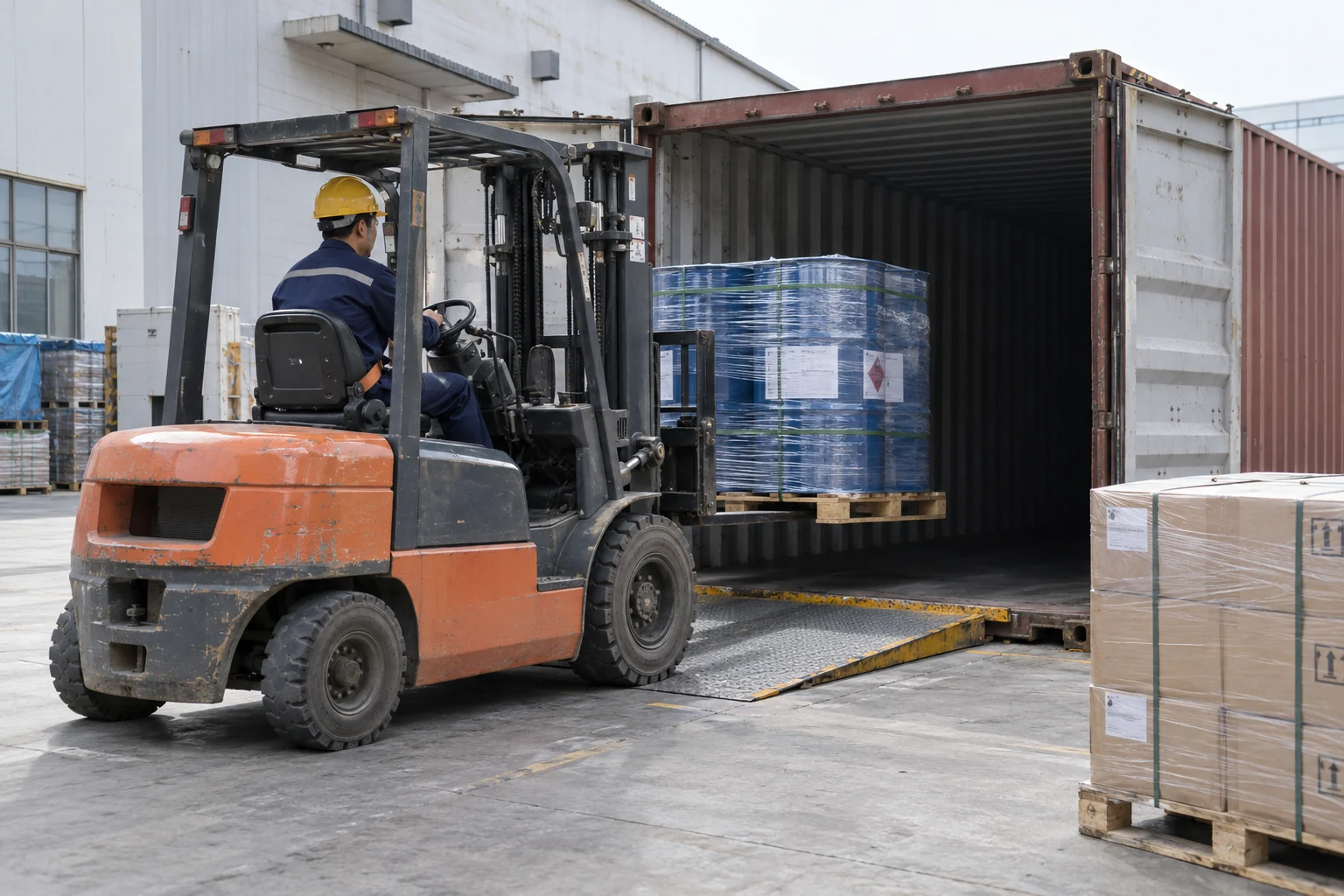
For sea freight, dangerous goods in packaged form must comply with the IMDG Code, which is mandatory under the SOLAS Convention. The Code is amended to follow the UN Recommendations on the Transport of Dangerous Goods, which set the basic requirements for all modes of transport [10]. The FAO and WHO Code of Conduct asks the pesticide industry to follow these rules for packaging, marking and transport [6]. In China, packaging for exported hazardous chemicals undergoes a performance test and a use inspection, with a result certificate for each [5].
Keep the classification identical on the SDS, package marks and labels, carrier booking and transport documents, and review section 14 whenever the formulation changes.
7. Registration support
Registration data on identity and composition are the basis for quality control: they allow the authority to check that a product on the market is the same as the one it evaluated [8]. In general terms, a manufacturer may be asked for:
- Identity of the technical material: manufacturer, ISO common name, chemical name, CAS and CIPAC numbers, method of manufacture and the specification of purity [8].
- Five-batch analysis: the content of active ingredient and of impurities at or above 1 g/kg in at least five typical production batches. FAO and WHO use these data to set the minimum content and the maximum impurity limits, and require recent five-batch studies to follow Good Laboratory Practice [7].
- Data for an equivalence determination when the technical material comes from a manufacturer other than the one already registered [8].
- The composition of the formulated product, usually in a confidential statement that lists each component with its content and certified limits [8].
- Physical, chemical and technical properties, storage stability and shelf life, and compatibility with packaging materials [8].
- Analytical methods, samples and analytical standards [8].
- A proposed label and an SDS [8].
Each authority decides which data it requires and in what form. Data submitted by another company may be protected for a fixed period, during which they cannot be relied on without the owner's consent [8].
8. How Huasheng works
Huasheng Bio is a Chinese agricultural-input company founded in Beijing in 2021. It combines its own production with partner manufacturers in China, and supplies every product to the same agreed specification, acceptance criteria and batch documents, whichever site makes it. The batch COA, SDS and shipping records are matched to the goods delivered. Customer-brand packaging is available.
Its products are sold in more than 30 countries, and it has taken part in more than 200 product registrations.
Frequently asked questions
How do I import pesticides from China?
Confirm the registration and approved label in the destination market. Agree a written specification with acceptance criteria, approve a production sample against it, and check each batch's certificate of analysis before shipment. Pesticides on China's national list also need an export notice for each batch [4][7][8].
What qualifications does a Chinese company need to export pesticides?
Under a 2021 announcement by China's agriculture ministry and customs, in force since January 2022, exported pesticides must be registered in China, the exporting company must hold a pesticide business licence and is responsible for quality, and the product must come from a manufacturer with a production licence. Export-only registrations follow separate rules, and an export notice is obtained for each batch through the Single Window [4].
What documents should come with a pesticide shipment from China?
The batch certificate of analysis, the SDS, the label approved for the destination market, a commercial invoice, a packing list, a bill of lading or air waybill, and a certificate of origin where the importing country requires one. Pesticides on China's national list also need an export notice [3][4][6][9][11].
What is five-batch analysis?
An analysis of at least five typical production batches of a technical material for active ingredient content and for impurities at or above 1 g/kg. It is used to set the minimum content and the maximum impurity limits, and registration authorities ask for batch analysis data [7][8].
What is the difference between a TC and a formulation?
A technical material (TC) is the active ingredient isolated from the materials used to make it. It is traded between manufacturers and formulators and is formulated before use. A formulation, such as an SC, EC or WG, combines the active ingredient with co-formulants and is the product the end user applies [7][8].
How is a pesticide classified for transport?
According to the UN Model Regulations. Section 14 of the SDS gives the UN number, proper shipping name, transport hazard class, packing group and whether the product is a marine pollutant. For sea freight, the IMDG Code applies [9][10].
Further reading
- Sourcing from China with Huasheng
- Quality control and batch documents
- Product catalogue: technical materials and formulations
- Registration support
- [1] FAO (2026). FAOSTAT: Pesticides Trade, data to 2024.
- [2] FAO (2022). Pesticides use, pesticides trade and pesticides indicators: global, regional and country trends, 1990-2020. FAOSTAT Analytical Brief 46.
- [3] State Council of China (2017, amended 2022). Regulations on Pesticide Administration (State Council Order No. 677).
- [4] Ministry of Agriculture and Rural Affairs and General Administration of Customs of China (2021). Announcement No. 416 on pesticide import and export management, in force from 1 January 2022, with the 2022 list of controlled pesticides (republished by the Beijing Municipal Government).
- [5] General Administration of Customs of China (2020). Announcement No. 129 of 2020 on the inspection of imported and exported hazardous chemicals and their packaging (republished by the Ministry of Industry and Information Technology).
- [6] FAO and WHO (2014). The International Code of Conduct on Pesticide Management.
- [7] FAO and WHO (2025). Manual on the development and use of FAO and WHO specifications for chemical pesticides, third edition.
- [8] FAO and WHO (2025). International Code of Conduct on Pesticide Management: guidance on data requirements for the registration of pesticides, 2nd edition.
- [9] United Nations (2023). Globally Harmonized System of Classification and Labelling of Chemicals (GHS), tenth revised edition, annex 4.
- [10] International Maritime Organization. Dangerous goods: the International Maritime Dangerous Goods (IMDG) Code.
- [11] International Trade Administration, US Department of Commerce. Common export documents.
Products in this article