Spider mites: identification, monitoring and acaricide resistance management
How to recognise the two-spotted spider mite and its damage in vegetables, fruit, soybean, maize and greenhouses, when to act, and how to rotate acaricide modes of action alongside predatory mites so that control keeps working.
Technical review: Wang Liqun, Researcher; Chen Zhiyuan, Senior Agronomist
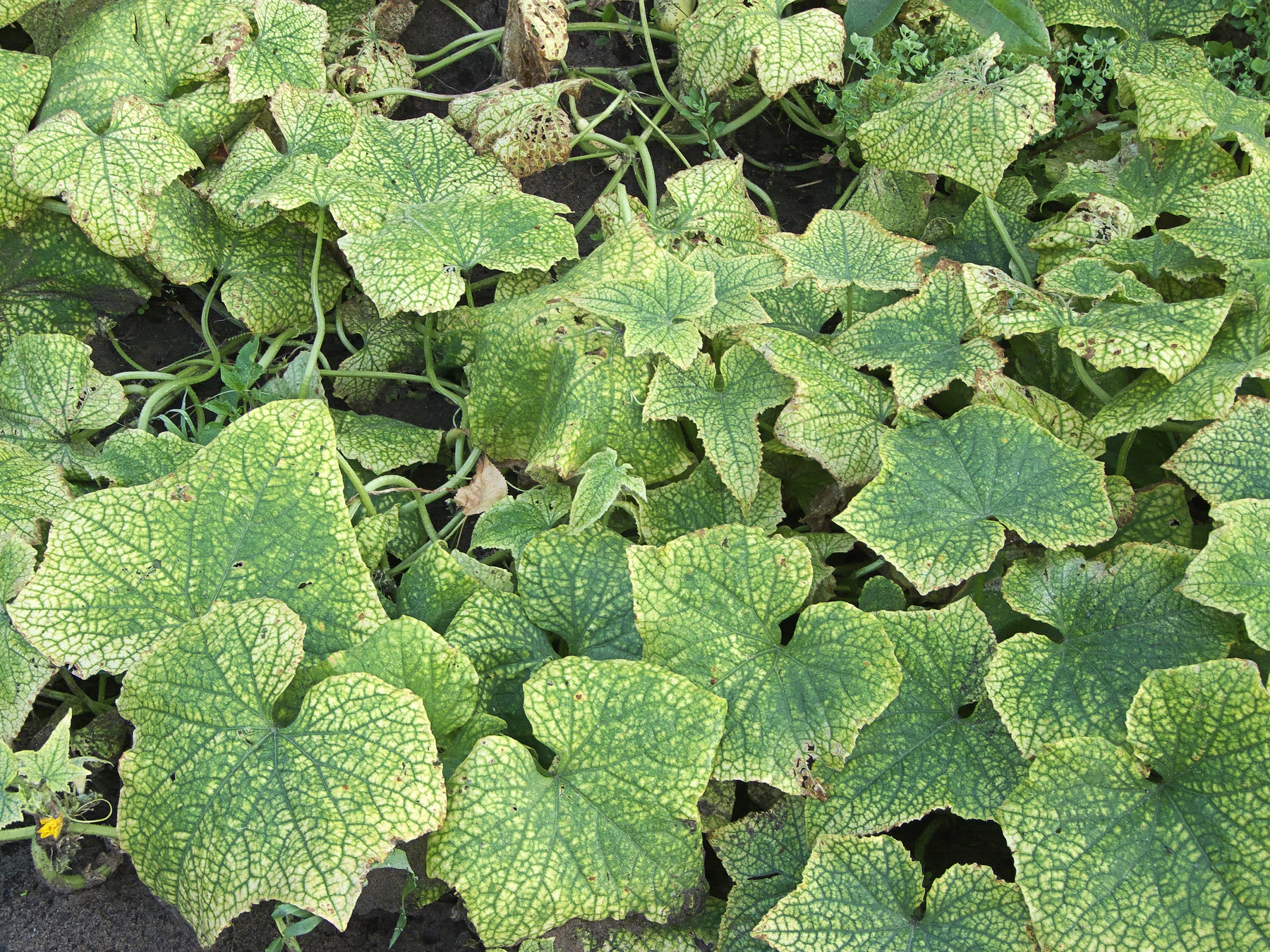
The two-spotted spider mite, Tetranychus urticae, is one of the most economically important pests of outdoor and protected crops worldwide [1]. It feeds on more than 1,200 plant species [2], from soybean and maize to vegetables, fruit trees, vines, berries and ornamentals [3][4]. Related species such as the Pacific and strawberry spider mites look alike in the field and are managed the same way [3]. EPPO treats the carmine spider mite, T. cinnabarinus, as a synonym of T. urticae [5].
1. How to recognise it
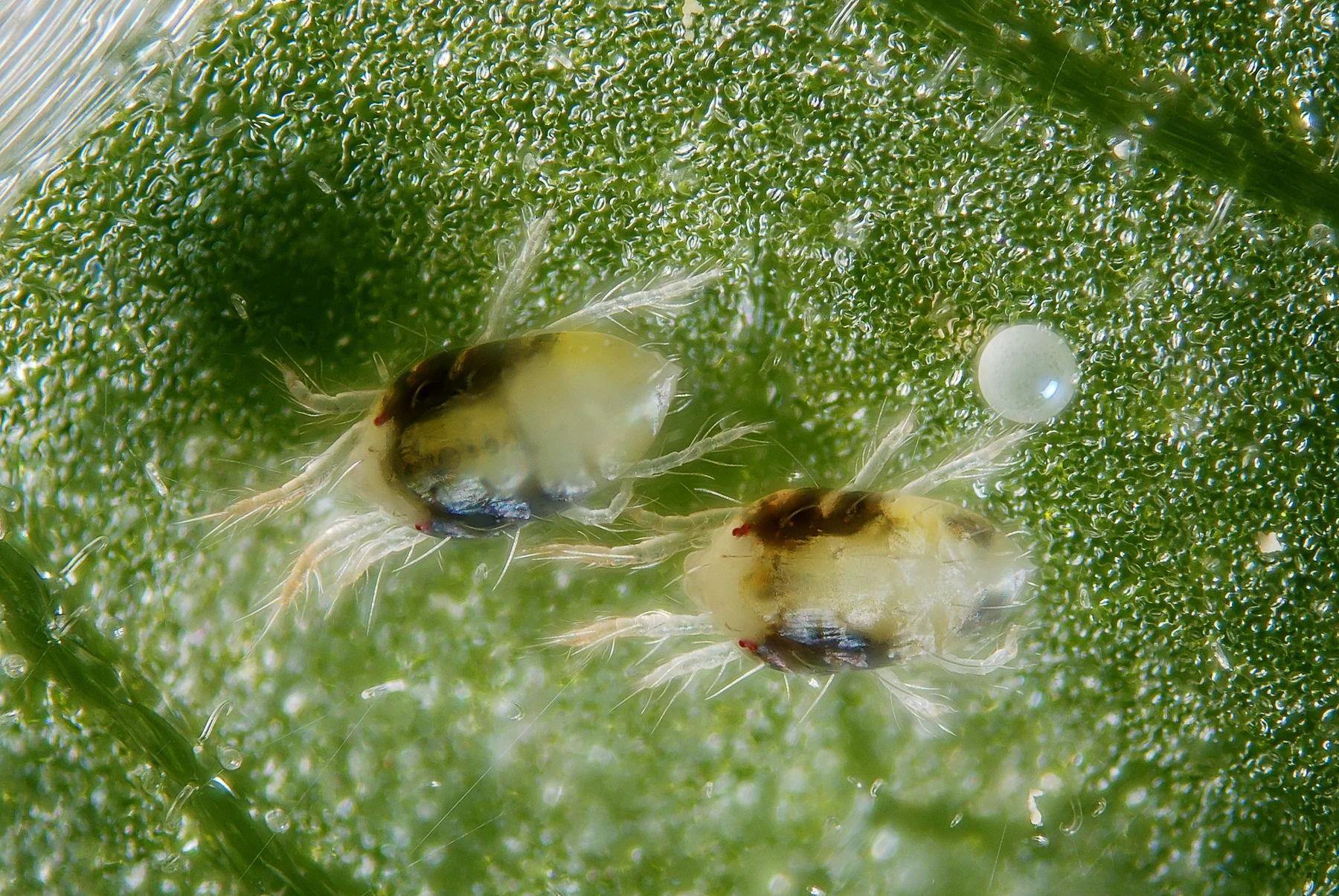
Adults are about 0.5 mm long, with eight legs and an oval, yellowish to greenish body. Females usually show a large dark blotch on each side, formed by food particles in the gut [6][7][4]. Eggs are round and translucent; newly hatched larvae have six legs and later stages eight [3]. Colonies sit mostly on leaf undersides, and their silk webbing separates spider mites from other mites and from aphids and thrips. Tap leaves over white paper and look for moving dots with a 10x lens [3][7].
Predatory mites are similar in size but have longer legs, move faster and are teardrop-shaped; Phytoseiulus persimilis is bright red [3][7]. In maize, the Banks grass mite also occurs. Its pigment runs along the sides to the rear of the body, while the two spots of T. urticae stay in the front half, and its colonies start earlier and stay on the lower leaves [4].
2. Damage symptoms
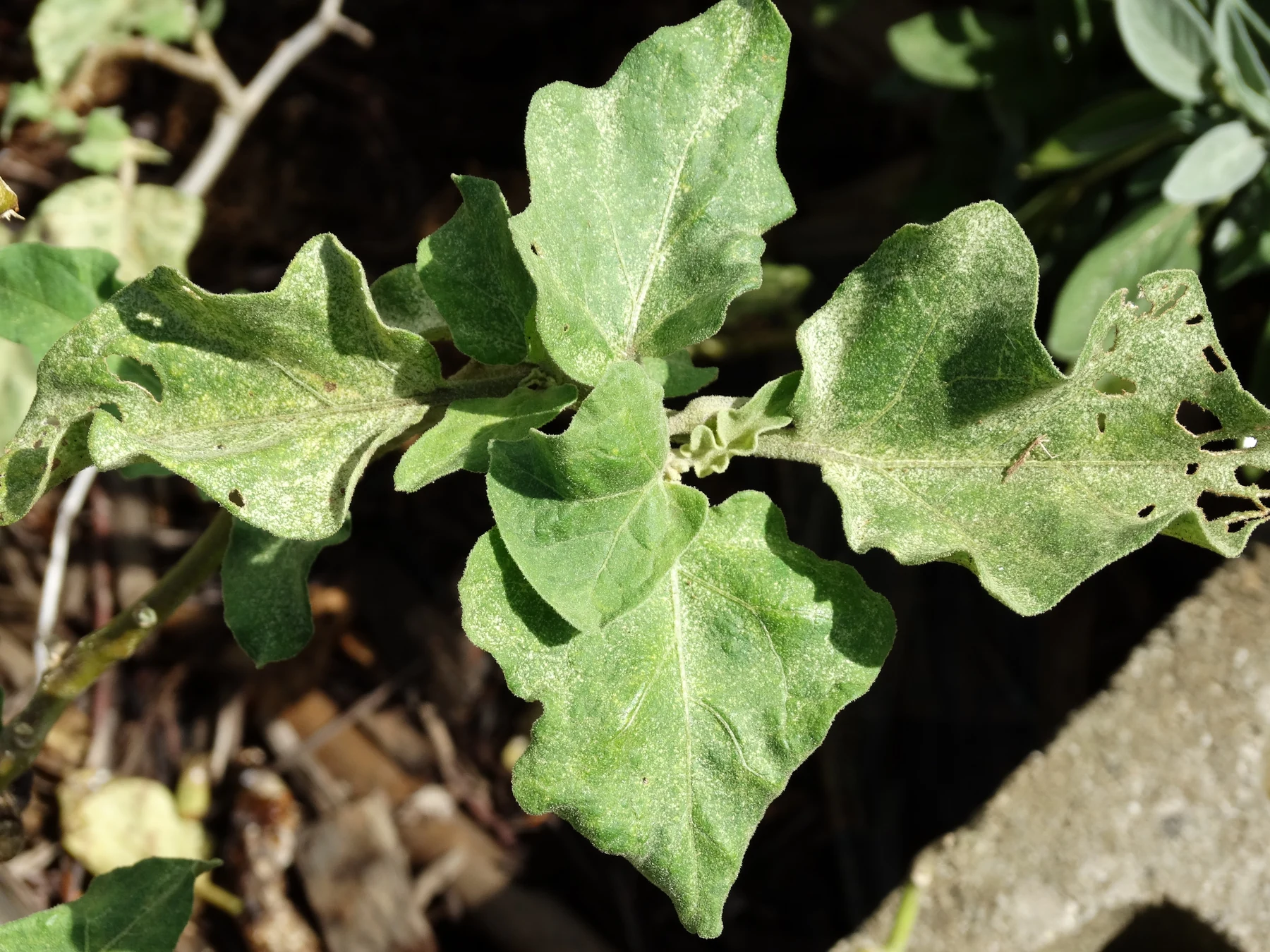
Spider mites pierce leaf cells and suck out the contents. The first sign is whitish or yellow speckling around the midrib and larger veins; as the spots merge, leaves turn silvery, then yellow or bronze, and may drop, and heavy infestations cover plants with webbing [1][3][6].
In soybean, infestations start low in the canopy and on field borders and spread downwind [6]; injury in the late vegetative and early reproductive stages can cut yield by 40% to 60% [4]. In maize, losses are greatest when leaves at or above the ear are damaged, through poor seed fill and early dry-down [4]. In melons and squash, leaf loss reduces yield and can lead to sunburn, and in beans and peas the mites attack the pods [3]. In greenhouses, heavy infestations can blast buds and flowers [7]. Confirm mites, eggs or webbing before treating, as other causes look similar [4].
3. Life cycle
Two-spotted spider mite life stages
| Stage | Duration or key feature | Where to look |
|---|---|---|
| Egg | Hatches in as few as 3 days [7] | Leaf undersides, often on webbing [6] |
| Larva | Six legs; colourless at first [3][7] | In the colony [3] |
| Two nymphal stages | Eight legs; side spots more distinct [7] | In the colony [3] |
| Adult female | Lives 3 to 4 weeks and lays up to 100 eggs [7] | Mature leaves, along the midveins [7] |
| Egg to adult | Under a week in hot weather to about 20 days at 18 °C [3][6][7] | Check more often in hot weather [3] |
Unfertilised eggs give males, so females reproduce without mating [7]. The short cycle, abundant progeny and this mode of reproduction let resistance develop very quickly [1]. In Brazil’s São Francisco Valley, at a mean of about 27 °C, up to 37 generations a year are possible [2]. In cold areas, mated females turn orange-red and overwinter in bark, litter or cool greenhouses, when they are less susceptible to pesticides [3][7].
4. Monitoring and when to act
Populations build fastest in hot, dry conditions: above about 27 °C and at 20% to 40% relative humidity in greenhouses, and above about 32 °C in dry weather in soybean [7][6]. Water-stressed plants, dusty margins and crops on sandy soils are most at risk [3][4].
In greenhouses, inspect weekly, starting with plants near heating pipes, and check the undersides of mature leaves along the midveins [7]. In soybean, start at field edges next to alfalfa, grassy ditches or other perennial vegetation; if mites are present, examine two plants at each of twenty locations and repeat every four to five days [6]. In maize, identify the species from at least 20 adult females before choosing a product [4].
Thresholds are local. In Minnesota soybean, the spray threshold is heavy stippling on the lower leaves spreading into the middle canopy, with lower-leaf yellowing and mites in the middle canopy [6]. In integrated grape production in Brazil’s São Francisco Valley, it is 30% or more of plants infested [2]. For citrus, IRAC Spain advises against calendar sprays and recommends treating by risk level [8].
5. Prevention
Avoid causing outbreaks. Broad-spectrum insecticides, including some organophosphates, pyrethroids and carbaryl, kill spider mite predators and some also stimulate mite reproduction; in hot weather, outbreaks can follow within days [3], and many problems in maize and soybean trace back to such a spray [4].
Irrigate adequately and keep dust down [3]. In greenhouses, inspect incoming plants, remove weeds in and around the house and avoid excess nitrogen [7]. In vineyards, weeds and legume cover crops between the rows host the mite [2]. Predatory mites, Stethorus lady beetles, six-spotted thrips, predatory midges, minute pirate bugs, lacewing larvae and a fungal disease all reduce spider mite numbers [3][4].
6. Resistance is documented
IRAC, the Insecticide Resistance Action Committee, describes T. urticae as one of the most resistant species by the number of pesticides to which populations have become resistant, as does a peer-reviewed review [1][9]. IRAC lists known resistance in Groups 1A, 6, 10A, 12B, 20B, 21A and UN, and its table of mechanisms adds 1B, 3A and, in Australia and the United States, 19 [1].
In October 2026 the Arthropod Pesticide Resistance Database listed 572 resistance cases for T. urticae, far more than for any other Tetranychus species [10]; Embrapa, citing the database in 2015, counted 468 cases involving 94 active ingredients [2]. In China, high resistance to cyetpyrafen, a complex II inhibitor launched in 2017, spread across distant regions within three years [11]. Metabolic resistance can also cross IRAC groups [12].
7. Rotate modes of action
IRAC’s rule is that successive pest generations should not be treated with the same mode of action group. Applications are planned in windows: the residual period of one or more applications of one group, taken as one generation or about 30 days, with no more than two applications of that group per window [12]. Label limits on the number of applications also apply [8].
Rotate between main groups, not sub-groups, so do not alternate 10A with 10B or 20B with 20D; IRAC also says dicofol, bromopropylate and abamectin should not follow each other, and some bifenazate resistance mutations confer resistance to acequinocyl [12]. Match the product to the stages present: most acaricides do not kill eggs, hexythiazox does not act on adults, METI acaricides do not act on eggs, and etoxazole must be applied before populations are extensive [7][8]. Cover the leaf undersides, where colonies sit [2][8]. After a control failure, switch to a group with no known local cross-resistance [12].
Mode of action groups used against spider mites
| IRAC group | Class | Examples | What the sources say |
|---|---|---|---|
| 6 | Avermectins, milbemycins | Abamectin, milbemectin | Resistance documented worldwide [1]; high in Chinese field populations [13] |
| 10A | Clofentezine, hexythiazox | Hexythiazox, clofentezine | Grouped because they are cross-resistant; resistance documented [12][1] |
| 10B | Etoxazole | Etoxazole | Same main group as 10A [12][14]; apply before populations are extensive [7] |
| 12A | Diafenthiuron | Diafenthiuron | On IRAC’s mite poster [14]; high resistance in Chinese rose glasshouses [15] |
| 13 | Pyrroles | Chlorfenapyr | On IRAC’s mite poster [14]; low or moderate resistance in China [13]; may harm P. persimilis [7] |
| 20B, 20D | Acequinocyl; bifenazate | Bifenazate, acequinocyl | Linked by some resistance mutations [12]; bifenazate may harm P. persimilis [7] |
| 21A | METI acaricides | Pyridaben, fenpyroximate | Resistance documented [1]; no activity on eggs [8] |
| 23 | Tetronic and tetramic acid derivatives | Spirodiclofen, spirotetramat | IRAC: field resistance not validated [1]; but high spirodiclofen resistance is reported in China [15]; spirotetramat is mainly for sucking insects [16] |
| 25 | Complex II inhibitors | Cyflumetofen, cyenopyrafen | Resistance to cyetpyrafen, with the same target, spread in China within three years [11] |
| 1A, 1B, 3A | Carbamates, organophosphates, pyrethroids | Bifenthrin (3A) | Resistance documented [1]; broad-spectrum use triggers outbreaks [3][4] |
| UN, UNE, UNF, UNM | Sulfur, plant oils and soaps, fungi, physical agents | Sulfur, paraffin oil, Beauveria bassiana | Registered in Spain as citrus acaricides [8]; oils and soaps act only on contact [3] |
The table describes mode of action groups and what the cited sources report. It is not a list of registered uses. Which products may be used, on which crops and at what rate and interval is set by each country’s registration and the product label.
Mixtures such as etoxazole with bifenazate or abamectin apply two groups at once; IRAC accepts them only as a short-term solution, with each component from a different group used at its full rate, so count both groups [12].
8. Biological options in the same programme
EPPO’s list of biological control agents for T. urticae includes the predatory mites Phytoseiulus persimilis, Neoseiulus californicus (non-diapausing strain), Amblyseius andersoni, Galendromus occidentalis and Typhlodromus pyri, and the predatory midge Feltiella acarisuga [17].
P. persimilis feeds only on spider mites and is regarded as the most effective predator, but it needs about 20 °C and 75% relative humidity, falls behind at 30 °C or more, and its eggs fail below 60% humidity. N. californicus and G. occidentalis tolerate warmer, drier conditions and persist when prey is scarce. On greenhouse tomatoes, sticky leaf hairs hinder P. persimilis and Feltiella acarisuga works better. Release early, while mite numbers are low [7].
Check compatibility: bifenazate, spiromesifen and chlorfenapyr may harm P. persimilis, and abamectin residues can stay toxic to predators for up to 14 days [7]. Entomopathogenic fungi form IRAC group UNF [12]. In China, an oil dispersion of Beauveria bassiana ZJU435 is documented for spider mites in citrus and grape; this strain is the basis of Beauvia Z435™, which is in development.
9. Regional notes
China
Seven Chinese field populations of T. urticae showed high or extremely high resistance to abamectin and low or moderate resistance to bifenazate, cyenopyrafen and chlorfenapyr [13]. Ten populations from rose glasshouses were each resistant to at least eight acaricides [15], and resistance to cyetpyrafen spread within three years of its launch [11]. In citrus, the citrus red mite Panonychus citri has developed high resistance to spirodiclofen, one of the most widely used acaricides in China [18]. Registered products are listed by the Institute for the Control of Agrochemicals (ICAMA).
Latin America
In Brazil, T. urticae is one of the three main pest mites. In São Francisco Valley vineyards, frequent abamectin use led to control failures, with 45% of surveyed populations below 80% mortality at the manufacturer’s recommended concentration. Embrapa notes that this resistance falls when abamectin use is reduced, and advises limiting it and managing host weeds [2]. In Argentina, arañuela roja is the main strawberry pest around La Plata, where a decision table based on monitoring the pest and its predator N. californicus cut acaricide applications by 87% to 100% on four farms [19].
Other regions
In Spain, IRAC España reports a growing lack of acaricide efficacy in citrus and stresses monitoring, protection of phytoseiid mites, rotation and sprayer calibration for full canopy coverage, critical against T. urticae in clementines [8].
10. A practical sequence
- Scout leaf undersides with a hand lens: weekly in greenhouses, and every four to five days from field edges in hot, dry spells.
- Confirm live mites, eggs or webbing before treating; in maize, identify the species.
- Irrigate adequately, control dust and weed hosts, and avoid broad-spectrum insecticides where alternatives exist.
- Release or conserve predatory mites early, choosing species that suit the temperature and humidity.
- At the local threshold, use a locally registered acaricide from a group without known local resistance, suited to the stages present, with full coverage of leaf undersides.
- Rotate main groups between generations, and count both groups in a mixture.
- Check results; after a failure, switch group. Follow the local label for crop, rate and interval.
Frequently asked questions
What is the best acaricide for spider mites?
There is no single best product. Resistance is documented in many groups, including 6, 10A, 20B and 21A, so choose a locally registered product from a group without known local resistance, suited to the stages present, and rotate groups [1][12].
How do I identify two-spotted spider mites?
Check leaf undersides with a 10x lens for eight-legged mites about 0.5 mm long with a dark blotch on each side, round translucent eggs and fine webbing [3][6].
When should spider mites be treated in soybeans?
When scouting reaches the local threshold. In Minnesota, that is heavy stippling on lower leaves spreading into the middle canopy, with lower-leaf yellowing; scouting is repeated every four to five days [6].
Why do spider mites come back after spraying?
Most acaricides do not kill eggs, broad-spectrum insecticides kill the mites’ predators, and resistant mites survive repeated use of one group [7][3][1].
Can predatory mites control spider mites in a greenhouse?
Yes, if releases start early. Phytoseiulus persimilis suits moderate temperature and high humidity, Neoseiulus californicus suits warmer, drier conditions, and the predatory midge Feltiella acarisuga works better on tomatoes [7][17].
Does abamectin still work against spider mites?
Group 6 resistance is documented worldwide, including in Chinese field populations and Brazilian vineyards. Where it is registered and still effective locally, use it only within a rotation [1][13][2].
Further reading
- Enquire about abamectin, bifenazate, etoxazole and chlorfenapyr
- Abamectin: formulations and supply
- Bifenazate: formulations and supply
- Etoxazole: formulations and supply
- Chlorfenapyr: formulations and supply
- Diafenthiuron: formulations and supply
- Beauvia Z435™ (Beauveria bassiana ZJU435)
- [1] IRAC. Twospotted spider mite, Tetranychus urticae: pest profile and resistance.
- [2] Oliveira JEM, Monteiro VB, Gondim Junior MGC, Siqueira HAA (2016). Manejo da resistência do ácaro-rajado (Tetranychus urticae Koch) em videira no Submédio do Vale do São Francisco. Embrapa Semiárido, Comunicado Técnico 169.
- [3] Godfrey LD (2011). Pest Notes: Spider Mites. UC ANR Publication 7405. University of California Statewide IPM Program.
- [4] Wright R (2013). Managing spider mites in corn and soybean. Nebraska Extension CropWatch.
- [5] EPPO Global Database. Tetranychus urticae (TETRUR).
- [6] Koch R, Wold-Burkness S (reviewed 2026). Twospotted spider mites on soybean. University of Minnesota Extension.
- [7] Smith T (2013, updated 2026). Twospotted spider mites. UMass Extension Greenhouse Crops and Floriculture Program.
- [8] IRAC España (2026). Uso responsable de acaricidas en cultivos de cítricos.
- [9] Van Leeuwen T, Vontas J, Tsagkarakou A, Dermauw W, Tirry L (2010). Acaricide resistance mechanisms in the two-spotted spider mite Tetranychus urticae and other important Acari: a review. Insect Biochemistry and Molecular Biology 40: 563-572.
- [10] Mota-Sanchez D, Wise JC (2026). The Arthropod Pesticide Resistance Database: genus Tetranychus. Michigan State University.
- [11] Cao LJ, Chen JC, Thia JA et al. (2025). Recurrent mutations drive the rapid evolution of pesticide resistance in the two-spotted spider mite Tetranychus urticae. eLife.
- [12] IRAC (2026). Mode of Action Classification Scheme, version 11.5.
- [13] Xu D, He Y, Zhang Y, Xie W, Wu Q, Wang S (2018). Status of pesticide resistance and associated mutations in the two-spotted spider mite, Tetranychus urticae, in China. Pesticide Biochemistry and Physiology 150: 89-96.
- [14] IRAC. Mites: Mode of Action classification by target site (poster, based on MoA Classification version 11.2).
- [15] Zong X, Song J, Huang X, Zhu Y, Yu H, Ning G, Zhao J (2025). Monitoring acaricide resistance and the frequency of associated target-site mutations in Tetranychus urticae populations from rose glasshouses in China. Pest Management Science 81: 1579-1591.
- [16] University of Hertfordshire. Pesticide Properties DataBase (PPDB): spirotetramat.
- [17] EPPO Global Database. Tetranychus urticae (TETRUR): biological control agents listed in EPPO Standard PM 6/3.
- [18] Cheng LY, Hou DY, Sun QZ et al. (2022). Biochemical and molecular analysis of field resistance to spirodiclofen in Panonychus citri (McGregor). Insects 13: 1011.
- [19] Greco NM, Sánchez NE, Liljesthröm GG et al. (2007). Transferencia de una estrategia de manejo de la arañuela roja a productores de frutilla del cinturón hortícola del Gran La Plata. Experiencias en Extensión, Universidad Nacional de La Plata.
Products in this article