Technical equivalence of pesticide technical materials explained
What technical equivalence means, why regulators compare a new source of an active ingredient with a reference profile, and how the FAO/WHO two-tier assessment and the EU guidance reach a decision.
Technical review: Wang Liqun, Researcher; Chen Zhiyuan, Senior Agronomist
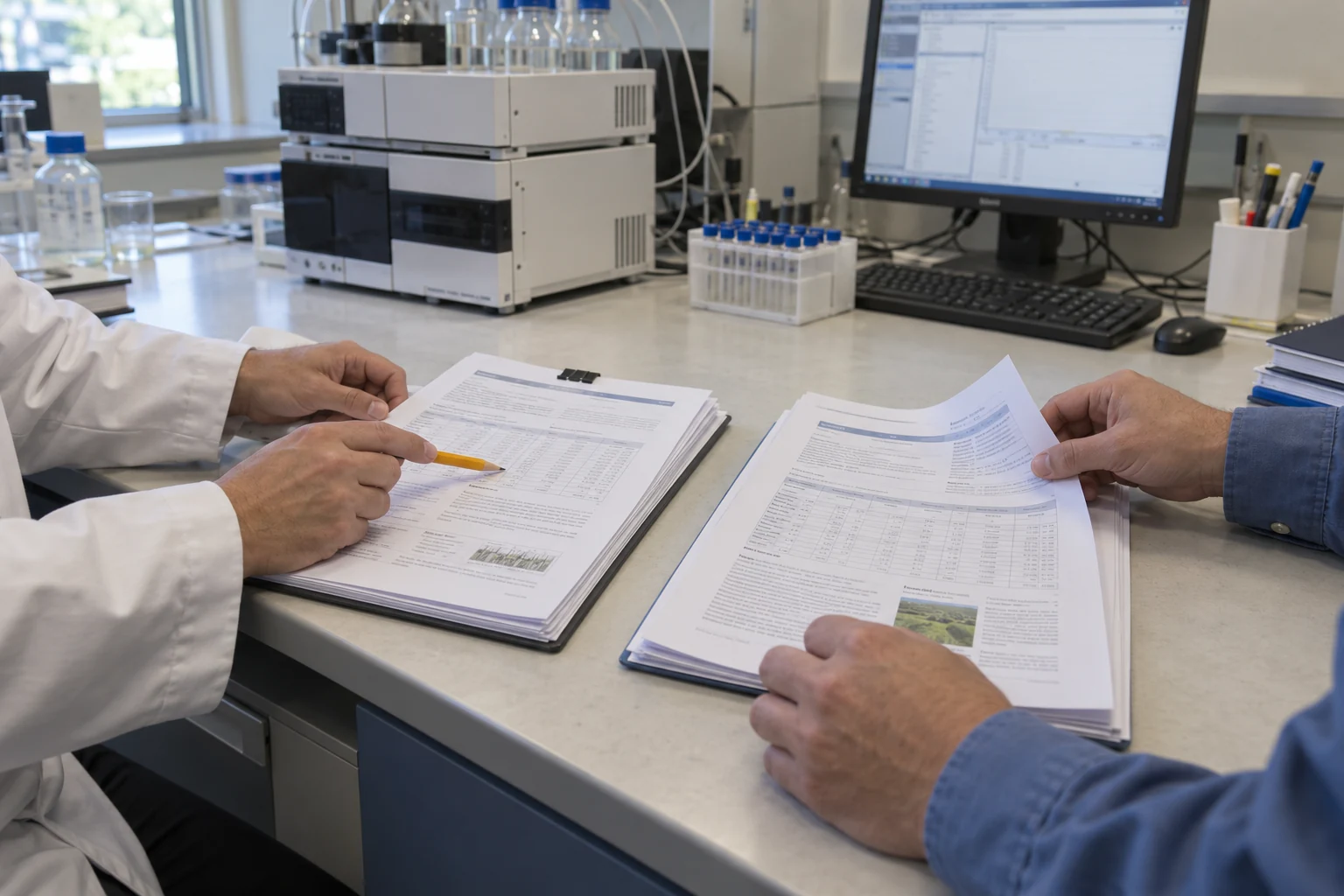
Active ingredients are traded as technical material (TC) or technical concentrate (TK): material from a manufacturing process that comprises the active ingredient together with its associated impurities [1]. The FAO/WHO manual quotes the International Code of Conduct on Pesticide Management, which defines equivalence as the determination of the similarity of the impurity and toxicological profile, and of the physical and chemical properties, of supposedly similar technical material from different manufacturers, in order to assess whether they present similar levels of risk [1]. This guide follows the manual’s third edition (2025) [1] and the EU guidance document SANCO/10597/2003 [2].
1. Why equivalence matters
A chemical impurity is a by-product of manufacturing the active ingredient, or a substance derived from it during formulation or storage [1]. Which by-products form depends on how the material is made: the EU guidance notes that significant impurities may result directly from the synthesis process and conditions used, or from cross-contamination within the production cycle [2]. The FAO/WHO manual therefore asks for impurity profiles to be defined separately where the manufacturing route differs between sites or the manufacturers differ [1].
The hazard data behind an approval were produced on a particular reference material. The UK regulator describes the purpose of an equivalence assessment as ensuring that a new source is equivalent to, or of no greater hazard than, that reference [3]. FAO/WHO specifications follow the same logic: they do not apply to other manufacturers’ products, or to products made by different processes, unless these have been evaluated as equivalent [1].
A new source is not only a new company. The EU guidance also counts a switch from pilot to industrial scale and a change in the method of manufacture or manufacturing location [2]. The UK regulator adds a change in the technical specification, for example when new, relevant or significant impurities are noted [3].
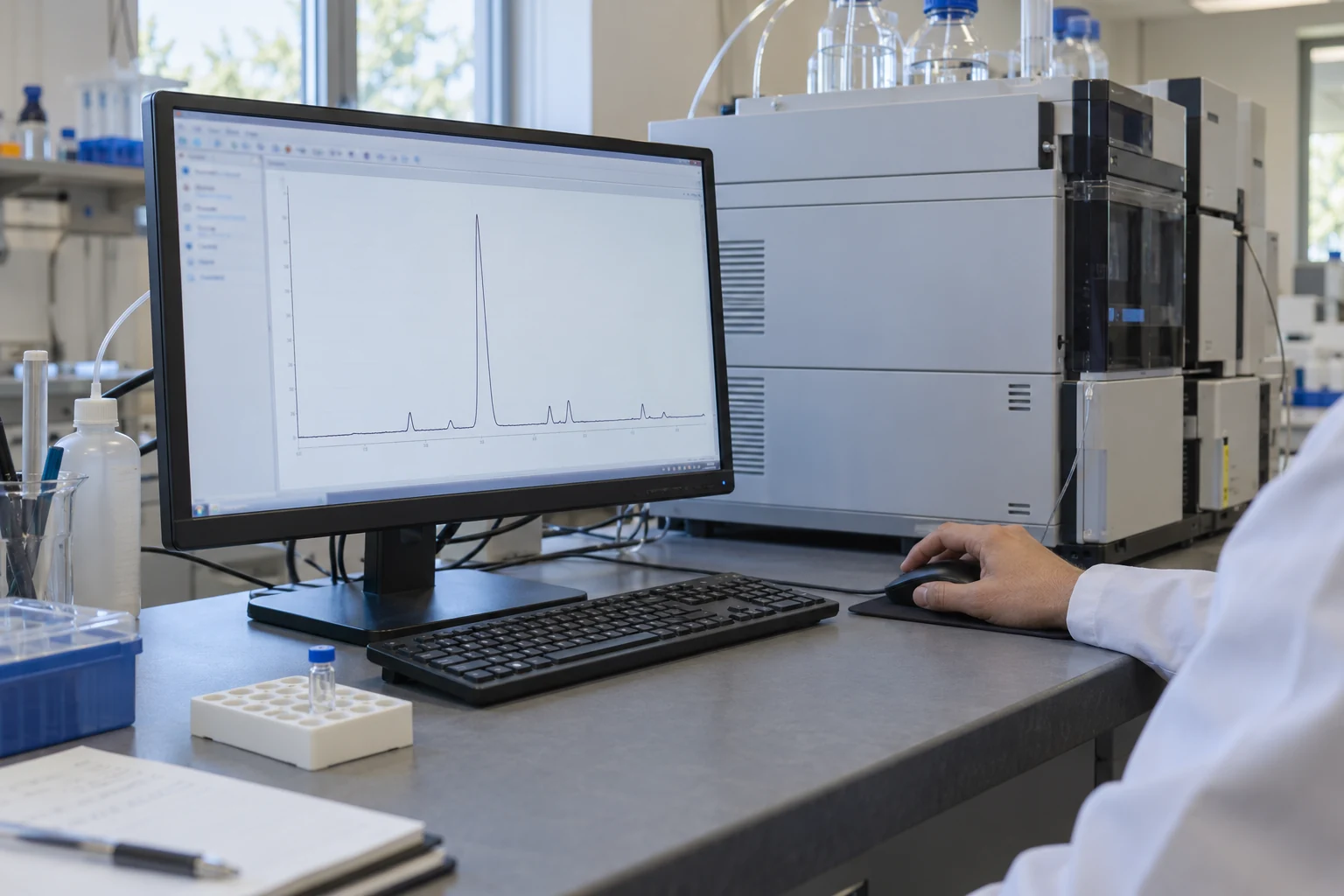
2. The reference profile
Every equivalence decision needs a benchmark. In the FAO/WHO system it is the reference profile: the purity and impurity, toxicological and ecotoxicological profiles on which the original specification for a technical material is based, generally those of the material with the most complete toxicological and ecotoxicological data [1]. It works alongside the reference specification, the current published FAO or WHO specification, which is the first criterion in determining the equivalence of a later manufacturer’s material [1].
A reference profile is not amended by data from materials later judged equivalent, although a JMPS review may replace it with a new one [1]. Where one manufacturer produces at several sites, five-batch data are required from every site and one site’s profile is identified as the reference profile [1]. The EU guidance speaks of a reference source, the source on which the risk assessment was based and for which the Commission took a regulatory decision; where several exist, a new source is equivalent if it meets the criteria against one of them [2].
3. How the FAO/WHO assessment works
The FAO/WHO Joint Meeting on Pesticide Specifications (JMPS) evaluates hazards to decide which impurities are relevant, to set their limits and to determine equivalence; it does not evaluate the hazards of the active ingredient itself [1].
Equivalence is determined in a two-tiered approach [1]. Tier 1 checks that the material meets the existing FAO/WHO specification and that its manufacturing process, impurity profile and bacterial mutagenicity (in vitro) results meet the Tier 1 criteria in the table below; the same test applies when a producer changes the process of a material already covered by a specification [1]. Where Tier 1 cannot decide on equivalence or non-equivalence, Tier 2 compares toxicological and, where required, ecotoxicological data with the reference profile [1].
FAO/WHO criteria for the equivalence of technical materials (third edition, Section 3.2 F)
| Tier | What is compared | What the manual states |
|---|---|---|
| 1 | Specification | The material meets the requirements of the existing FAO/WHO specification [1] |
| 1 | Non-relevant impurities | Maximum level up by no more than 50% of the reference maximum or 3 g/kg absolute, whichever is the greater increase; beyond that, a reasoned case [1] |
| 1 | Relevant impurities | No new relevant impurities, and no increase in their maximum levels [1] |
| 1 | New impurities at 1 g/kg or more | A reasoned case, with supporting data if available, that they are non-relevant; the JMPS decides [1] |
| 1 | Bacterial mutagenicity (in vitro) | Compared endpoint to endpoint; the outcome is not worse than for the reference material [1] |
| 2 | Acute toxicity, irritation, sensitisation | Within a factor of 2 of the reference profile (or of the dose increments, if larger); no more serious classification [1] |
| 2 | Repeated-dose studies in rodents (28 or 90 days) | No qualitatively new adverse effect; NOAEL or benchmark dose for any endpoint not lower than 10⁻⁰·⁵ (about 0.32) times the reference value [1] |
| 2 | Ecotoxicology, where required | Within a factor of 5 of the reference profile, using the same species [1] |
An assessment of the proposed material by a competent registration authority is taken into account in Tier 1 [1]. Where a material does not strictly pass these tests but the JMPS considers it of acceptable or improved quality, a modification of the existing specification will be considered [1]. Formulations follow their technical material: classical formulations are generally considered equivalent if the technical material has been judged equivalent and they comply with the same specification, while slow-release formulations such as capsule suspensions may need additional evidence [1].
Two tiers for comparing a new source
Compare the proposed technical material with the reference profile.
- Reference profile
- Technical material from a new source
Tier 1
- Existing FAO/WHO specification
- Manufacturing process and impurity profile
- Bacterial mutagenicity (in vitro)
- Equivalent
- Not equivalent
Cannot decide on equivalence or non-equivalence
Only this unresolved case proceeds to Tier 2.
Tier 2
- Toxicological data compared with the reference profile
- Ecotoxicological data, where required
- Equivalent
- Not equivalent
Schematic of the FAO/WHO procedure [1]; the criteria remain in the article’s table. Equivalence does not establish equal efficacy or suitability for the same uses.
4. Relevant impurities decide the outcome
A relevant impurity is a by-product of manufacture or storage which, compared with the active ingredient, is toxicologically significant to health or the environment, is phytotoxic to treated plants, causes taint in food crops, affects the stability of the pesticide, or causes any other adverse effect [1].
Relevance is relative: because it is judged against the hazards of the active ingredient, the same compound can be non-relevant in one pesticide and relevant in another [1]. By default an impurity becomes relevant when its concentration in the technical material reaches 10% of its maximum acceptable limit; for mutagens and carcinogens in GHS Category 1A or 1B that threshold is 0.1 g/kg [1]. Relevant impurities occur in certain technical materials only; the manual cites four in malathion technical material and formulated products [1].
This is where equivalence meets the idea of an FAO specification, which is meant to be an international point of reference against which product quality can be judged, for regulatory purposes or in commercial dealings [1]. A specification publishes the minimum active ingredient content and the identity and maximum levels of relevant impurities; information on non-relevant impurities is kept confidential [1]. Only relevant impurities may appear in a specification [1], and their average measured level must not exceed the declared maximum [1]. A new relevant impurity, or a higher limit for an existing one, takes the case to Tier 2 [1].
5. Data usually involved
Tier 1 data cover the identity and properties of the active ingredient, the route of manufacture, the minimum content, impurity limits, information on relevant impurities, intentionally added compounds and bacterial mutagenicity data [1]. Key elements:
- Route of manufacture: solvents, intermediates and catalysts, and a process description (without engineering details) that lets the evaluator check that the claimed purity is plausible [1].
- Five-batch analysis: maximum limits for impurities at or above 1 g/kg, supported by at least five typical batches; recent five-batch studies must be Good Laboratory Practice (GLP) studies [1].
- Relevant impurities below 1 g/kg: limits also supported by at least five typical batches [1].
- Unidentified fraction: typically not more than 20 g/kg of the technical material [1].
- Minimum content: the manual recommends the five-batch mean minus three standard deviations, although other soundly justified proposals may be accepted [1].
- Original study reports: required for batch analysis and mutagenicity data [1].
Tier 2 data cover skin and eye irritation and skin sensitisation and, when the JMPS considers it necessary, 28-day or 90-day repeated-dose studies in rodents [1]. Irritation studies are required only where the proposed minimum purity is below 990 g/kg and the reference material is not a Category 1 eye or skin irritant [1]. Acute oral, inhalation and dermal studies are no longer mandatory for a second manufacturer, which the manual links to animal welfare [1].
6. Other frameworks
European Union
The EU guidance document SANCO/10597/2003 sets out a harmonised procedure for assessing new sources of technical material against the reference source under Article 38 of Regulation (EC) No 1107/2009. The latest revision we could retrieve is rev. 10.1 of 13 July 2012, a Commission working document that does not intend to produce legally binding effects [2]. A new source is equivalent if, due to its impurities, it has the same or less harmful effects than the reference source [2].
The Tier I criteria are: certified minimum purity not lower than the reference source; no new impurities; relevant impurity limits not increased; and non-relevant impurity limits exceeded by no more than 3 g/kg where the reference limit is 6 g/kg or less, or by no more than 50% above that. These quantitative criteria are based on the FAO/WHO manual [2]. A lower minimum purity means the source is not equivalent and needs its own risk assessment; other unresolved cases go to Tier II, where acute toxicity data within a factor of 2 count as equivalent but a more severe hazard classification rules equivalence out [2]. The guidance does not cover micro-organisms or poorly defined substances such as plant extracts [2].
OECD
The FAO/WHO manual notes that the OECD references FAO and WHO specifications in its harmonised recommendations for registration, and the repeated-dose studies in the manual’s Tier 2 refer to OECD test guidelines 407 and 408 [1]. The OECD’s own equivalence guidance (2018) covers microbial pesticides only: changes to the same strain of an already approved micro-organism [4].
China
China’s data requirements for pesticide registration (Ministry of Agriculture Announcement No. 2569, in effect from 1 November 2017) define a same technical material (相同原药) as one whose active ingredient content and other main quality specifications are not lower than those of the registered technical material, and whose impurities cause adverse effects essentially the same as, or smaller than, the registered material’s [5]. Registering an identical pesticide requires an identical-pesticide determination under Annex 10, and the product chemistry data for a chemical technical material include a full composition analysis report and an analysis of how impurities form [5].
7. What it means for buyers of generic technical material
Equivalence belongs to a source, not to an active ingredient name. FAO/WHO specifications apply only to the products of manufacturers whose technical materials have been evaluated, and a significant change in the manufacturing process requires re-evaluation by the JMPS [1]. Regulators likewise treat a new site, process or production scale as a new source [2][3]. Formulators that use an evaluated technical material must declare its source and undertake to notify FAO or WHO if an alternative source is used [1].
For a buyer, the published clauses of a specification are the minimum active ingredient content and the limits for relevant impurities; the rest of the impurity profile behind an equivalence decision stays confidential [1]. Equivalence also has limits: equivalent products are not necessarily suitable for the same uses or of equal efficacy, and equivalence means only that they comply with similar basic quality criteria [1]. The registration in each destination country decides which crops, uses and rates are allowed.
Frequently asked questions
What does technical equivalence mean for pesticides?
It is the determination of whether technical material from a different manufacturer, process or site is similar enough to the reference material, in impurity, toxicological and physical-chemical profile, to present a similar level of risk [1].
What is a reference profile?
The purity and impurity, toxicological and ecotoxicological profiles on which the original specification for a technical material is based. New sources are compared against it, and later equivalent materials do not change it [1].
How much can impurities increase before a material is no longer equivalent?
Under FAO/WHO Tier 1, a non-relevant impurity’s maximum may rise by up to 50% or 3 g/kg, whichever is the greater increase, with no new or increased relevant impurities [1]. The EU guidance allows 3 g/kg where the reference limit is 6 g/kg or less and 50% above that [2]. Larger changes need a reasoned case or Tier 2 data [1][2].
What is a relevant impurity?
A by-product of manufacture or storage that, compared with the active ingredient, is toxicologically significant to health or the environment, is phytotoxic, causes taint, affects stability or has another adverse effect. Its limit is published in the FAO/WHO specification [1].
Is a five-batch analysis needed for an equivalence assessment?
In the FAO/WHO procedure, yes: impurity limits must be supported by at least five typical batches, and recent five-batch studies must follow GLP [1].
Does an equivalent technical material work as well as the original?
Equivalence does not assess efficacy. Equivalent products are not necessarily suitable for the same uses or of equal efficacy; equivalence means only that they comply with similar basic quality criteria [1].
Further reading
- Product registration services
- Quality and product documentation
- Product catalogue
- [1] FAO and WHO (2025). Manual on the development and use of FAO and WHO specifications for chemical pesticides. Third edition. Rome and Geneva.
- [2] European Commission (2012). Guidance document on the assessment of the equivalence of technical materials of substances regulated under Regulation (EC) No 1107/2009. SANCO/10597/2003 rev. 10.1.
- [3] Health and Safety Executive (2026). Pesticide active substance source: technical equivalence.
- [4] OECD (2018). Guidance document for the assessment of the equivalence of technical grade active ingredients for identical microbial strains and isolates. Series on Pesticides and Biocides.
- [5] Ministry of Agriculture of China (2017). Announcement No. 2569: Data requirements for pesticide registration.
Products in this article