Pesticide formulation codes explained: EC, SC, WG, WP and other codes
What the formulation codes in a pesticide specification mean, how to read the % or g/L figure in front of them, and what to compare when two offers carry the same name.
Technical review: Wang Liqun, Researcher; Chen Zhiyuan, Senior Agronomist
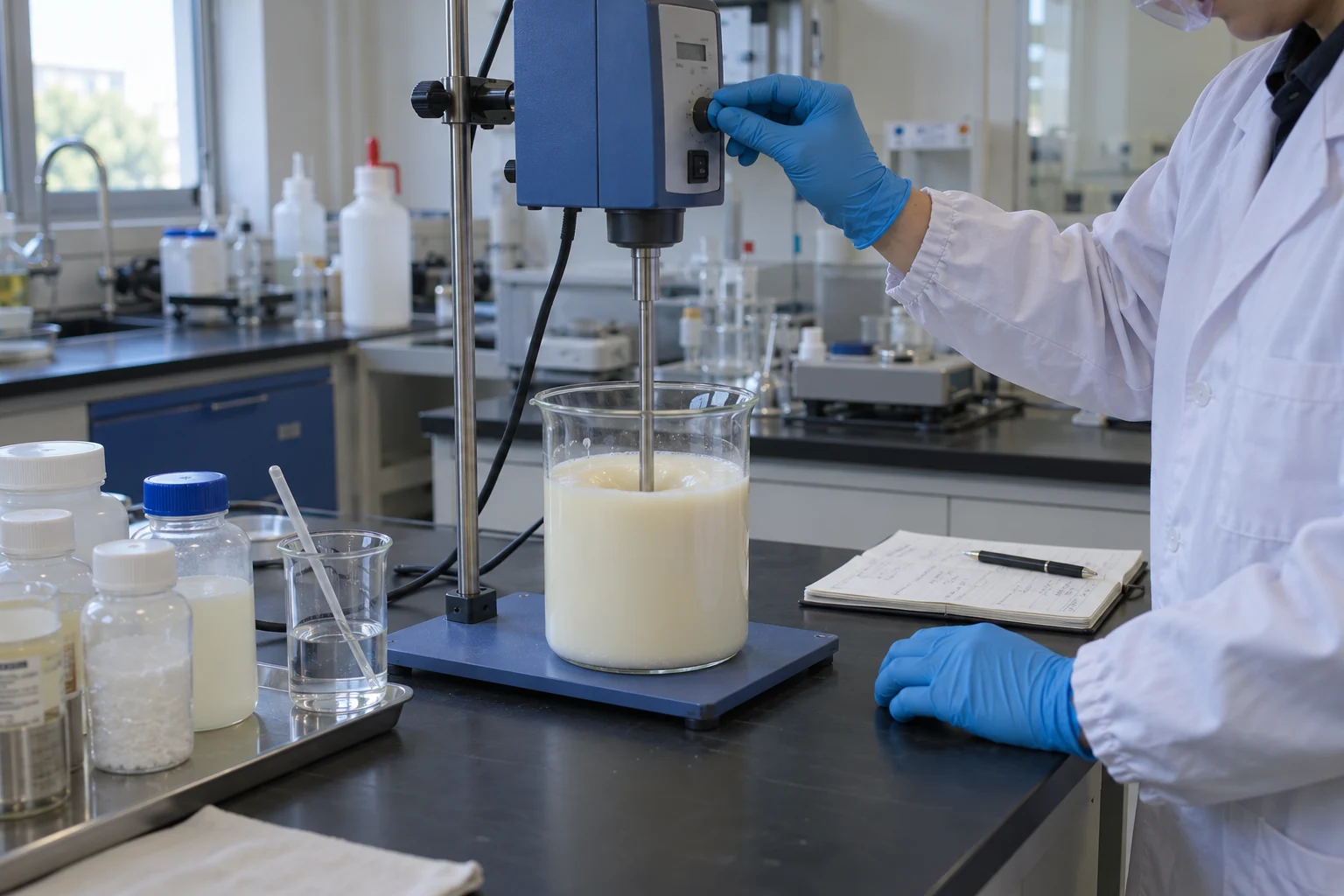
A specification such as “imidacloprid 70% WG” or “abamectin 18 g/L EC” names the active ingredient, its content and the formulation type. The type is a two-letter code from CropLife International’s Technical Monograph No. 2, the Catalogue of pesticide formulation types and international coding system, now in its eighth edition [1]. FAO’s Pesticide Registration Toolkit states that the type and code of a formulated product must be designated according to this catalogue [3], and the FAO/WHO manual on pesticide specifications sets out, type by type, which properties a specification should control [2].
1. How the codes work
Formulation types primarily describe the characteristics of the formulation, and where more than one type could apply, the most appropriate one should be chosen [1]. The suffix SB is added for material packed in a sealed water soluble bag, as in WP-SB, and codes no longer supported for new developments are listed separately: microgranules (MG) and fine granules (FG) now refer to GR [1].
The number before the code is the active ingredient content. The FAO/WHO manual requires g/kg for solids, liquid technical materials, volatile liquids and viscous liquids; other liquids may be declared in g/kg or in g/L at 20 ± 2 °C [2]. g/kg is mass per mass of product and g/L is mass per volume. US labelling rules also state ingredient percentages weight to weight [6]. Read this way, imidacloprid 70% WG is 700 g/kg and mancozeb 80% WP is 800 g/kg.
For liquids, a percentage and a g/L figure are not interchangeable. Conversion must use the measured mass per millilitre at a stated temperature, not a nominal value, and if a specification gives both units, results in a dispute are expressed as g/kg [2]. An EC sold as 1.8% and one sold as 18 g/L are the same strength only if the density is exactly 1 g/mL.
Where an active ingredient can exist as a salt, ester or free acid, the specification must name the form and define the basis on which content is calculated [2]. For emamectin benzoate, for example, check whether the figure refers to the salt.
2. Liquid formulations
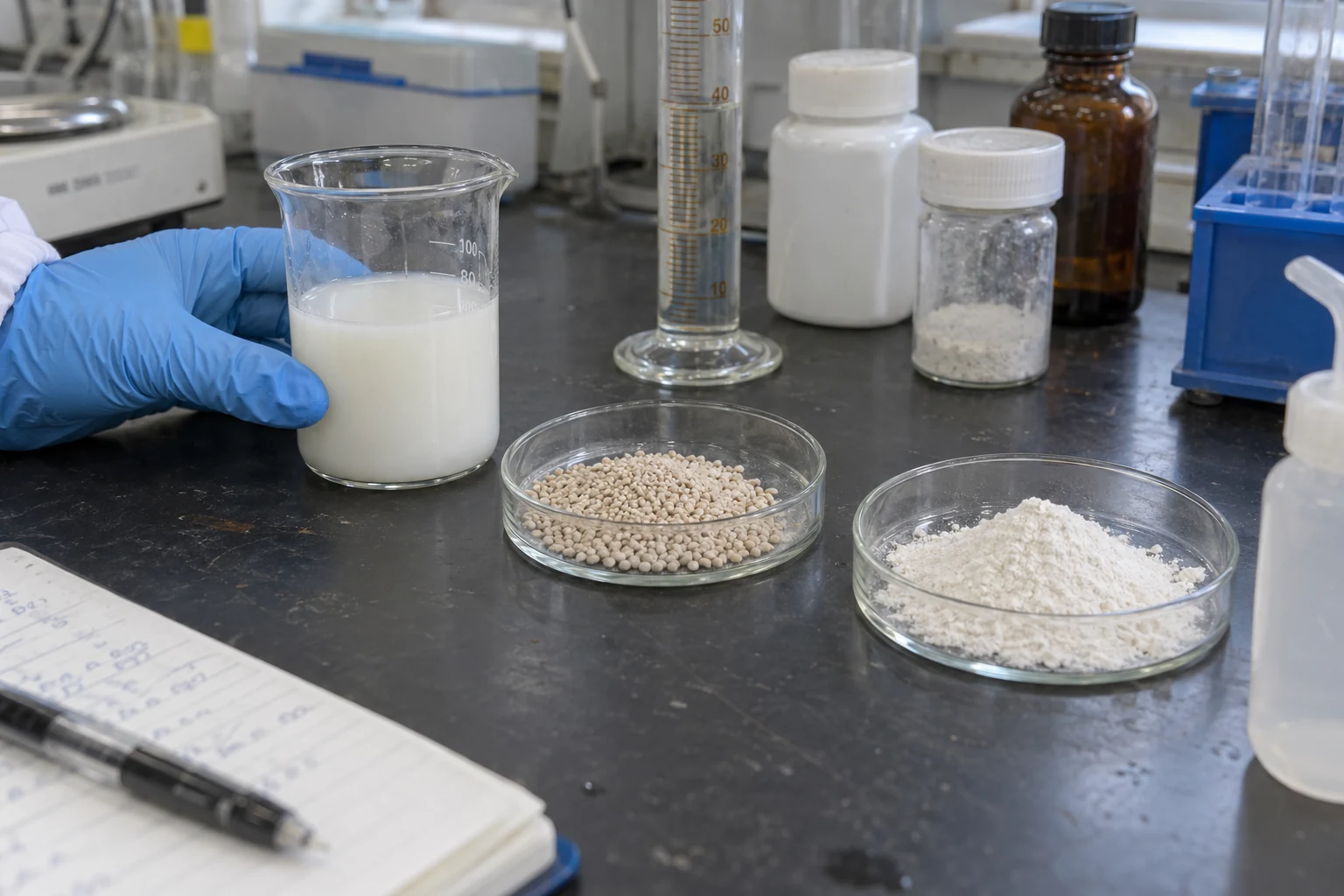
The FAO/WHO manual groups liquids into solutions, emulsions, suspensions and mixed types [2]. The common ones are:
- EC, emulsifiable concentrate: a homogeneous liquid applied as an emulsion after dilution in water [1], with the active ingredient dissolved in suitable solvents [2].
- SL, soluble concentrate: a clear to opalescent liquid applied as a solution of the active ingredient after dilution in water [1].
- EW, emulsion, oil in water: a solution of pesticide in an organic liquid, dispersed as fine globules in a continuous water phase [1].
- ME, microemulsion: a clear to opalescent liquid containing oil and water [1], often stable only within limited temperature ranges [2].
- SC, suspension concentrate, also called flowable concentrate: a stable suspension of active ingredient in water [1].
- OD, oil dispersion: a stable suspension of active ingredient in a water immiscible fluid, which may contain other dissolved active ingredients [1].
- SE, suspo-emulsion: solid particles and fine globules of active ingredient in a continuous water phase [1].
- CS, capsule suspension: a stable suspension of capsules in a fluid, normally diluted with water [1]. For slow release, the manual expects clauses on release rate and free active ingredient [2].
SC, EW and OD are metastable and may need shaking or stirring after storage; samples are taken only after the container has been homogenised [2].
3. Solid formulations
Solids are grouped as formulations for direct use, for dispersion in water and for dissolution in water [2].
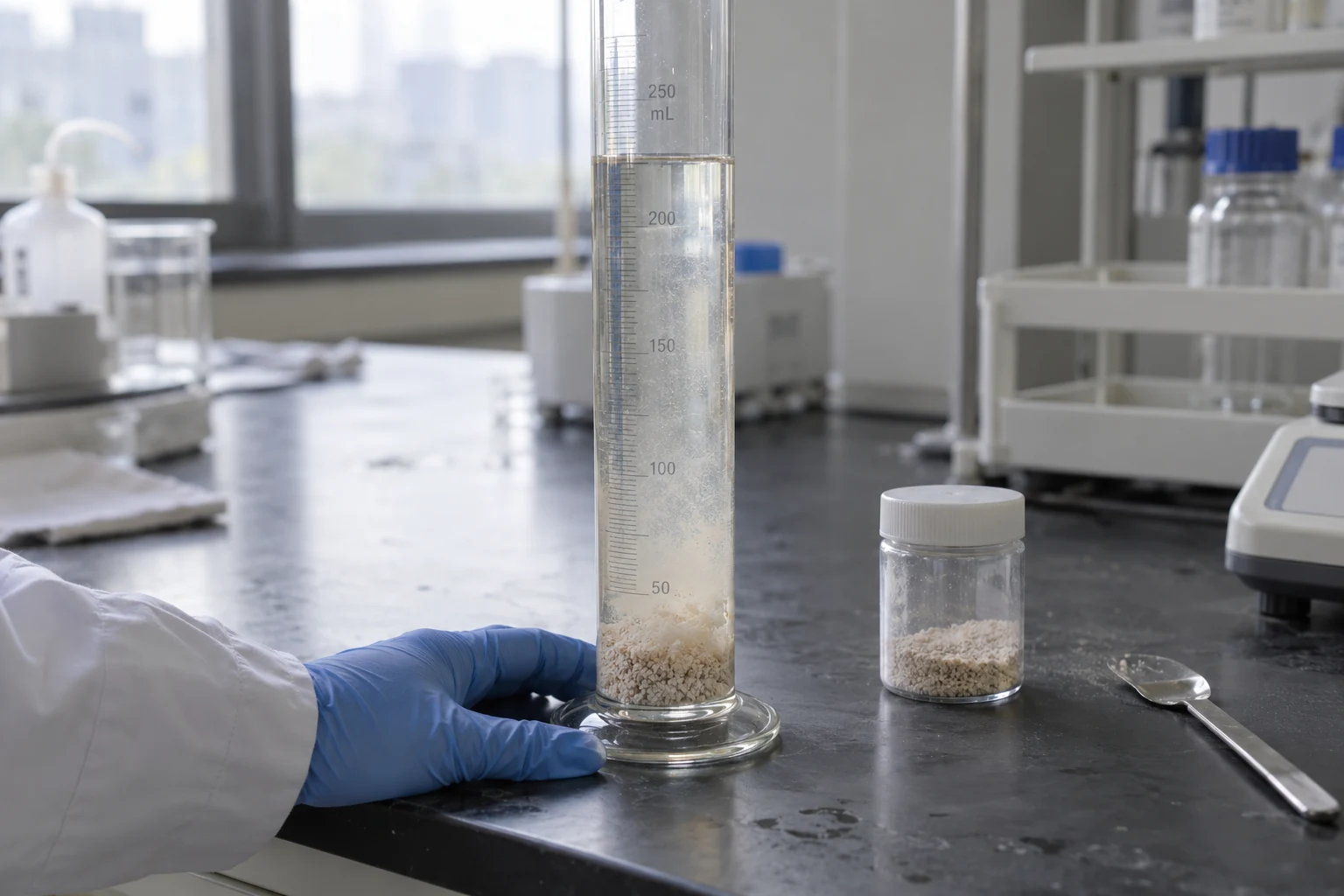
- WG, water dispersible granules: granules applied after disintegration and dispersion in water [1]. Beyond the properties considered for WP, the manual adds dispersibility, dustiness and flow properties, and asks for samples prepared by CIPAC method MT 166 [2].
- WP, wettable powder: a powder applied as a suspension after dispersion in water [1].
- SG and SP, water soluble granule and water soluble powder: applied as a true solution of the active ingredient after dissolution in water, and may contain insoluble inert ingredients [1].
- GR, granule: free-flowing granules of a defined size range, ready for use [1].
- DP, dustable powder: a free-flowing powder suitable for dusting [1].
WG and WP both end up as a suspension in the spray tank, and the manual applies the same suspensibility and wet sieve tests to both [2]. The difference is the form in the bag: UF/IFAS Extension describes water dispersible granules as like wettable powders but made as small granules, easier to measure and less dusty to handle [5].
4. Seed treatment formulations
- FS, flowable concentrate for seed treatment: a stable suspension applied to seed directly or after dilution [1].
- WS, water dispersible powder for slurry seed treatment: a powder dispersed at high concentration in water and applied as a slurry [1].
- DS, powder for dry seed treatment: a powder applied dry, directly to seed [1].
Every seed treatment guideline includes adhesion to seeds (CIPAC MT 194), so that the dose stays on the seed during storage and handling [2]. There is no germination clause, because no test method suits all seeds [2]. The manual also expects a dye or pigment that permanently colours treated seed, red being recommended, and notes that some countries prescribe the colour by law [2].
5. Technical material (TC) and technical concentrate (TK)
TC, technical material, is the active ingredient with its associated manufacturing impurities and, where needed, small amounts of necessary additives; TK, technical concentrate, may also contain appropriate diluents [1]. A TK is used where the pure active ingredient is unstable or isolating it adds unnecessary cost, and a TC is traded between manufacturers and formulators [2].
A TC declares a minimum content in g/kg with no upper limit, because purity should be as high as practicable; a TK declares a content with a tolerance [2]. Both control relevant impurities, and neither carries storage stability clauses, because manufacturers can rework the material before formulation [2]. In China, labels of technical products must state that the product is a raw material for formulation, not for use on crops, unless registration allows direct use [7].
Common formulation codes and what a specification controls
| Code | Name | What it is | Points to check in a specification |
|---|---|---|---|
| TC | Technical material | Active ingredient with manufacturing impurities [1] | Minimum content; relevant impurities [2] |
| TK | Technical concentrate | As TC, plus diluents [1] | Content with tolerance; relevant impurities [2] |
| EC | Emulsifiable concentrate | Liquid forming an emulsion in water [1] | Emulsion stability and re-emulsification; persistent foam [2] |
| SL | Soluble concentrate | Liquid forming a solution in water [1] | Dilution stability; persistent foam [2] |
| EW | Emulsion, oil in water | Oil globules in water [1] | Pourability; emulsion stability; persistent foam [2] |
| ME | Microemulsion | Clear oil and water liquid [1] | Emulsion stability; persistent foam [2] |
| SC | Suspension concentrate | Particles suspended in water [1] | Pourability; spontaneity of dispersion; suspensibility; wet sieve [2] |
| OD | Oil dispersion | Particles suspended in a water immiscible fluid [1] | Pourability; dispersion stability; wet sieve [2] |
| SE | Suspo-emulsion | Particles and globules in water [1] | Pourability; dispersion stability; wet sieve [2] |
| CS | Capsule suspension | Capsules suspended in a fluid [1] | Suspensibility; wet sieve; freeze and thaw stability; free active ingredient and release rate if slow release [2] |
| WG | Water dispersible granules | Granules that disperse in water [1] | Wettability; dispersibility; suspensibility; wet sieve; dustiness; flowability; attrition resistance [2] |
| WP | Wettable powder | Powder that disperses in water [1] | Wettability; suspensibility; wet sieve [2] |
| SG | Water soluble granule | Granules that dissolve in water [1] | Degree of dissolution and solution stability; dustiness; attrition resistance [2] |
| SP | Water soluble powder | Powder that dissolves in water [1] | Wettability; degree of dissolution and solution stability [2] |
| GR | Granule | Granules ready for use [1] | Nominal size range; dustiness; flowability; attrition resistance [2] |
| DP | Dustable powder | Powder for dusting [1] | Dry sieve test [2] |
| FS | Flowable concentrate for seed treatment | Suspension for seed [1] | Pourability; wet sieve; adhesion to seeds [2] |
| WS | Water dispersible powder for slurry seed treatment | Powder made into a slurry for seed [1] | Wettability; wet sieve; adhesion to seeds [2] |
| DS | Powder for dry seed treatment | Powder applied dry to seed [1] | Dry sieve test; adhesion to seeds [2] |
All formulation guidelines also cover identity, content, relevant impurities and storage stability; liquids are also tested at 0 °C or, for capsule suspensions, by freezing and thawing [2]. A published specification may add or omit a clause with a reasoned case [2].
6. Common names that are not catalogue codes
WDG and DF are common in trade documents. Neither appears among the current or discontinued codes of the eighth edition; the catalogue code is WG [1]. UF/IFAS Extension’s table of US label abbreviations lists WDG as water dispersible granules and DF as dry flowable, and its text says water dispersible granules are also known as dry flowables [5]. For an offer marked WDG or DF, ask for the WG specification clauses.
“Flowable” on its own is ambiguous: in the catalogue SC is also called flowable concentrate and FS is the flowable concentrate for seed treatment [1], while in the UF/IFAS table F means a liquid flowable [5]. In the same US table, TC is termiticide concentrate and ME is microencapsulated; in the catalogue, TC is technical material, ME is microemulsion and capsules are CS [1][5].
China’s national standard, GB/T 19378-2017, defines 61 formulation types and codes. According to authors from the Institute for the Control of Agrochemicals of the Ministry of Agriculture and Rural Affairs, about 85% are based on or aligned with the international types, and the rest are domestic types, particularly for public health registration [4]. The FAO/WHO manual also has Chinese and Spanish editions [8][9].
7. How to compare two offers
Two quotations for “imidacloprid 70% WG” can describe different products. FAO/WHO specifications may be used in a contract of sale to give the buyer some guarantee of quality [2]. Check:
- Same code and same form of active ingredient [1][2].
- Same content basis: g/kg against g/kg. For a liquid quoted in g/L, ask for the density at 20 °C [2].
- Tolerance: for example ±25 g/kg for a declared 700 g/kg, ±10% for a declared 50 g/kg, and ±15% for a declared 18 g/L in a homogeneous liquid such as an EC [2].
- Same physical limits. Guideline values include at most 2% retained on a 75 µm wet sieve, suspensibility of 60% to 105% after 30 minutes and at most 60 ml of persistent foam after 1 minute [2].
- Storage stability: after 14 days at 54 ± 2 °C, the clauses should still be met and average content should not fall below 95% of the starting value; liquids are also tested after 7 days at 0 ± 2 °C [2].
- Release date: chemical formulations are generally expected to remain satisfactory for at least 2 years from the release date in unopened original containers [2].
- The technical material: FAO/WHO specifications apply only to products of manufacturers whose technical materials have been evaluated, and equivalent formulations, made from equivalent TCs or TKs to the same specification, do not necessarily have equal efficacy [2].
None of this replaces registration: FAO/WHO specifications are not intended to replace national registration requirements, and the competent authority decides whether a pesticide may be used in its country [2].
Frequently asked questions
What does WG mean in a pesticide name, and is WDG the same?
WG is the catalogue code for water dispersible granules, applied after disintegration and dispersion in water [1]. WDG is not a catalogue code; UF/IFAS Extension uses WDG for water dispersible granules and treats dry flowables (DF) as the same product type [1][5].
What is the difference between EC and SC formulations?
An EC is a homogeneous liquid that forms an emulsion in water; an SC is a stable suspension of active ingredient particles in water [1][2]. An EC is tested for emulsion stability, an SC for pourability, dispersion, suspensibility and wet sieve [2].
What is an OD formulation?
An oil dispersion: a stable suspension of active ingredient in a water immiscible fluid, diluted with water before use [1]. Its specification covers pourability, dispersion stability and wet sieve [2].
What is the difference between WG and WP?
Both are dispersed in water and applied as a suspension; WP is a powder and WG is granules [1]. The FAO/WHO guideline for WG adds dispersibility, dustiness, flowability and attrition resistance to the WP tests [2].
Does 70% in “imidacloprid 70% WG” mean weight or volume?
For a solid, weight. FAO/WHO specifications express the content of solids in g/kg, so 70% is 700 g/kg [2], and US labelling rules state percentages weight to weight [6]. Liquids are often declared in g/L at 20 °C, which is mass per volume [2].
What is the difference between TC and TK?
A TK may contain diluents that a TC does not [1]. A TC has a minimum content and no upper limit; a TK has a declared content with a tolerance [2].
Further reading
- Product catalogue: active ingredients and formulations
- Sourcing and supply
- [1] CropLife International (2022). Catalogue of pesticide formulation types and international coding system. Technical Monograph No. 2, 8th edition.
- [2] FAO and WHO (2025). Manual on the development and use of FAO and WHO specifications for chemical pesticides. Third edition.
- [3] FAO. Pesticide Registration Toolkit: type of formulation and code.
- [4] Wang Y., Zhao Y. and Song J., Institute for the Control of Agrochemicals, MARA (2025). Standardizing pesticide formulation types and coding systems in China: current status and prospects. CIPAC poster.
- [5] Fishel, F. M. (2019). Pesticide formulations (PI231). University of Florida IFAS Extension.
- [6] US Code of Federal Regulations. 40 CFR 156.10, Labeling requirements.
- [7] Ministry of Agriculture and Rural Affairs of China. Measures for the administration of pesticide labels and instructions (Order No. 7 of 2017, current text).
- [8] FAO and WHO (2023). Manual on the development and use of FAO and WHO specifications for chemical pesticides, second edition. Chinese edition.
- [9] FAO and WHO (2022). Manual on the development and use of FAO and WHO specifications for chemical pesticides, second edition. Spanish edition.
Products in this article