Technical material and formulation specifications: content, impurities, stability and the COA
How to read and agree a specification for a pesticide technical material or formulation, from minimum content and relevant impurities to storage stability, and how the batch certificate of analysis should match it.
Technical review: Wang Liqun, Researcher; Chen Zhiyuan, Senior Agronomist
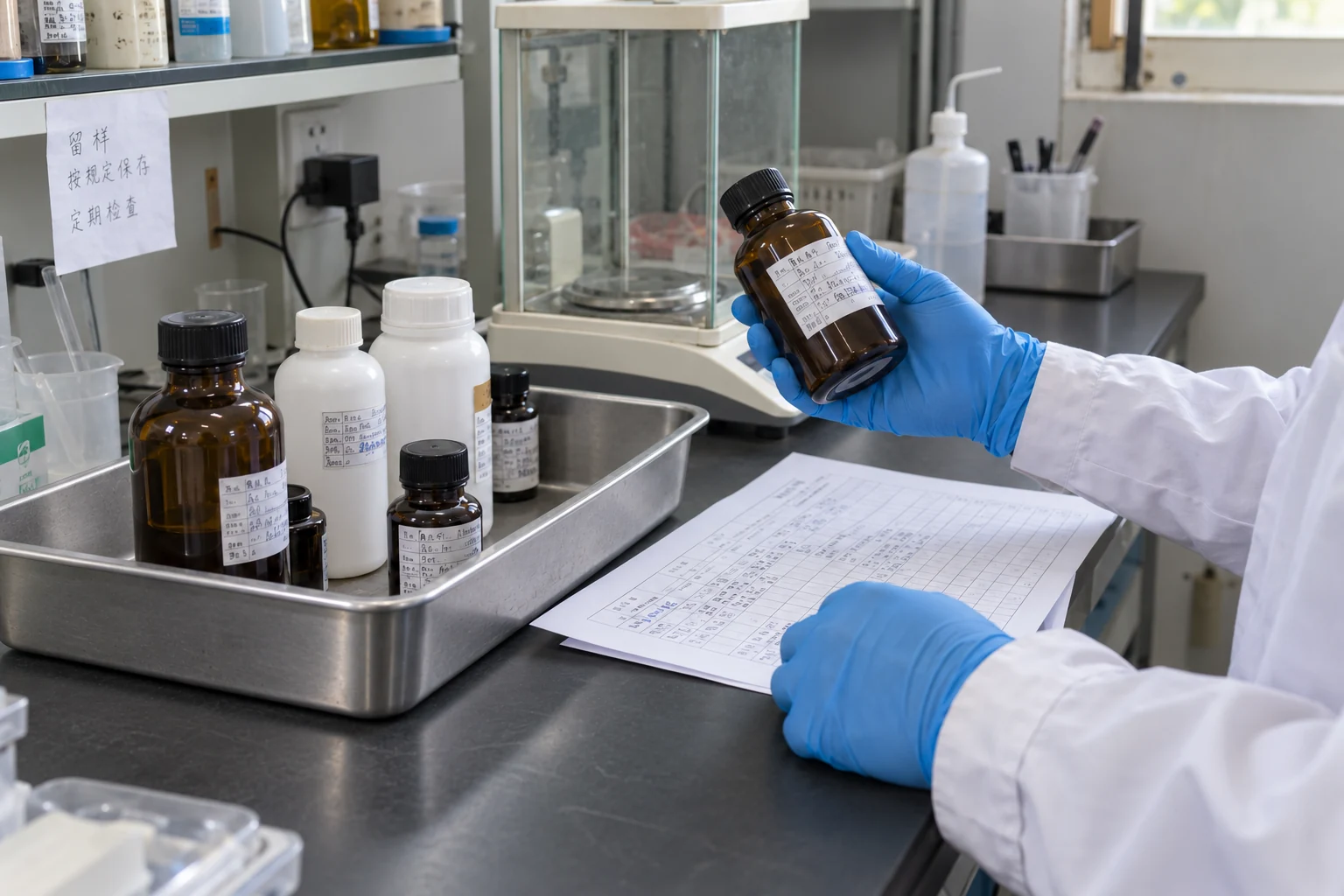
A specification is how a buyer and a supplier agree what a pesticide must contain and how it must behave. FAO and WHO develop international specifications through their Joint Meeting on Pesticide Specifications (JMPS), following a manual whose third edition appeared in 2025 [1]. A specification may form part of a contract of sale, giving the buyer some guarantee of quality, and lets authorities check that products on the market match what was registered [1]. This guide explains the main clauses, with examples from published FAO specifications, and how a batch certificate of analysis (COA) relates to them.
1. What a specification is for
A specification covers appearance, the content of active ingredient and relevant impurities, physical and chemical properties, and storage stability. It does not define efficacy, and it does not cover the chemistry of formulants except where they affect physical properties such as pH [1]. Because a specification should not require judgement by the buyer, each clause describes a quantifiable parameter with a limit and a test method; anything else goes into notes that are not part of the specification [1].
A technical material (TC) is the active ingredient isolated, as far as practicable, from the starting materials and solvents used to make it, and it is traded between manufacturers and formulators. A technical concentrate (TK) may not have been isolated, or may be a minimally diluted TC, for example where the active ingredient is unstable in pure form [1]. The JMPS classed mancozeb technical as a TK because it contains a stabiliser at 20 g/kg and a dispersant [3].
FAO and WHO specifications apply only to manufacturers whose technical material the JMPS has evaluated; others can submit data to have one applied to them, an assessment of equivalence that compares impurity and toxicological profiles and is a separate subject [1]. Exports should meet the importing country’s specifications where these differ [15].
2. Active ingredient content
For a TC, the content is declared as not less than a stated figure in g/kg, and the average measured content must not be lower than that minimum. There is no upper limit, because purity should be as high as practicable [1]. Published FAO minimums include 950 g/kg for glyphosate TC [2], 970 g/kg for imidacloprid TC [4] and 965 g/kg for azoxystrobin TC [5]. The manual recommends deriving the minimum from the average of five batches minus three standard deviations [1].
For a TK or a formulation, the supplier declares a content, in g/kg or, for most liquids, g/L at 20 ± 2 °C, and the average measured content must stay within a tolerance that depends on the declared level [1].
Tolerances on declared content for TKs and formulations [1]
| Declared content (g/kg or g/L) | Tolerance |
|---|---|
| Up to 25 | ± 15% for homogeneous formulations (EC, SC, SL); ± 25% for heterogeneous ones (GR, WG) |
| Above 25 up to 100 | ± 10% |
| Above 100 up to 250 | ± 6% |
| Above 250 up to 500 | ± 5% |
| Above 500 | ± 25 g/kg or g/L |
The upper limit of each range is included [1], so a soluble concentrate declared at 480 g/L must average 456 to 504 g/L. Because the basis of calculation must be defined when a method measures only the active part of a salt [1], the contract should say whether such a figure means glyphosate isopropylamine salt or glyphosate acid. Where both g/kg and g/L are given, disputes are settled in g/kg; in a co-formulated product the limits for every active ingredient apply [1].
3. Relevant impurities
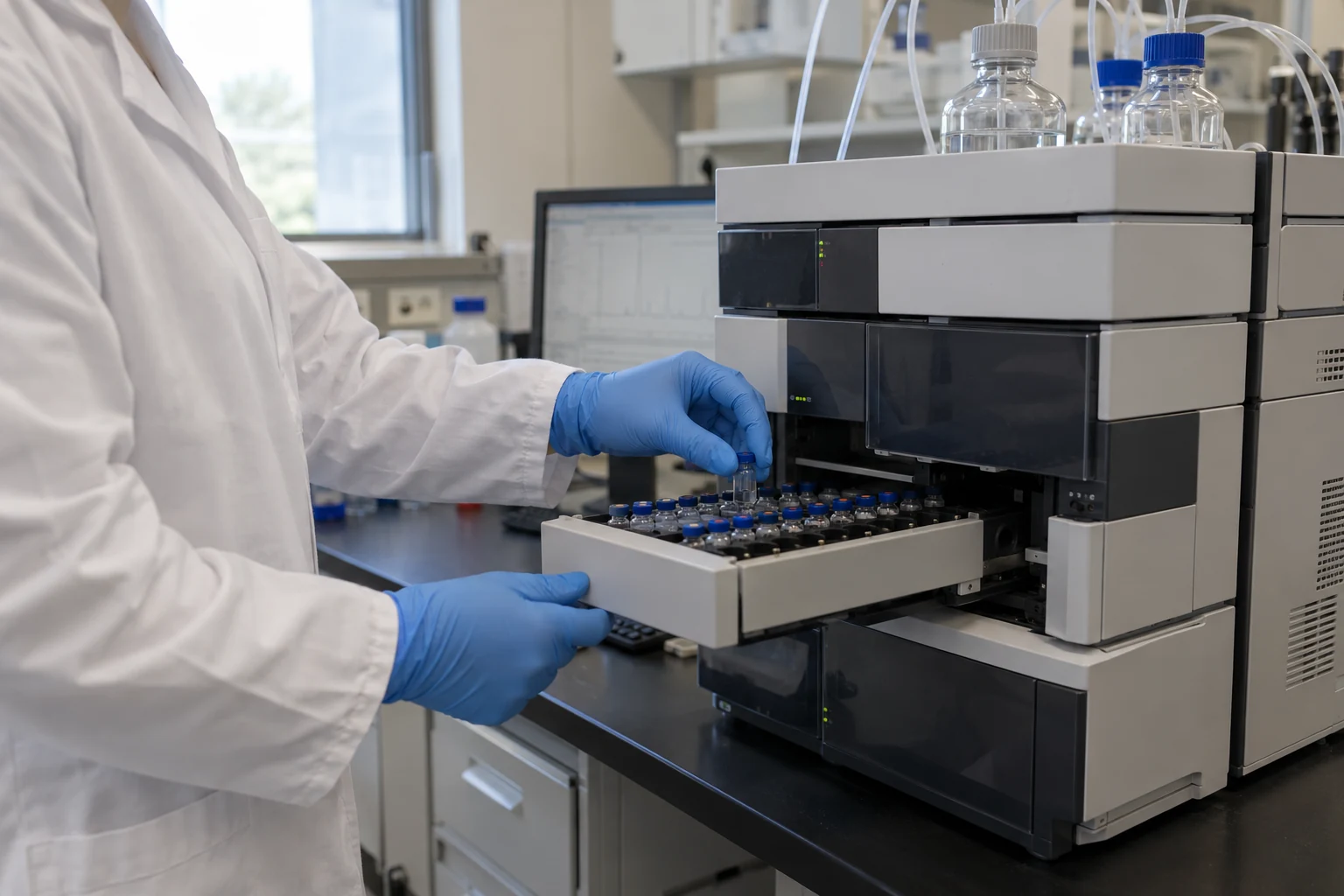
A relevant impurity is a by-product of manufacture or storage which, compared with the active ingredient, is toxicologically significant to health or the environment, is phytotoxic, causes taint in food crops, affects the stability of the pesticide or causes another adverse effect. Water and insoluble material can also be relevant, for example if they would spoil a formulation or block spray nozzles [1]. Because relevance is judged against the active ingredient’s own hazards, the same compound can be relevant in one pesticide and not in another [1].
Only relevant impurities appear in a published specification; information on other impurities stays confidential [1]. Limits are set case by case, with GHS limits for mixtures as the default; for example, an impurity classed as a category 1A or 1B mutagen or carcinogen becomes relevant at 0.1 g/kg [1]. The average measured level must not exceed the declared maximum [1].
Relevant impurities in published FAO specifications (examples)
| Material (FAO specification) | Relevant impurity | FAO maximum |
|---|---|---|
| Glyphosate TC (284/TC, 2025) | Formaldehyde | 1.3 g/kg [2] |
| Glyphosate TC (284/TC, 2025) | N-nitrosoglyphosate | 1 mg/kg [2] |
| Mancozeb TK (34/TK, 2020) | Hexamethylenetetramine (HMTA), the added stabiliser | 20 g/kg [3] |
| Mancozeb TK (34/TK, 2020) | Water | 10 g/kg [3] |
| Chlorothalonil TC (288/TC, 2024) | Hexachlorobenzene | 0.04 g/kg [6] |
| Malathion TC (12/TC, 2022) | Isomalathion | 4 g/kg [7] |
| Fenitrothion TC (35/TC, 2010) | S-methyl fenitrothion | 5 g/kg [8] |
| Prothioconazole TC (745/TC, 2021) | Prothioconazole-desthio | 0.5 g/kg [9] |
| Trifloxystrobin TC (617/TC, 2024) | CGA 344605 | 4 g/kg [10] |
| Imidacloprid TC (582/TC, 2018) | None specified | Not applicable [4] |
Some carry further clauses: chlorothalonil TC also limits decachlorobiphenyl to 0.03 g/kg [6], and malathion TC limits malaoxon to 1 g/kg [7]. Glyphosate’s N-nitrosoglyphosate limit stays at 1 mg/kg in the TK and formulations too, because nitrites in process water can raise it during salt formation and granulation [2]. The mancozeb specification has no clause for ethylenethiourea (ETU); HMTA is added to prevent ETU forming and is itself treated as relevant [3].
A missing clause does not settle the question for every source. The diflubenzuron specification lists no relevant impurity for the evaluated manufacturers, but 4-chloroaniline would become relevant at 0.1 g/kg or more in another manufacturer’s product [11]. Water is usually relevant in a TC destined for water-sensitive formulations such as EC, OD or UL [1].
4. Physical and chemical properties by formulation type
Formulations carry physical clauses chosen for how they are used. The manual treats these tests as simple models whose results indicate, but do not define, field performance; most use CIPAC standard water D at concentrations related to label rates [1].
Main clauses in the FAO/WHO guideline specifications [1]
| Type | Clauses | Limits the manual gives |
|---|---|---|
| TC, TK | Acidity, alkalinity or pH if required; no storage clause | Case by case |
| SL | Dilution stability; persistent foam; storage at 0 °C and 54 °C | Foam normally at most 60 mL after 1 min |
| EC | Emulsion stability; persistent foam; storage at 0 °C and 54 °C | Cream and free-oil limits set per product |
| SC | Pourability; spontaneity of dispersion; suspensibility; wet sieve; persistent foam; storage at 0 °C and 54 °C | Pour residue at most 5%; suspensibility 60 to 105%; at most 2% on a 75 µm sieve |
| WG | Wettability; wet sieve; dispersibility; suspensibility; foam; dustiness; flowability; attrition resistance; storage at 54 °C | Wetted within 1 min; dispersibility at least 60% |
Published specifications fill in figures: FAO’s glyphosate water soluble granule (SG) specification allows at most 2% of the product on a 75 µm sieve after 5 minutes of dissolution and 0.05% after 24 hours, and requires at least 98% to pass a 5 mm sieve in the flowability test [2]. For mixtures, the manual’s own limits apply where it gives one, otherwise a suitable value for the mixture; tank mixes are outside FAO and WHO specifications [1].
5. Storage stability
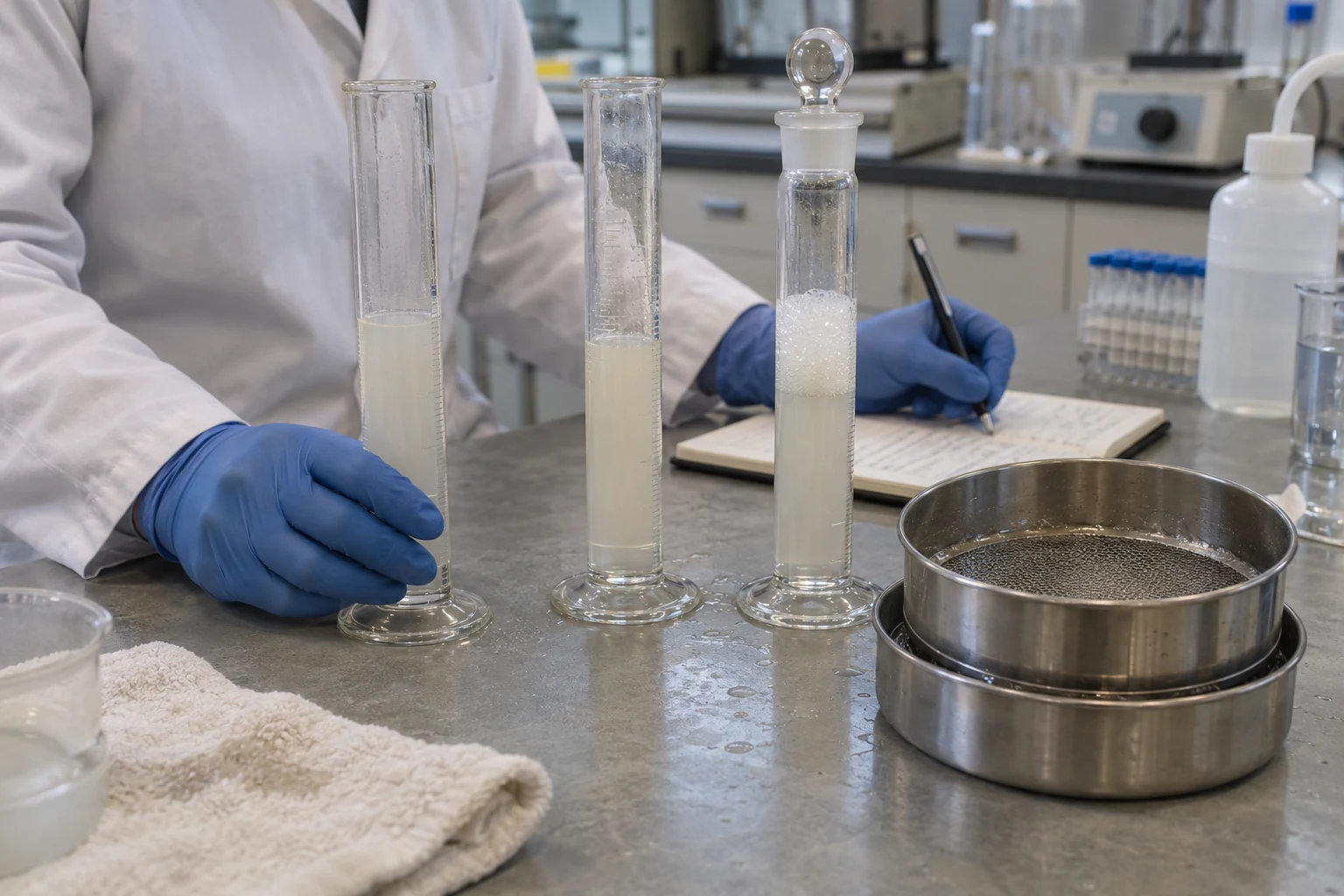
The standard accelerated test (CIPAC MT 46.4) holds the formulation at 54 ± 2 °C for 14 days, after which the average active ingredient content should not fall below 95% of its starting value and the relevant impurity and physical clauses must still be met [1]. Alternatives run from 4 weeks at 50 °C to 18 weeks at 30 °C, and a justified lower threshold is possible; FAO’s mancozeb WP uses 90% [1][3]. Liquids are also held at 0 ± 2 °C for 7 days, after which normally no more than 0.3 mL may separate [1].
TC and TK have no storage clause, as manufacturers can usually rework them [1]. Formulations are generally expected to remain satisfactory for at least 2 years from the release date in unopened original containers stored as the label directs; a shorter shelf life must be stated on the label, which must also show the release date of the lot or batch [1]. Where degradation is unavoidable, an overage of up to 10% of nominal content may be applied [1].
6. Methods: CIPAC and AOAC
CIPAC, the Collaborative International Pesticides Analytical Council, is a non-profit, non-governmental organisation that promotes international agreement on test methods; methods proposed by companies are tested by laboratories worldwide and, once adopted, published in the CIPAC Handbooks [13]. Physical tests carry CIPAC MT numbers, such as MT 46.4 for accelerated storage, MT 39.3 for low-temperature stability and MT 184.1 for suspensibility [1].
For FAO specifications, the content method must be adopted by CIPAC or AOAC International, at least provisionally, relevant-impurity methods must be peer validated, and CIPAC or AOAC methods normally referee disputes [1]. Glyphosate content uses an AOAC method [2]. CIPAC offers some impurity methods free, including those for S-methyl fenitrothion, prothioconazole-desthio and CGA 344605 [14]. An in-house content method needs a bridging study against the CIPAC method on at least three batches; bridging is not accepted for relevant impurities [1].
7. The certificate of analysis
FAO and WHO quality control guidelines say manufacturers should keep analysis records for every batch for at least five years, that importers should ensure each consignment is accompanied by a quality control report for that batch from an accredited laboratory, and that labels should identify the lot or batch and its release date [15].
FAO’s tender guidelines list what a certificate of analysis must contain for control and legal purposes: the laboratory’s name and address; the analyst’s name and signature; the sample number and identity; the date of receipt and the condition of the sample and its seal; how it was delivered and stored; the date of analysis; a summary of the method; and the results [16].
In practice, each agreed clause should appear on the COA with its method, limit and a numerical result; “complies” alone cannot be checked against a tolerance. Limits refer to the average analytical result and a compliance sample must represent the whole lot [1], so the COA should carry the batch number on the label. Agree the dispute route before shipment: the tender guidelines split each official sample into three sealed parts, for the supplier, the laboratory and retention, with the retained part going to an independent laboratory in a dispute [16].
From a specification clause to the COA
Each agreed clause needs its method, limit and a numerical result on the batch COA.
- Batch identification
- [Same batch number as the label]
Active ingredient content
- Method
- [Agreed analytical method]
- Limit
- [Minimum content, or declared content and tolerance]
- Result
- [Average measured content + unit]
Relevant impurity
- Method
- [Peer-validated method]
- Limit
- [Maximum for the named impurity]
- Result
- [Average measured level + unit]
Physical property
- Method
- [Applicable CIPAC MT method]
- Limit
- [Limit for the formulation type]
- Result
- [Numerical result + unit]
Schematic only; these are fields, not test results or a certificate. “Complies” alone cannot be checked against a tolerance. See the specification and COA requirements in the article [1][15][16].
8. A checklist for buyers
- Name the active ingredient by ISO common name and exact form (acid, salt or ester), and the basis of the content figure [1].
- Check for a current FAO or WHO specification; it applies directly only to evaluated manufacturers [1][12].
- For a TC, agree the minimum content in g/kg; for a TK or formulation, the declared content and tolerance [1].
- List each relevant impurity with its maximum and method, and a water limit if the TC is for EC, OD or UL [1].
- Name the physical clauses for the formulation type, with CIPAC MT methods and limits [1].
- Agree storage stability conditions, the release date on the label and the shelf life [1].
- Require a COA for every batch with laboratory, dates, methods and numerical results per clause, and agree sampling and a referee laboratory [15][16].
- Where the importing country requires a different specification, the product should meet that one [15].
Frequently asked questions
What is the purity of glyphosate technical (TC)?
FAO specification 284/TC requires glyphosate TC to be declared at not less than 950 g/kg. It also limits formaldehyde to 1.3 g/kg and N-nitrosoglyphosate to 1 mg/kg [2].
What is a relevant impurity in a pesticide?
A by-product of manufacture or storage that, compared with the active ingredient, is toxicologically significant, phytotoxic, causes taint, affects stability or has another adverse effect. Only these are listed, each with a maximum, in a specification [1].
What should a pesticide certificate of analysis include?
At least the laboratory, the analyst, the sample identity, the dates of receipt and analysis, the method and the results [16]. FAO and WHO also advise importers to have a batch quality control report from an accredited laboratory with every consignment [15].
What does 14 days at 54 °C mean in a pesticide specification?
It is the accelerated storage test, CIPAC MT 46.4. Afterwards the average active ingredient content should not be below 95% of the starting value, and the product must still meet its other clauses [1].
What is the difference between TC and TK?
A TC is isolated, as far as practicable, from its starting materials and solvents; a TK may not be, or may be a minimally diluted TC. A TC has a minimum content, a TK a declared content with a tolerance [1].
What if there is no FAO specification, as for abamectin?
Abamectin does not appear in FAO’s list of published specifications [12]. The FAO/WHO manual can still serve as a framework of criteria [1], and authorities may rely on national or other recognised standards [15].
Further reading
- Quality and documentation
- Product catalogue
- Glyphosate: formulations and supply
- Imidacloprid: formulations and supply
- Azoxystrobin: formulations and supply
- Abamectin: formulations and supply
- Prothioconazole: formulations and supply
- Trifloxystrobin: formulations and supply
- [1] FAO and WHO (2025). Manual on the development and use of FAO and WHO specifications for chemical pesticides. Third edition.
- [2] FAO (2025). FAO specifications and evaluations for agricultural pesticides: Glyphosate.
- [3] FAO (2021). FAO specifications and evaluations for agricultural pesticides: Mancozeb.
- [4] FAO (2018). FAO specifications and evaluations for agricultural pesticides: Imidacloprid.
- [5] FAO (2022). FAO specifications and evaluations for agricultural pesticides: Azoxystrobin.
- [6] FAO (2024). FAO specifications and evaluations for agricultural pesticides: Chlorothalonil.
- [7] FAO (2022). FAO specifications and evaluations for agricultural pesticides: Malathion.
- [8] FAO (2010). FAO specifications and evaluations for agricultural pesticides: Fenitrothion.
- [9] FAO (2021). FAO specifications and evaluations for agricultural pesticides: Prothioconazole.
- [10] FAO (2024). FAO specifications and evaluations for agricultural pesticides: Trifloxystrobin.
- [11] FAO (2020). FAO specifications and evaluations for agricultural pesticides: Diflubenzuron.
- [12] FAO. Pesticide specifications list (FAO/WHO Joint Meeting on Pesticide Specifications).
- [13] CIPAC. Collaborative International Pesticides Analytical Council: about CIPAC (home page).
- [14] CIPAC. Free relevant impurities methods.
- [15] FAO and WHO (2011). International Code of Conduct on the Distribution and Use of Pesticides: Guidelines for quality control of pesticides.
- [16] FAO (1994). Provisional guidelines on tender procedures for the procurement of pesticides.
Products in this article