Silverleaf and greenhouse whiteflies: identification, monitoring and resistance management
How to tell the main whitefly species apart, when to act, and how to rotate insecticide modes of action with biological control so that the programme keeps working.
Technical review: Wang Liqun, Researcher; Chen Zhiyuan, Senior Agronomist
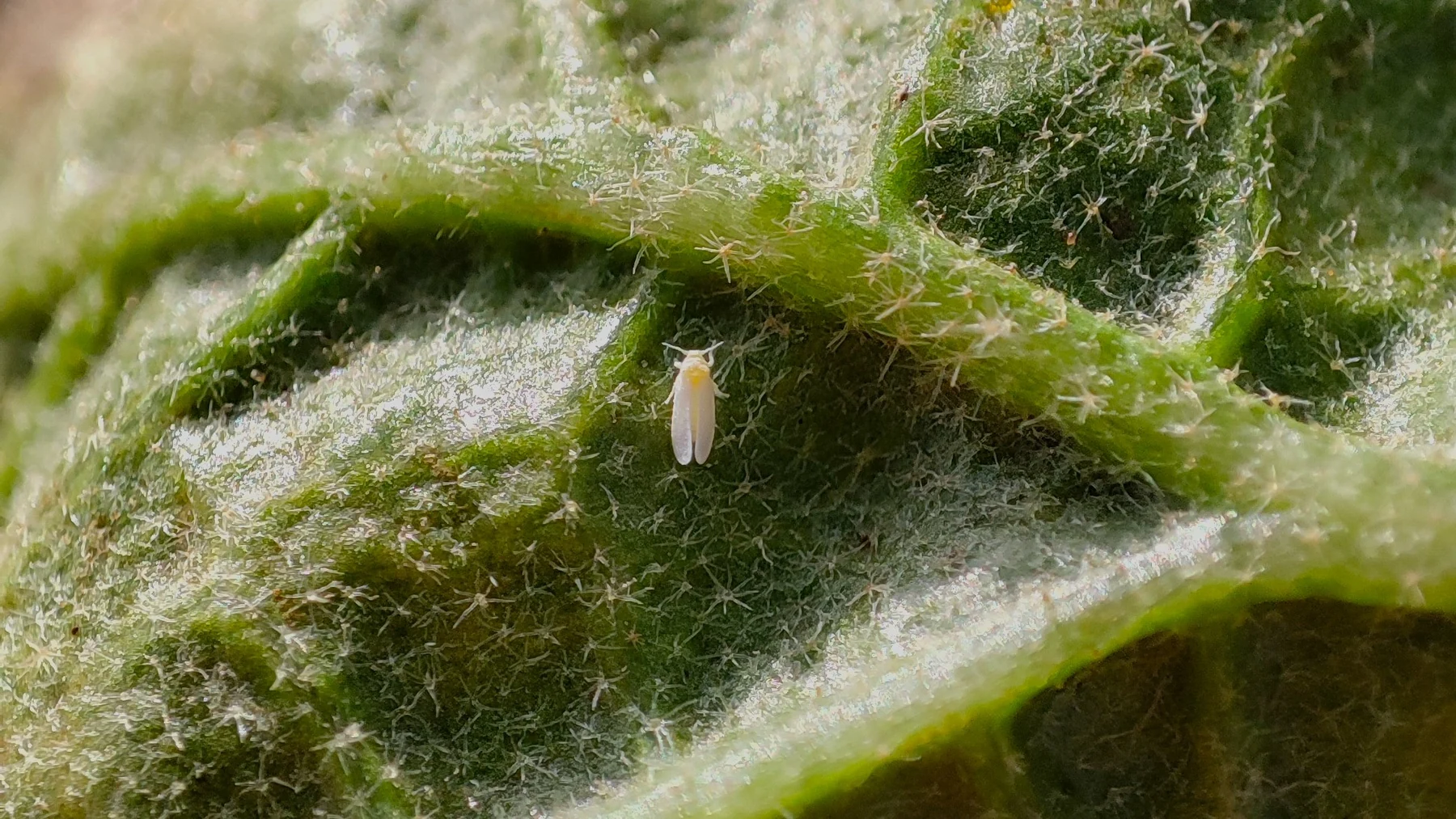
Whiteflies are small sap-sucking insects related to aphids and scales [1]. Only a few whitefly species are serious crop pests: by far the most important is the silverleaf or sweetpotato whitefly, Bemisia tabaci, followed by the greenhouse whitefly, Trialeurodes vaporariorum [2]. B. tabaci is among the world’s top 100 invasive organisms and has more than 900 host plants. It is a complex of cryptic species, of which MEAM1 (biotype B) and MED (including biotype Q) matter most in agriculture [3]. Whiteflies damage crops by feeding, through honeydew that supports sooty mould, and by transmitting viruses; B. tabaci reportedly transmits more than a hundred virus species [2][3].
1. How to recognise them
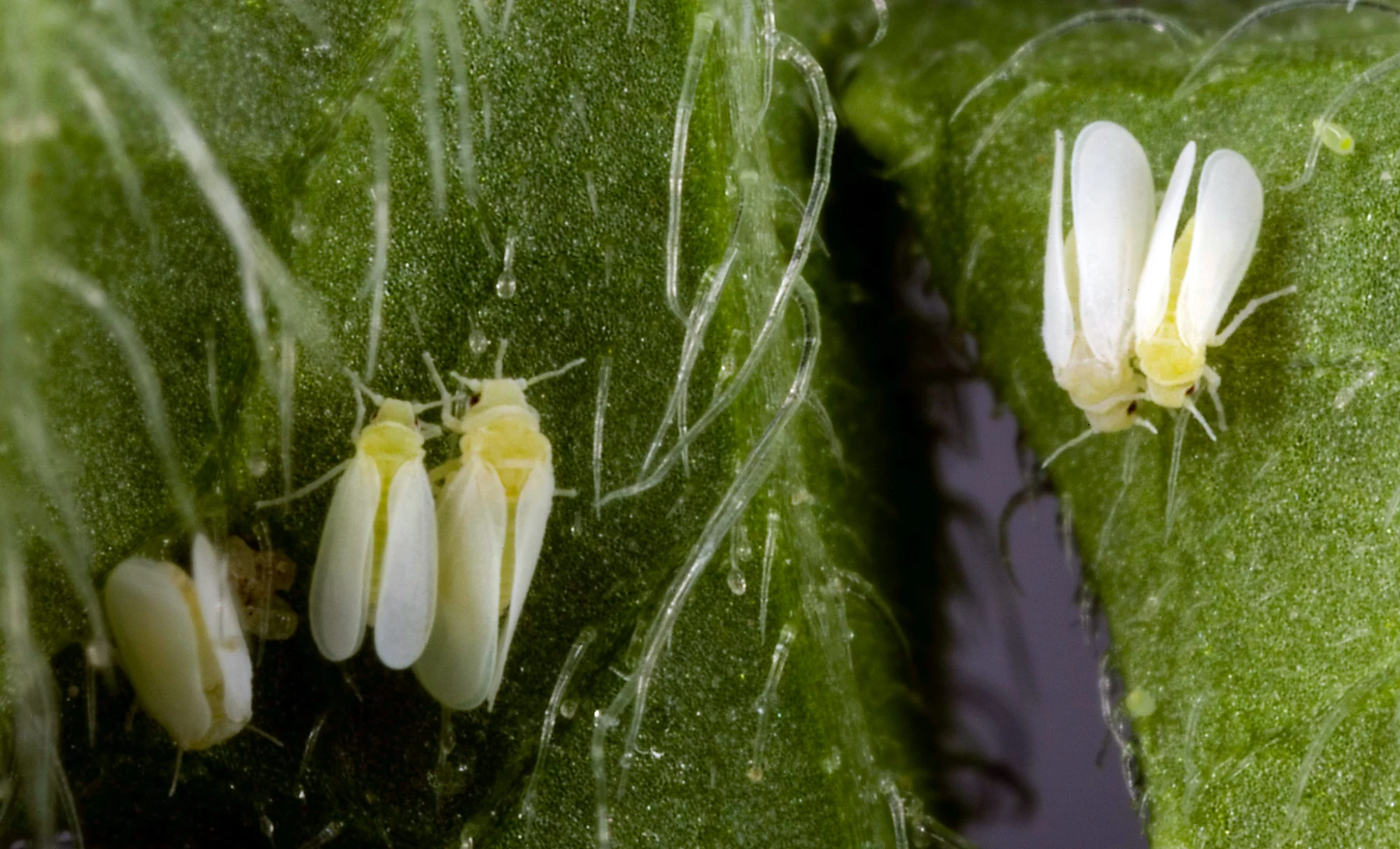
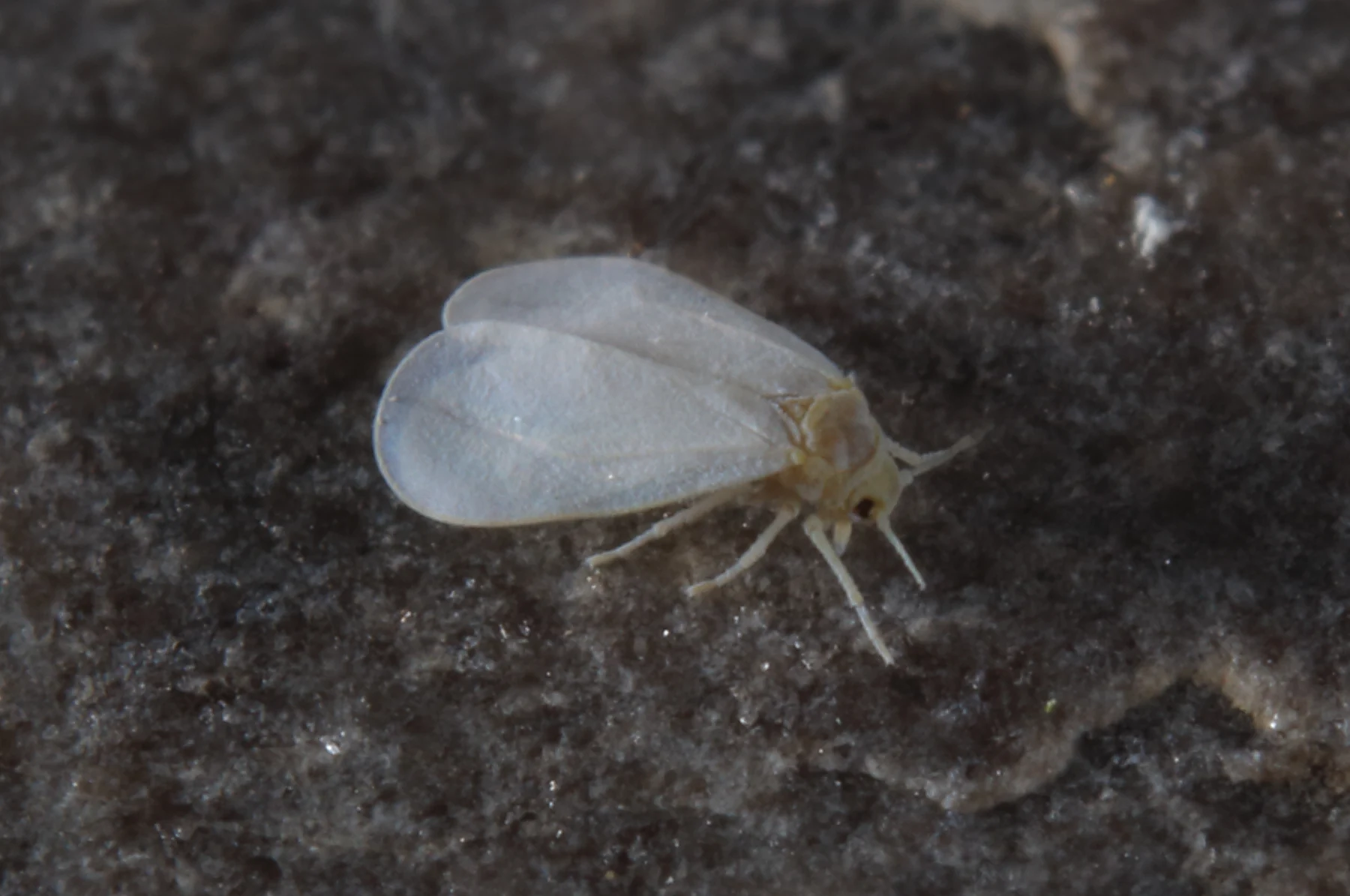
Adults are about 1.5 mm long, yellowish with white wings, and sit mostly on leaf undersides. Silverleaf whitefly holds its wings roof-like, with a small gap along the back; greenhouse whitefly holds them flatter, with no gap [4].
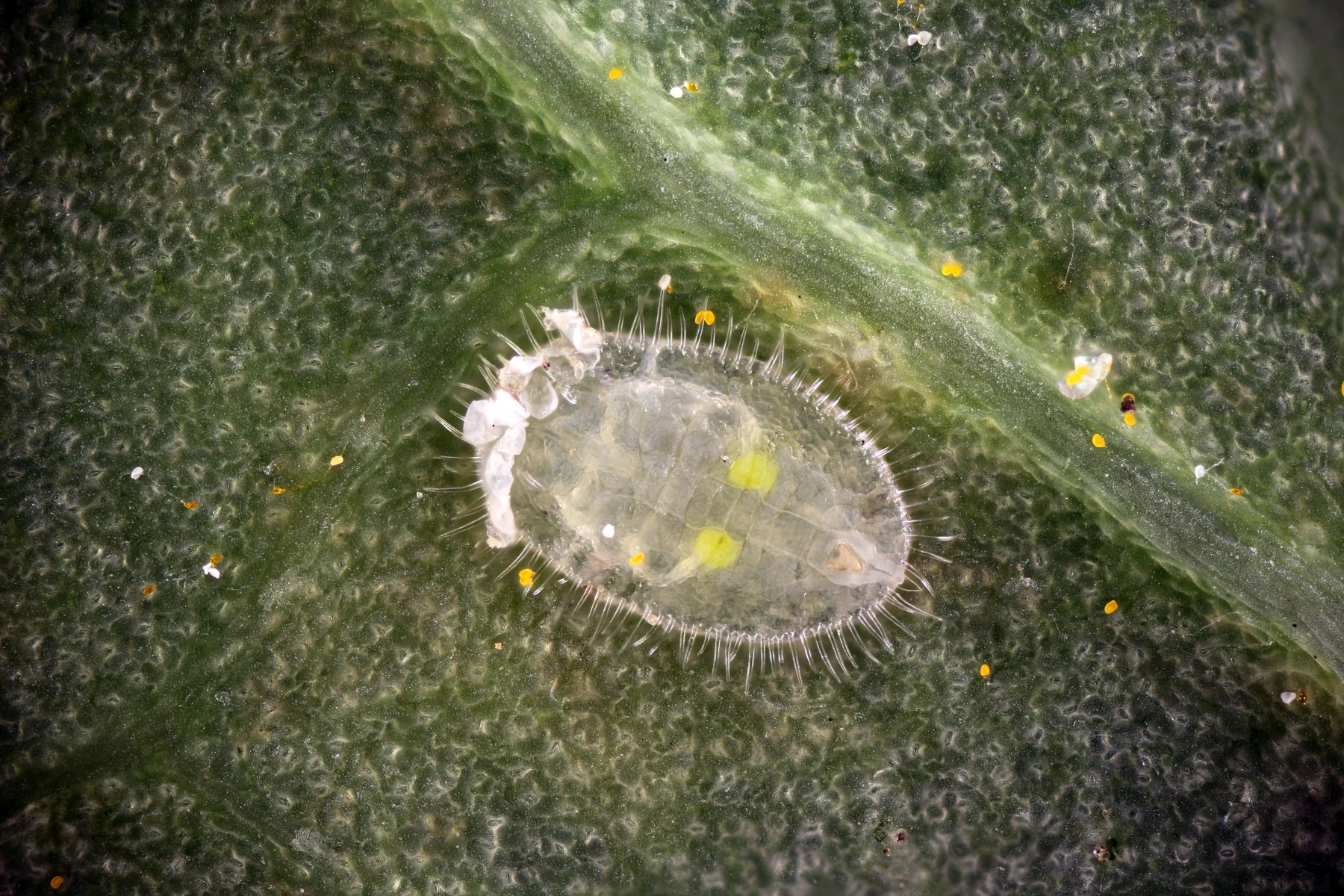
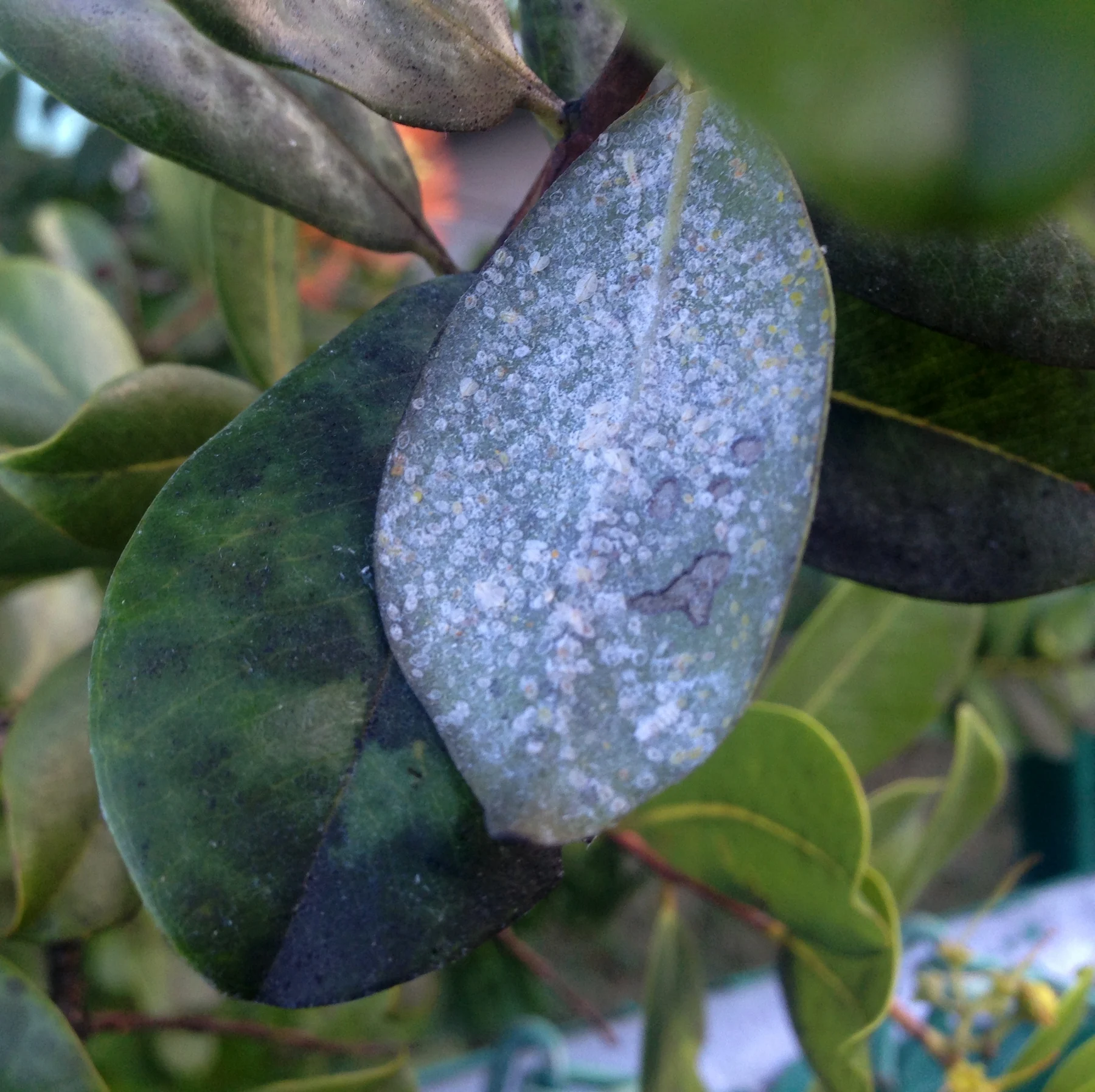
The last nymphal stage, often called the pupa or red-eyed nymph, is the easiest to identify. Silverleaf whitefly pupae are oval, whitish to yellowish and soft, with edges sloping down to the leaf and few or no long waxy filaments. Greenhouse whitefly pupae have straight, raised sides and many long waxy filaments [4][5].
Small, pale aphids can be mistaken for whitefly nymphs: aphids have legs, late whitefly nymphs have eye spots [6]. MEAM1 and MED look identical, and only a laboratory genetic test separates them. This matters because MED (biotype Q) is highly resistant to numerous insecticides and MEAM1 generally less so [5][7].
2. Damage symptoms
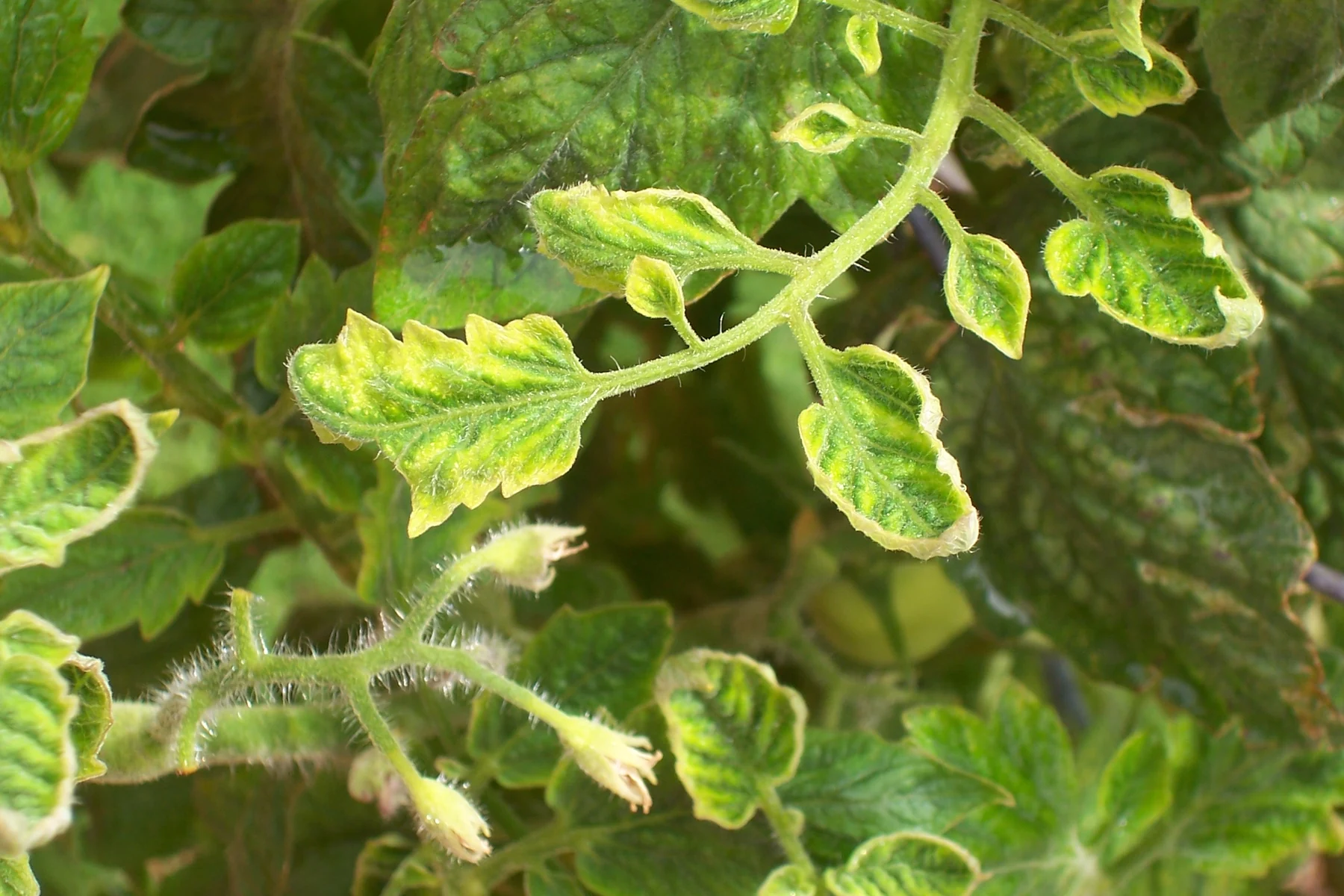
Adults and nymphs suck phloem sap; large populations turn leaves yellow and dry and make them drop [1]. Honeydew makes leaves sticky and shiny and supports black sooty mould, which interferes with photosynthesis [5][8]. On open cotton bolls it makes the lint sticky and affects spinning efficiency [6]. Feeding by B. tabaci also turns squash leaves silver and makes tomato fruit ripen unevenly [4][8].
Virus transmission is often the most serious damage. B. tabaci transmits tomato yellow leaf curl virus (TYLCV) and cucurbit chlorotic yellows virus [9], and lettuce infectious yellows and squash leaf curl viruses in cucurbits [8]. The greenhouse whitefly transmits tomato infectious chlorosis virus [4].
3. Life cycle
Eggs are laid on leaf undersides. The first nymphal stage, the crawler, moves for a few hours before settling; later stages stay fixed like small scales until the adult emerges from the fourth instar [1]. A female lays 50 to 300 eggs, depending on temperature and host [6][10].
Development of the two main whitefly species
| Stage | Silverleaf whitefly (B. tabaci) | Greenhouse whitefly (T. vaporariorum) |
|---|---|---|
| Egg | 12 days at about 21 °C [5] | 9 days at about 21 °C [5] |
| Fourth instar (pupa) | 10 days at about 21 °C [5] | 11 days at about 21 °C [5] |
| Egg to adult | About 16 days at 30 °C; 31 to 39 days at 20 to 21 °C [5][7] | 21 to 26 days at 27 °C; 32 days at about 21 °C [5][7] |
Embrapa gives about 15 days from egg to adult and 11 to 15 generations a year, a short cycle that favours resistance [11].
4. Monitoring and when to act
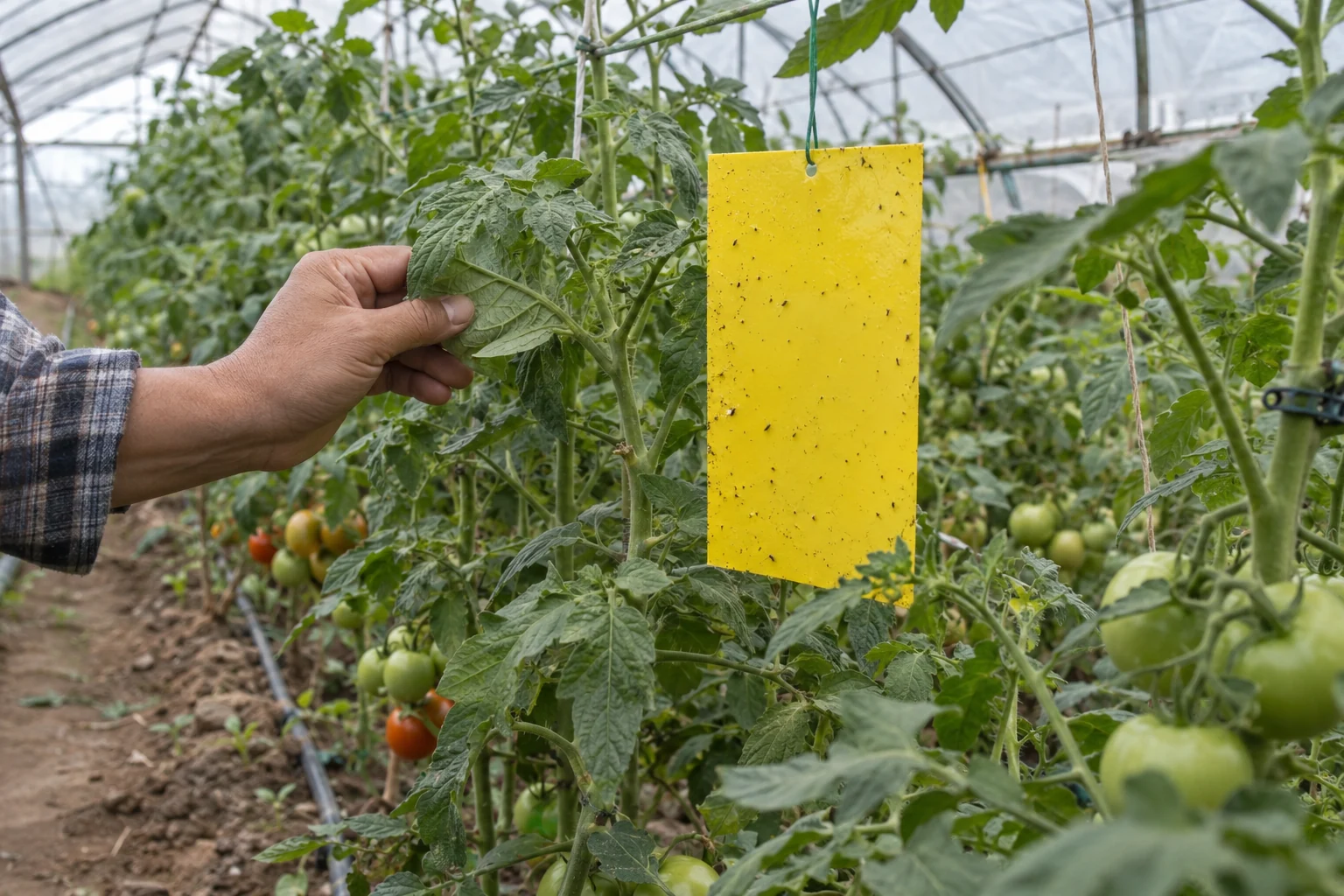
Monitor at least weekly. In greenhouses, hang yellow sticky cards, about one per 1,000 square feet (about 90 m²) plus extra cards near doors and vents, and change them weekly; inspect leaf undersides and shoot tips with a 10x lens [5][7]. In fields, traps detect the first arrivals, but counting adults on leaves estimates populations more accurately [8]. Start at field margins, which are usually infested first [4].
Field methods use a defined leaf. In Georgia cotton, scouts turn the fifth main-stem leaf below the terminal on at least 30 plants and count adults (three or more marks the leaf as infested), then detach it and count immatures (five or more) [6].
Thresholds are set locally. In Georgia cotton, treatment is recommended when 50% of leaves are infested with immatures [6]. In California tomatoes, the threshold for silverleaf whitefly is about 4 adults per leaf in a random 30-leaf sample [4]. Embrapa’s guidance for vegetables in Brazil uses one adult per plant on average, with exceptions for crops such as tomato where whiteflies transmit viruses [11].
5. Prevention
Start clean: use whitefly-free transplants and inspect incoming plants [5][8]; control broadleaf weeds, remove crop residues and rotate host with non-host crops [12]. Separate host crops: in California, tomatoes are planted at least half a mile upwind of melons, cole crops and cotton where possible [4].
In greenhouses, screen openings with mesh below 0.4 mm, fit double doors, and leave 2 to 4 weeks without plants between crops [5][7][12]. In tomato fields, silver reflective mulch delays whitefly build-up by 4 to 6 weeks, but stops working once foliage covers more than 60% of the surface [4]. Avoid over-fertilising, which attracts adults [5], and use varieties tolerant or resistant to whitefly-transmitted viruses where they exist [3].
6. Resistance is documented
B. tabaci has developed resistance to more than 50 active ingredients, and multi-resistant field populations have evolved, particularly of MED [3]. IRAC’s overview (status in 2020) summarises it by group [9]:
- 1A, 1B and 3A (carbamates, organophosphates, pyrethroids): since the 1980s, globally widespread.
- 4A (neonicotinoids): since the late 1990s, now in Europe, the Americas, Asia and Africa, mainly through the enzyme CYP6CM1, raised far more in adults than in nymphs; 4C and 4D are described as unaffected by this mechanism.
- 9B (pymetrozine): affected by the same enzymes, mainly in adults.
- 7C (pyriproxyfen): southern Europe, the USA and Israel since the 2000s, more recently parts of Brazil.
- 23 (spiromesifen, spirotetramat): isolated cases in Spain (MED) and Australia (MEAM1).
IRAC then knew of no or very limited resistance in other groups [9], but China’s recent monitoring has found it for one of them, the diamide cyantraniliprole (Group 28; see Regional notes). Greenhouse whitefly has confirmed neonicotinoid resistance in European protected vegetables [13]. Susceptibility varies by place and time, so check the local situation with experts [9].
7. Rotate modes of action
IRAC’s rule is not to treat consecutive whitefly generations with the same mode of action. A treatment window covers one B. tabaci life cycle, at most 30 days; several applications of one group may fall within it, within label limits, and the next window uses a different effective group. The scheme needs at least three effective groups [2], with no more than two applications per group within a window [14]; UC IPM advises changing mode of action every 21 days or sooner in California greenhouses and nurseries [7].
Limit Group 4 to one pest generation and less than half of the crop cycle, and follow a Group 4 seed or soil treatment with a foliar product from another group [13]. Mixture partners should come from different groups at full rates, and a mixture should not be used where the pest already resists one partner [13][14]. After a failure, switch group [14]. Eggs and pupae tolerate many insecticides and many products act only on immatures, so target the susceptible stage and cover leaf undersides [5][6].
Mode of action groups used against whiteflies
| IRAC group | Class | Examples | What the sources say |
|---|---|---|---|
| 4A | Neonicotinoids | Imidacloprid, thiamethoxam, acetamiprid, dinotefuran, clothianidin, nitenpyram | Resistance on several continents, mainly in adults [9]; imidacloprid resistance in Georgia cotton [6]; China 2024: thiamethoxam mostly low to moderate [15] |
| 4D | Butenolides | Flupyradifurone | Unaffected by the main neonicotinoid mechanism [9]; China 2024: mostly moderate to high in adults [15] |
| 9B | Pyridine azomethine derivatives | Pymetrozine | Affected by the neonicotinoid resistance enzymes, mainly in adults [9] |
| 7C | Juvenile hormone receptor modulators | Pyriproxyfen | Acts on immatures only [4]; resistance in southern Europe, the USA, Israel and parts of Brazil [9] |
| 23 | Tetronic and tetramic acid derivatives | Spirotetramat, spiromesifen | Isolated cases in Spain and Australia [9]; China 2024: spirotetramat high in eggs, rising [15] |
| 28 | Diamides | Cyantraniliprole | Little or none by 2020 [9]; China 2024: moderate to high in eggs [15] |
| 29, 12A | Chordotonal organ nicotinamidase inhibitors; mitochondrial ATP synthase inhibitors | Flonicamid (29), diafenthiuron (12A) | Listed for whiteflies [2]; little or no resistance by 2020 [9] |
| 6 | Avermectins | Abamectin | China 2024: adults mostly susceptible; a rotation partner [15] |
| 1A, 1B, 3A | Carbamates, organophosphates, pyrethroids | Bifenthrin (3A) | Widespread resistance since the 1980s [9]; organophosphates and pyrethroids flare whiteflies by killing natural enemies [6] |
The table is not a list of registered uses. Which products may be used, on which crops, at what rate and interval is set by each country’s registration and by the product label.
8. Biological options in the same programme
Releasing natural enemies is common in greenhouses [12]. Encarsia formosa is especially effective against greenhouse whitefly, whose parasitised pupae turn black; parasitised sweetpotato whitefly pupae turn brown. Eretmocerus eremicus has been sold against sweetpotato whitefly since the 1990s and also kills nymphs by feeding on them, and the predatory mite Amblyseius swirskii eats whitefly eggs and nymphs [5]. The predatory bug Nesidiocoris tenuis is another established option [12].
In fields, the focus is on conserving natural enemies: in cotton, spiders, bigeyed bugs, lacewings, minute pirate bugs, lady beetles and Encarsia and Eretmocerus wasps can hold low populations below threshold without spraying [6].
Entomopathogenic fungi used against B. tabaci include Beauveria bassiana, Isaria fumosorosea, Metarhizium anisopliae, Verticillium lecanii and Aschersonia species. They are applied with standard sprayers, so they fit easily into a rotation [12]. B. bassiana acts by contact, so start early and repeat applications [5]. IRAC places fungal agents in group UNF, whose members are not thought to share a target site [14]. In China, oil dispersion formulations of Beauveria bassiana ZJU435 and Metarhizium anisopliae CQMa421 are documented for whiteflies in tomato; these strains are the basis of Beauvia Z435™ and Metavia CQ421™, which are in development.
9. Regional notes
China
In China’s national monitoring for 2024, issued in March 2025, B. tabaci eggs showed high resistance to spirotetramat (over 107-fold, and rising) and moderate to high resistance to cyantraniliprole. Adults showed mostly moderate to high resistance to thiacloprid and flupyradifurone and mostly low to moderate resistance to thiamethoxam, and were mostly susceptible to abamectin. For high-resistance areas, the report advises suspending spirotetramat and cyantraniliprole, preferring biologicals such as Metarhizium anisopliae, rotating afidopyropen, abamectin, thiamethoxam and flupyradifurone, and using each product at most once per vegetable season [15]. MED, once largely confined to the Mediterranean, has spread to China [3].
Latin America
In Brazil, MEAM1 was first reported in the 1990s and MED in 2014, in Rio Grande do Sul near the borders with Argentina and Uruguay. MED is spreading fast, is well adapted to protected crops and Capsicum peppers, and has a history of resistance to neonicotinoids, growth regulators and diamides [16]. In the Cerrado, crop successions and a long sowing window favour B. tabaci in soybean, beans and cotton [10]. In Argentina, an INTA greenhouse tomato trial that combined Encarsia formosa with chemical control needed two applications of a product less harmful to the parasitoid, against five insecticide applications with chemicals alone [17].
10. A practical sequence
- Identify the species from the pupae; where control is difficult, have the Bemisia species tested.
- Start clean: whitefly-free transplants, weed and residue control, screened greenhouses.
- Monitor weekly with yellow cards and counts on a defined leaf, starting at field margins.
- Agree action thresholds with local advisers, with less tolerance where whiteflies spread viruses.
- Plan windows of up to about 30 days, one mode of action each, using at least three effective groups; count a neonicotinoid seed or soil treatment as a Group 4 window.
- Target the susceptible stage, cover leaf undersides, and favour selective products and biologicals.
- Check results, switch group after a failure, and follow the local label for crop, rate and interval.
Frequently asked questions
What is the best insecticide for whiteflies?
There is no single best product. B. tabaci resists more than 50 active ingredients and resistance differs by place, so use a locally registered product from a group that still works in your area, rotated in windows of no more than about 30 days [2][3].
How can I tell silverleaf whitefly from greenhouse whitefly?
Check the pupae: silverleaf whitefly pupae are oval with few or no long filaments, while greenhouse whitefly pupae have straight, raised sides and many long filaments [4][5].
When should whiteflies be treated?
When monitoring passes a locally agreed threshold, for example 50% of cotton leaves with immatures in Georgia or about 4 adults per leaf in California tomatoes. Tolerance is lower where whiteflies transmit viruses [4][6][11].
Do neonicotinoids still work against whiteflies?
B. tabaci resistance to Group 4A is documented on several continents, mainly in adults. IRAC advises limiting Group 4 to one pest generation and half of the crop cycle [9][13].
How does biological control of whiteflies work?
In greenhouses, parasitoids such as Encarsia formosa and Eretmocerus eremicus and the predatory mite Amblyseius swirskii are released. In fields, natural enemies are conserved by spraying only above threshold [5][6].
What are MEAM1 and MED?
The two most important cryptic species of B. tabaci, formerly biotypes B and Q. They look identical; only a laboratory test separates them, and MED is generally more resistant to insecticides [3][5][7].
Further reading
- Enquire about pyriproxyfen, spirotetramat, flonicamid and pymetrozine
- Pyriproxyfen: formulations and supply
- Spirotetramat: formulations and supply
- Flonicamid: formulations and supply
- Pymetrozine: formulations and supply
- Diafenthiuron: formulations and supply
- Acetamiprid: formulations and supply
- Beauvia Z435™ (Beauveria bassiana ZJU435)
- Metavia CQ421™ (Metarhizium anisopliae CQMa421)
- [1] Flint, M.L. (2015). Pest Notes: Whiteflies. University of California Statewide IPM Program, Publication 7401.
- [2] IRAC Sucking Pest Working Group (2018). IRM for sustainable whitefly control with special reference to Bemisia tabaci (poster).
- [3] IRAC. Tobacco whitefly, Bemisia tabaci: pest profile and resistance profile.
- [4] UC IPM (2013). Tomato pest management guidelines: Whiteflies. UC ANR Publication 3470.
- [5] Pundt, L. (2019). Managing whiteflies in the greenhouse. UConn Extension.
- [6] Roberts, P.M., Barman, A. and Toews, M.D. (2023). Sampling and managing whiteflies in Georgia cotton. University of Georgia Extension Circular 1184.
- [7] UC IPM (2022). Floriculture and ornamental nurseries pest management guidelines: Whiteflies. UC ANR Publication 3392.
- [8] UC IPM (2016). Cucurbits pest management guidelines: Whiteflies. UC ANR Publication 3445.
- [9] IRAC Sucking Pest Working Group (2020). Insecticide resistance overview of the tobacco whitefly (Bemisia tabaci) (poster).
- [10] Tomquelski, G.V. et al. (2020). Eficiência de inseticidas para o controle da mosca-branca Bemisia tabaci biótipo B em soja nas safras 2017/2018 e 2018/2019. Embrapa Soja, Circular Técnica 158.
- [11] Moura, A.P., Michereff Filho, M. and Guimarães, J.A. (2013). Manejo da resistência da mosca-branca Bemisia tabaci biótipo B a agrotóxicos utilizados em hortaliças. Embrapa Hortaliças, Circular Técnica 114.
- [12] IRAC (2025). IPM for control of Bemisia tabaci, version 1.0.
- [13] IRAC Sucking Pest Working Group (2015). Guidelines for management of resistance to Group 4 insecticides, version 2.0.
- [14] IRAC (2026). Mode of Action Classification Scheme, version 11.5.
- [15] National Agro-Tech Extension and Service Center of China (2025). 2024 resistance monitoring report for pests of oil and economic crops (Ministry of Agriculture and Rural Affairs website, in Chinese).
- [16] Michereff Filho, M. et al. (2026). Eficiência de inseticidas no controle da mosca-branca, Bemisia tabaci Mediterranean (MED), em pimenta habanero. Embrapa Hortaliças, Boletim de Pesquisa e Desenvolvimento 272.
- [17] López, S.N., Riquelme, M.B. and Botto, E. (2010). Integración del control biológico y químico de la mosca blanca Trialeurodes vaporariorum (Hemiptera: Aleyrodidae). Revista Colombiana de Entomología 36(2): 190-194.
Products in this article