Eight legume crops — and the biology behind each
From peanut to alfalfa: eight legume crops with different rhizobial partners and different roles. A quick reference, with a rule of thumb for where inoculation pays most.
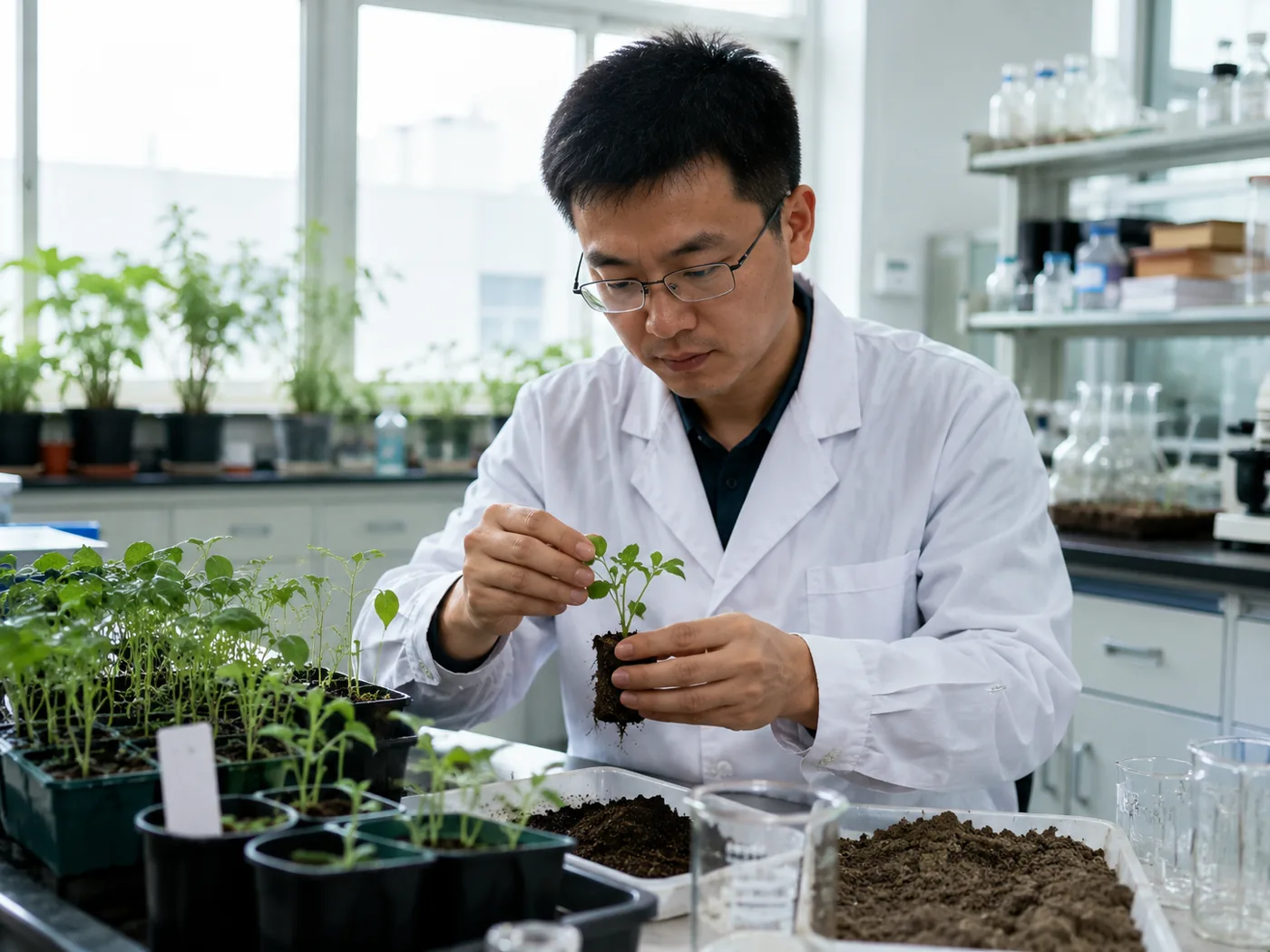
Legumes are among the world’s most important and most sustainable crops. Global pulse production alone exceeds 90 million tonnes a year, and legumes supply a large share of dietary protein in many countries, while also fixing their own nitrogen and building fertility for the crops that follow. But they are not interchangeable: each legume pairs with particular rhizobia, and knowing those pairings is the first step in making nitrogen fixation work.
The eight legume crops in our programmes
| Crop | Scientific name | Rhizobial partner |
|---|---|---|
| Peanut | Arachis hypogaea | Bradyrhizobium (Arachis group) |
| Soybean | Glycine max | Bradyrhizobium japonicum / diazoefficiens |
| Common bean | Phaseolus vulgaris | Rhizobium (phaseoli / tropici) |
| Cowpea | Vigna unguiculata | Bradyrhizobium (cowpea group) |
| Pigeon pea | Cajanus cajan | Bradyrhizobium (cowpea group) |
| Mung bean | Vigna radiata | Bradyrhizobium (cowpea group) |
| Black gram | Vigna mungo | Bradyrhizobium (cowpea group) |
| Alfalfa | Medicago sativa | Sinorhizobium meliloti |
Promiscuous vs specific — and why it changes your decision
Legumes fall into “cross-inoculation groups”: crops that share compatible rhizobia. Five of these crops (peanut, cowpea, pigeon pea, mung bean, black gram) belong to the notably promiscuous cowpea-miscellany group: a wide range of slow-growing Bradyrhizobium will nodulate them, so some compatible partner is often already in the soil. Soybean is the opposite: it is highly selective and needs its own specific Bradyrhizobium. Common bean partners with faster-growing Rhizobium, and alfalfa with Sinorhizobium meliloti.
That distinction is not academic. The more specific the host, the more likely its exact partner is missing on new ground — and the greater the return from inoculation. Soybean on a field that has never grown it is the classic case: without the right Bradyrhizobium, it barely nodulates at all.
Grain legumes and a perennial forage
Seven of the eight are grain or pulse legumes, fixing nitrogen over a single season. Alfalfa is different: a perennial forage that regrows and fixes nitrogen throughout the season, year after year, which is why its seasonal nitrogen totals are the highest in the group.
What each crop returns
The pairing is not only a matter of biology; it shows in the yield. Across our multi-site field trials, Orvan™-treated crops (each working through its own matched rhizobia) gained roughly +12% to +20% in yield, with the largest responses on the specific and high-demand hosts. Set alongside the nitrogen each crop can fix, these results make the productivity case for matching the biology to the host:
Nitrogen fixed and field-trial yield response, by crop
| Crop | Typical N fixed | Orvan™ yield gain |
|---|---|---|
| Peanut | ~50–150 kg N/ha | +19.9% |
| Soybean | ~60–300 kg N/ha | +16.1% |
| Mung bean | ~30–150 kg N/ha | +15.3% |
| Alfalfa | ~150–500 kg N/ha/yr | +15.2% |
| Common bean | ~30–150 kg N/ha | +14.2% |
| Cowpea | ~30–150 kg N/ha | +13.8% |
| Pigeon pea | ~30–150 kg N/ha | +12.6% |
| Black gram | ~30–150 kg N/ha | +11.9% |
Why one product cannot fit all
Because the rhizobial partner differs by crop, a rhizobial inoculant has to be crop-specific — which is why Nodu™ is supplied as one formulation per legume. Vigor™, a broad-spectrum growth promoter, and Orvan™, the coupling consortium, work across the range, but the nitrogen-fixing rhizobia at the heart of the programme must always be matched to the host.