Seaweed biostimulants: what a crop response to stress really means
Water balance, recovery and fruit set reveal more than a greener leaf. Understanding these responses helps put seaweed biostimulants in the right place in a crop programme.
A crop can look healthy until a difficult week exposes its limitations. The question then becomes practical: can it keep functioning, recover when conditions improve, and carry that recovery through to harvest? Seaweed biostimulants attract interest because they may influence parts of that response. Their value is best understood through a sequence of crop observations, rather than a single photograph of greener leaves.
1. Begin with the stress the crop actually experiences
Heat, drying soil and saline irrigation water can occur together, but they are different problems. A study of a seaweed extract during a temporary water shortage does not show that the same extract protects flowering during heat or corrects salt accumulation. Start by naming the expected event, the crop stage and the part of production at risk. For a fruiting crop, that might be flower retention; for a leafy vegetable, it might be continued marketable growth.
This framing also makes comparisons useful. Two fields with similar afternoon wilting may have very different root conditions and recovery prospects. Keep irrigation and weather records beside product observations so that a change in management is not mistaken for a biological response.
2. An extract is a biological mixture
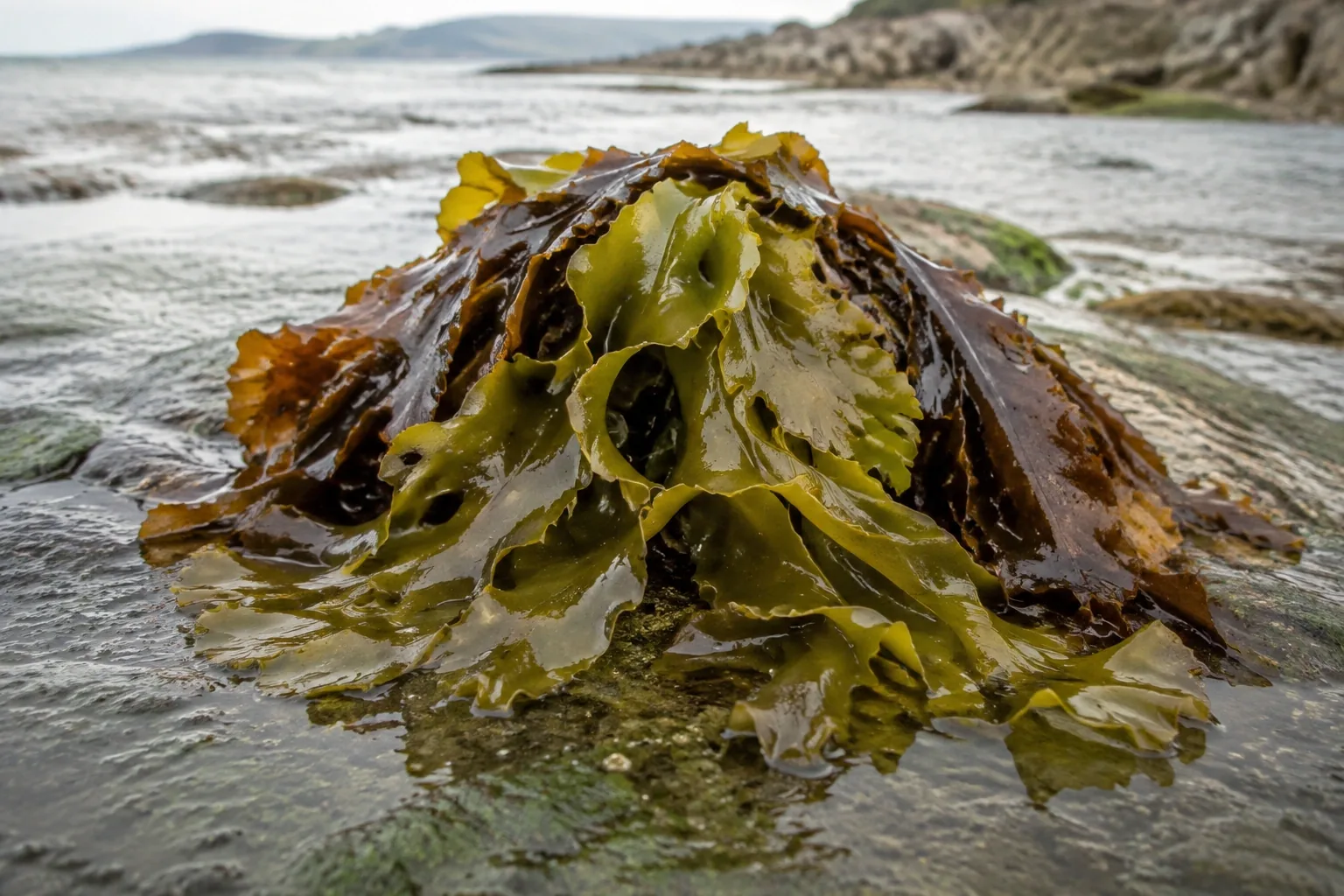
Ascophyllum nodosum is a brown seaweed used in agricultural extracts. Research comparing three extracts made from this same species found different drought responses in tomato. The raw-material name alone did not predict equivalent performance [1]. For product assessment, this makes extract identity, composition and consistency more informative than an attractive origin story.
A separate tomato study examined how extract processing affected heat-stress tolerance during fruit set. Broadly similar mineral and carbohydrate totals did not fully describe the differences between the extracts; the molecular size distribution of the carbohydrates was one relevant distinction [2]. The practical lesson is to ask what characterises the finished material, while avoiding the assumption that a single declared component explains every effect.
3. Read the physiology as a sequence
Stomata connect water loss with carbon uptake. A smaller opening can conserve water, but it also restricts entry of the carbon dioxide needed for photosynthesis. Consequently, a high or low stomatal conductance reading is not in itself a sign of success. Its meaning depends on the stress stage and on what the plant does next.
In controlled research on tomato seedlings, an extract of the red seaweed Galaxaura rugosa affected responses associated with abscisic acid, a plant stress signal, alongside changes in water-use physiology [3]. This offers a mechanism to investigate. It does not establish the same response in every seaweed extract, mature crop or field environment.
4. Recovery deserves its own assessment
A 2024 tomato study linked an Ascophyllum treatment before drought with changes in stress-related metabolism, photosynthetic function and subsequent fruit production under the study conditions [4]. That work makes the period after stress particularly interesting. An observation programme can therefore follow three connected questions: what was retained during the event, what resumed afterwards, and what reached harvest?
An observation framework for a crop programme
| When | What to record | What the record helps explain |
|---|---|---|
| Before the event | Crop stage, uniformity and irrigation conditions | Whether the comparison started from similar plants |
| During stress | Leaf condition alongside soil moisture and weather | Whether a visible response matches the actual exposure |
| During recovery | New growth and return to normal crop development | Whether a temporary difference becomes sustained recovery |
| At harvest | Marketable quantity, grade and rejected produce | Whether the response matters to the production objective |
5. Put the product beside the rest of the programme
A useful evaluation keeps the crop programme recognisable. If the product treatment also receives a new fertiliser regime, extra irrigation and different harvesting, the contribution of the extract becomes difficult to interpret. Record those changes separately. This is especially important when a formulation contains added nutrients: nutrition and biostimulation may both matter, but they answer different questions.
Commercial judgement should include the full operation. Does the proposed use fit the existing crop calendar? Can the grower identify the relevant stress window? Is the desired outcome sufficiently valuable to justify product and application costs? These questions connect a promising biological response with a workable agricultural decision.
6. Ask for a crop-specific explanation
A strong technical discussion can cover the material, the crop situation and the expected observable response together. It also shows which observations support that explanation. For seaweed biostimulants, the most useful next question is often: “What should we look for in this crop, during this particular period?” That creates a much clearer basis for product selection than a general promise of stronger plants.
Further reading
- [1] Goñi et al. (2018). Ascophyllum nodosum extract biostimulants and their role in enhancing tolerance to drought stress in tomato plants. Plant Physiology and Biochemistry.
- [2] Carmody et al. (2020). Ascophyllum nodosum Extract Biostimulant Processing and Its Impact on Enhancing Heat Stress Tolerance During Tomato Fruit Set. Frontiers in Plant Science.
- [3] Morales-Sierra et al. (2023). Biostimulant activity of Galaxaura rugosa seaweed extracts against water deficit stress in tomato seedlings involves activation of ABA signaling. Frontiers in Plant Science.
- [4] Physiological and molecular insights into the effect of a seaweed biostimulant on enhancing fruit yield and drought tolerance in tomato (2024). Plant Stress.