Reading your nodules: a field check for nitrogen fixation
Whether a legume is fixing nitrogen can be seen directly, by digging up a plant and reading its nodules. This guide covers how to sample, what to look for, and how to act on the results.
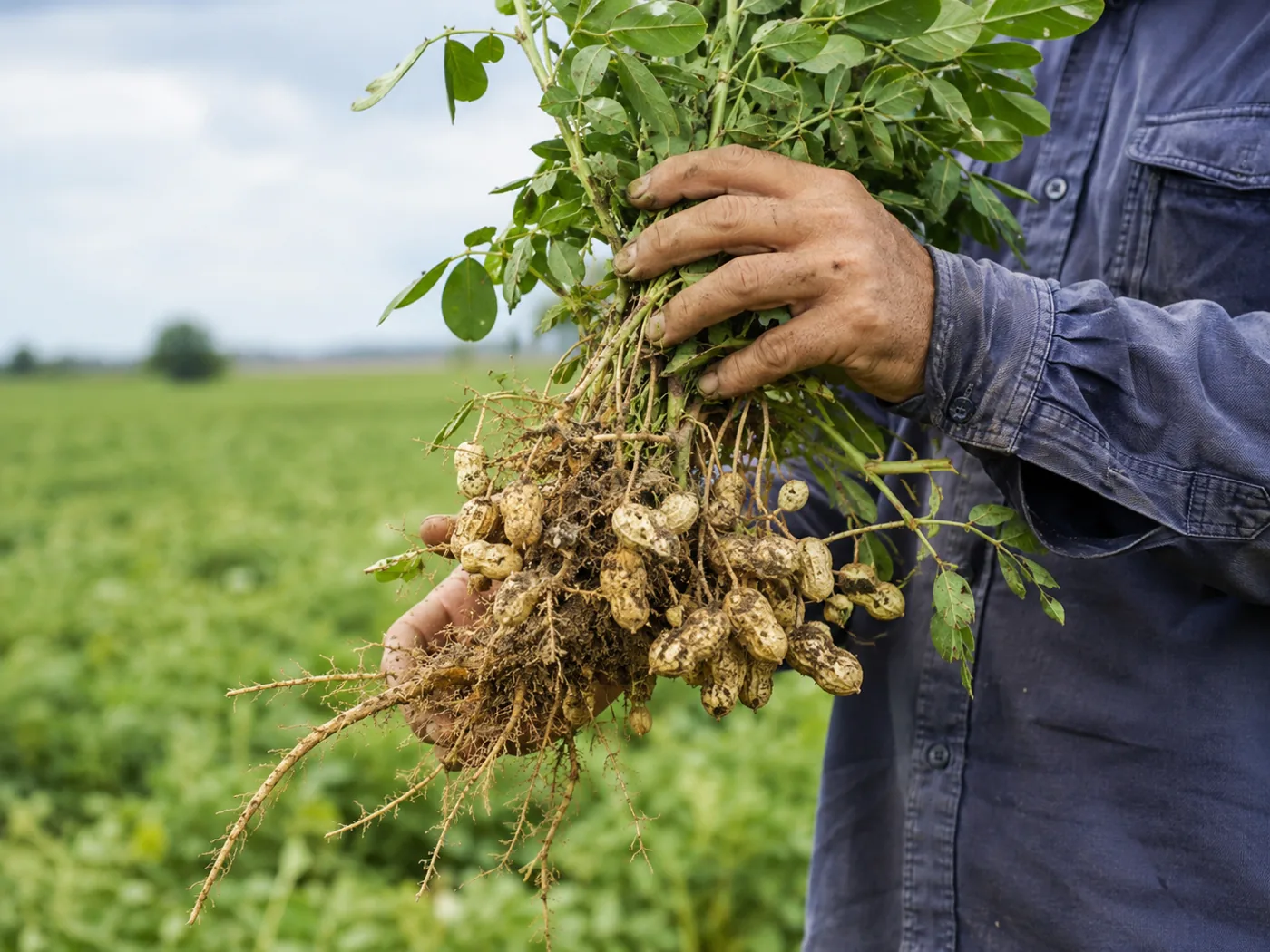
One of the most useful things a grower or agronomist can do is also one of the simplest: dig up several plants a few weeks after emergence and read the nodules. They show at a glance whether inoculation worked and whether the crop is actually fixing nitrogen — long before yield does, and while there is still time to act. It needs no laboratory and costs nothing: ten minutes with a trowel is enough.
Why a nodule can be read at all
A root nodule is a small organ the plant builds to house its rhizobia, and inside an active one is a pink-to-red pigment called leghemoglobin. It supplies the fixing bacteria with just enough oxygen while protecting the oxygen-sensitive nitrogen-fixing enzyme, and its colour is the single most reliable visible sign that fixation is actually taking place. That is why cutting a nodule in half reveals more than counting nodules can: the colour makes the process visible.
When and how to sample
Check around early flowering, when fixation is rising towards its peak — early enough that, if the result is poor, there is still a season to learn from. Beyond timing, a few sampling rules separate a reliable answer from a misleading one.
- Lift, don’t pull. Use a trowel or fork and lift each plant with its root ball intact; pulling by the stem strips the nodules off and ruins the reading.
- Sample several plants, not one. Take five to ten so that a single atypical plant does not mislead you.
- Sample representatively — and compare. Walk a rough transect across the field, and deliberately include both a healthy-looking patch and any pale or stunted patch, so that good and poor areas can be compared.
- Wash gently. Soak or rinse the soil off so the nodules stay attached and you can see their number, size, and position.
The four things to read
- Number: a well-nodulated plant carries plenty of nodules; very few are a warning sign. Exact counts vary by crop, but the contrast between a well- and a poorly nodulated plant is usually obvious.
- Placement: nodules clustered on the crown and taproot point to early, effective inoculation; nodules only far out on the lateral roots suggest the crop nodulated late, from whatever strains happened to be in the soil.
- Size: larger, well-developed nodules on the main root generally fix more nitrogen than a scattering of tiny ones.
- Colour inside: slice several of the larger ones open. Pink or red means active fixation; white, grey, or green does not.
What you see, and what it means
| What you see | What it usually means |
|---|---|
| Plenty of nodules on the crown / taproot | Good, timely inoculation and nodulation |
| Few or no nodules | Poor nodulation — check inoculant, application, or soil |
| Nodules only far out on lateral roots | Late nodulation, often from native strains |
| Pink or red inside | Actively fixing nitrogen (that colour is leghemoglobin) |
| White or grey inside | Not yet active, or ineffective |
| Green or brown inside | Past peak — senescing (normal late in the season) |
Quantity is not the same as quality
This is the point most often missed. A plant can be covered in nodules and still fix very little if those nodules are white or grey inside. This happens when native strains nodulate the crop but fix poorly, occupying the root without doing the work — a common pattern on promiscuous hosts such as cowpea. So do not stop at “are there nodules?”; cut several open and ask “are they pink inside?” Effective fixation needs both: enough nodules, in the right place, and active colour within. A dozen pink nodules on the crown are worth more than a hundred pale ones.
A worked example: reading a disappointing plant
Suppose soybean dug at flowering on a first-time field shows only a dozen small nodules, all far out on the lateral roots and all white inside, and the plant is pale. Taken together, the signs are clear: the crop nodulated late and ineffectively, most likely because the right Bradyrhizobium was never established (the crop was not inoculated, or the inoculant died before it reached the root). This crop will run short of nitrogen, and there is little to be done this season beyond keeping it nourished; the real lesson is for next season. By contrast, a plant whose crown carries clusters of large, pink-centred nodules is on track, and shows that inoculation and handling worked.
Acting on the results
If nodulation is good and the nodules are pink, the crop is on track — note the result as a record of what worked on that field. If nodules are few, late, or white inside, treat the reading as a diagnosis: check whether a fungicide or other chemical came into contact with the inoculant, whether the product was fresh and stored cool, whether it was the right crop-specific type, and whether high soil nitrate might be suppressing nodulation. Our troubleshooting guide sets out the full list of symptoms and causes. The remedy is almost always a matched, well-handled inoculant applied at sowing — and, the following season, a check strip to confirm that it worked.