Skip to content
Products

Microbial inoculants

Mycor™

Mycor — Mycorrhizal inoculant

Mycorrhizal inoculant

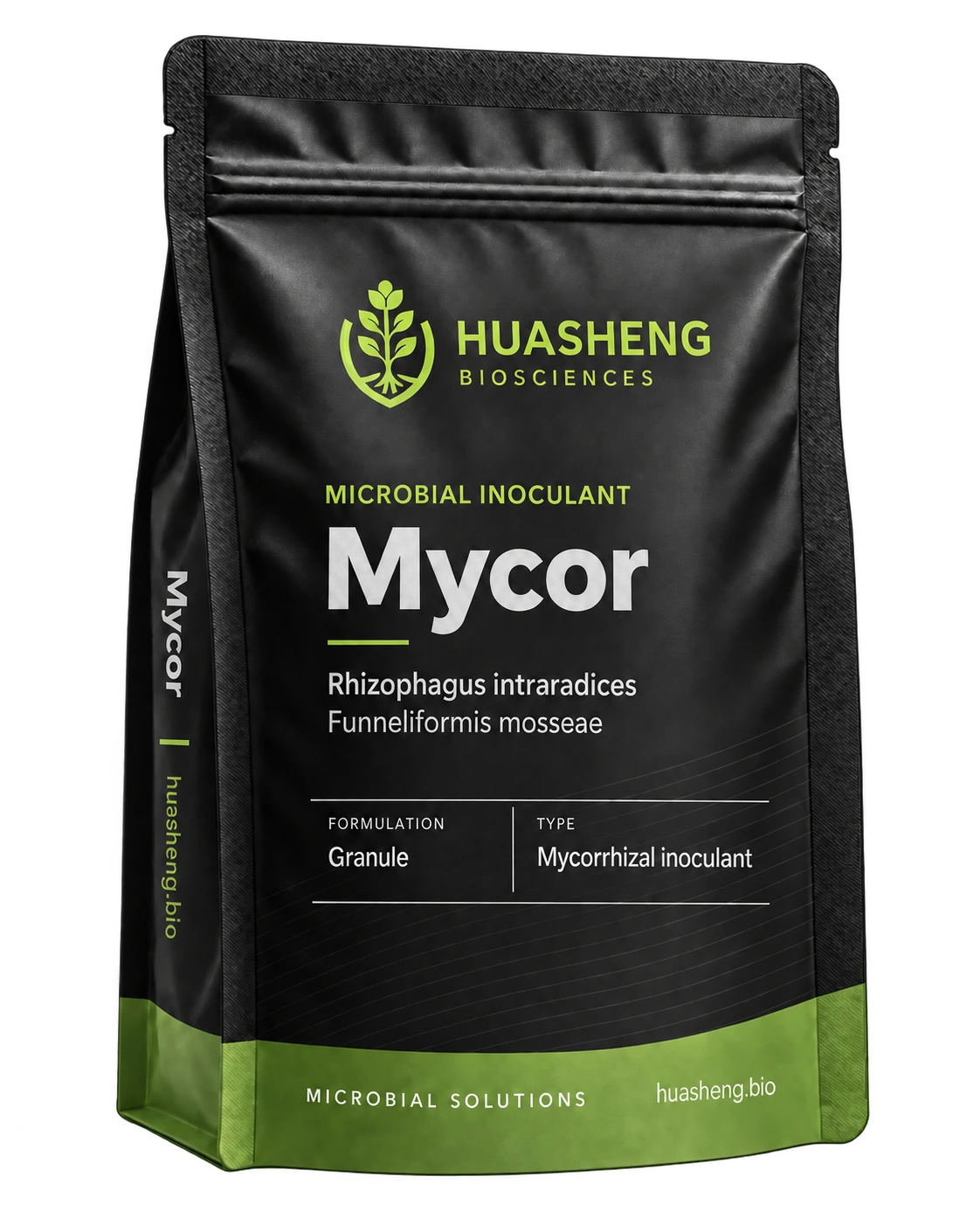
Mycor combines the arbuscular mycorrhizal fungi Rhizophagus intraradices and Funneliformis mosseae in a granular root-zone format. These fungi form associations with compatible host roots, linking the plant to a wider soil volume through fungal hyphae. The focus is root establishment and nutrient exploration, with host compatibility and phosphorus management shaping its practical role.

Principal components
Rhizophagus intraradices + Funneliformis mosseae
Crops
Grapes · Strawberry · Tomato

Contact our team for regional product availability.

Root establishment & nutrient exploration

A fungal extension of roots

Mycorrhizal hyphae connect compatible roots with soil spaces beyond the immediate root surface, giving nutrient exploration a distinct biological basis.

Complement phosphorus supply

Mycorrhizal function depends on the plant–fungus relationship and nutrient context; adequate phosphorus management remains part of the system.

Choose by host compatibility

A compatible crop is essential. Arbuscular mycorrhizal products cannot be assumed to benefit every vegetable or nursery species in the same way.

Composition & material characteristics

Arbuscular mycorrhizal fungi

Mycor combines Rhizophagus intraradices and Funneliformis mosseae in a root-zone material profile. These fungal species are associated with compatible plant roots and extend the plant’s connection with the surrounding soil through hyphae.

Host compatibility and phosphorus

The plant–fungus relationship is central to mycorrhizal function. Host compatibility, existing phosphorus supply and root establishment shape the relevance of a mycorrhizal material within a crop programme.

Published research on materials & applications

The following publications examine related materials and their agricultural applications. Findings relate to the materials, crops and conditions described in each study.

Tomato associated with Funneliformis mosseae BEG12 under different phosphorus conditions.

WHAT THE STUDY FOUND

Mycorrhizal plants showed greater resistance to the tested biological stresses, but this protection disappeared under severe phosphorus limitation.

RESEARCH SCOPE

Isolate-specific tomato study using Funneliformis mosseae BEG12 under contrasting phosphorus conditions. The protective response disappeared under severe phosphorus limitation; conclusions concern BEG12 and the tested host–nutrition system.

Phosphorus availability drives mycorrhiza induced resistance in tomato

Crop applications

Tomato, many fruit crops and compatible nursery plants are relevant root-establishment contexts. Brassica crops generally do not form the usual arbuscular mycorrhizal association. Existing phosphorus supply, soil condition and transplant establishment should guide crop-specific decisions.

Tomato root establishment

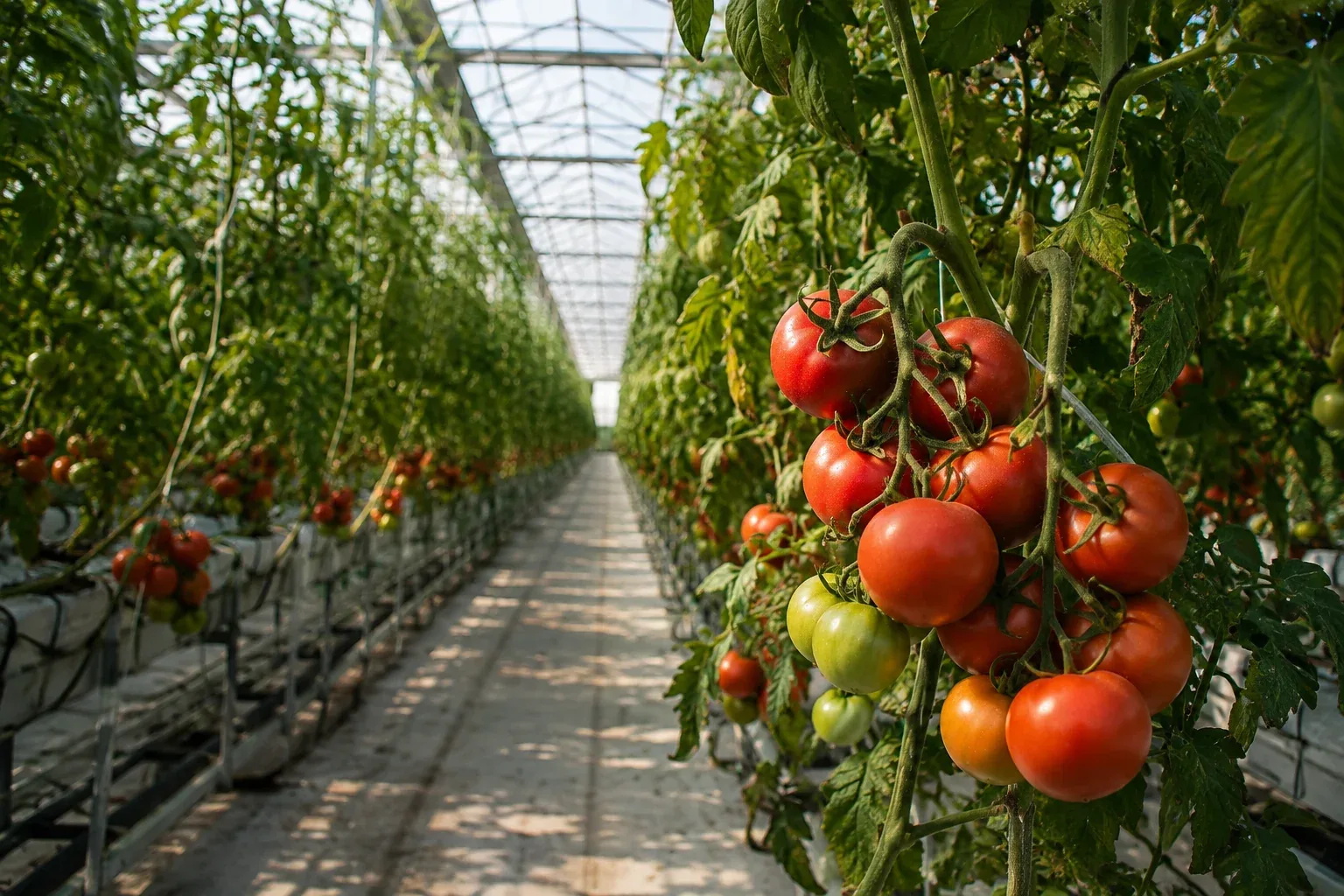
Tomato is a compatible arbuscular-mycorrhizal host. Establishment links the root system with the surrounding growing medium; phosphorus supply and root condition are part of the biological context.

Grapevine establishment

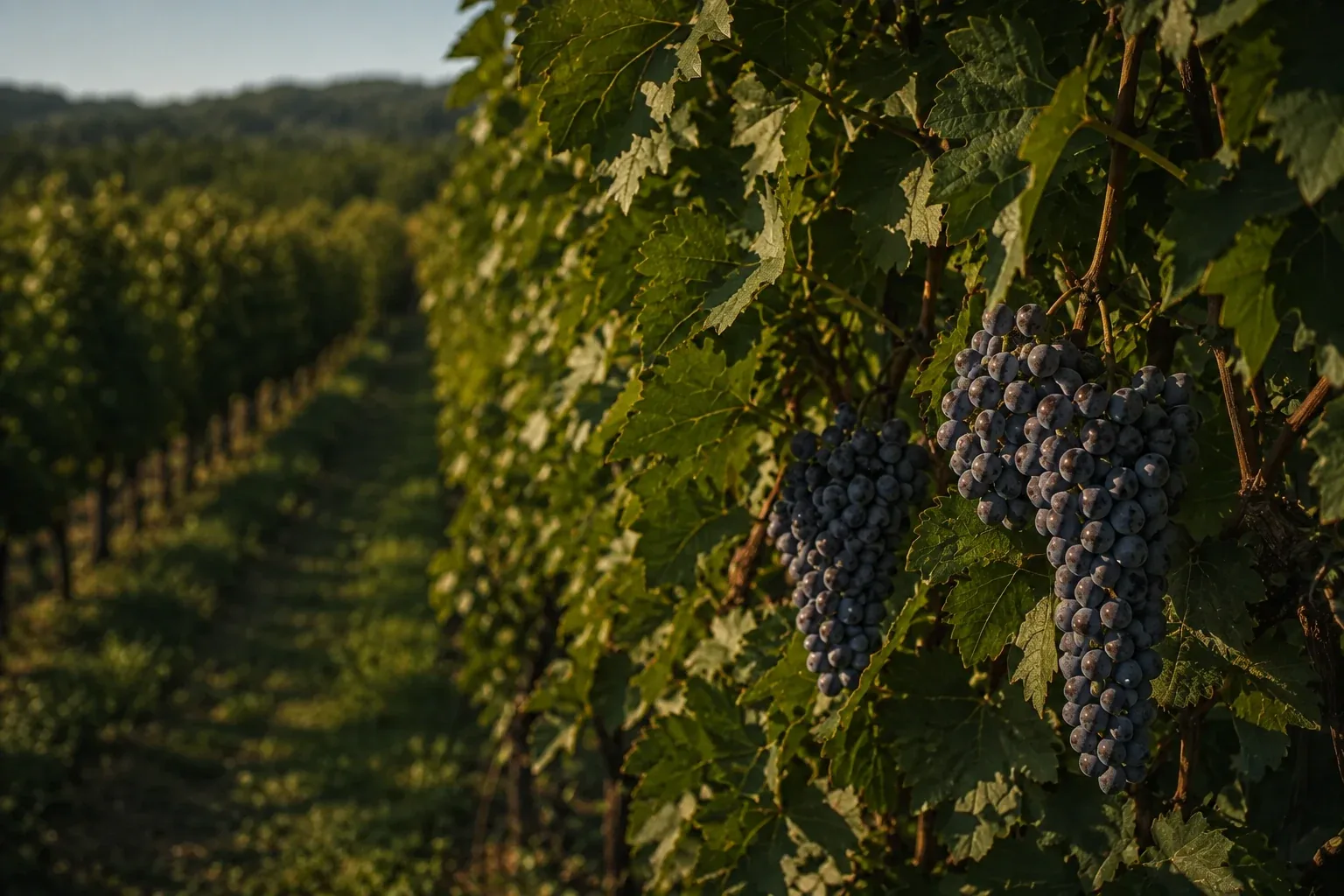
Young grapevines provide a root-establishment context for the two declared mycorrhizal species. The existing soil environment and nutrient supply influence the conditions in which the root association develops.

Strawberry root environments

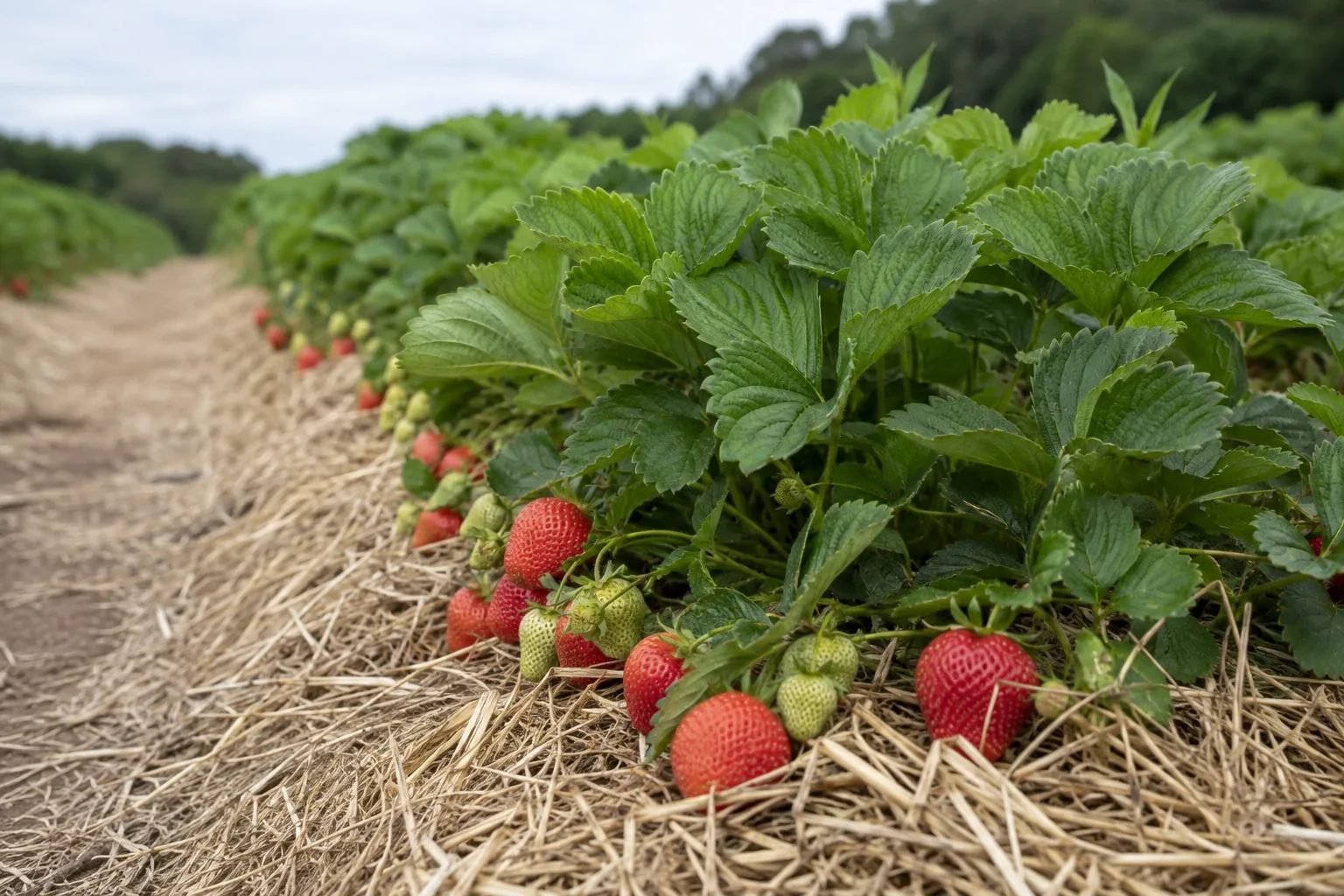
Strawberry root systems can be considered within a compatible-host programme. Substrate condition and phosphorus nutrition remain important when interpreting root development and the value of the mycorrhizal association.

Select the product and application programme for the crop, growing conditions and applicable market label.

Quality & product characteristics

Species and biological characterisation

Species identity and a clear description of the biological material are important quality characteristics. Isolate information, where available, allows research findings to be interpreted at a more specific biological level.

Root-zone material properties

Physical uniformity, storage condition and suitability for the target growing medium are relevant material properties. Crop-host information and phosphorus status provide the agronomic context for their evaluation.

Many horticultural crops form arbuscular mycorrhizae; brassica crops generally fall outside this host group.

Product questions

Which mycorrhizal species are declared?

The declared species are Rhizophagus intraradices and Funneliformis mosseae. Species identity is distinct from a strain or isolate designation and from the biological quantity stated for a finished formulation.

Can the mycorrhizal approach be applied to every crop?

Host compatibility matters. Tomato, grape and strawberry are the listed crop contexts; brassica crops generally do not form the usual arbuscular-mycorrhizal association. Phosphorus nutrition also affects the biological context.

Related products

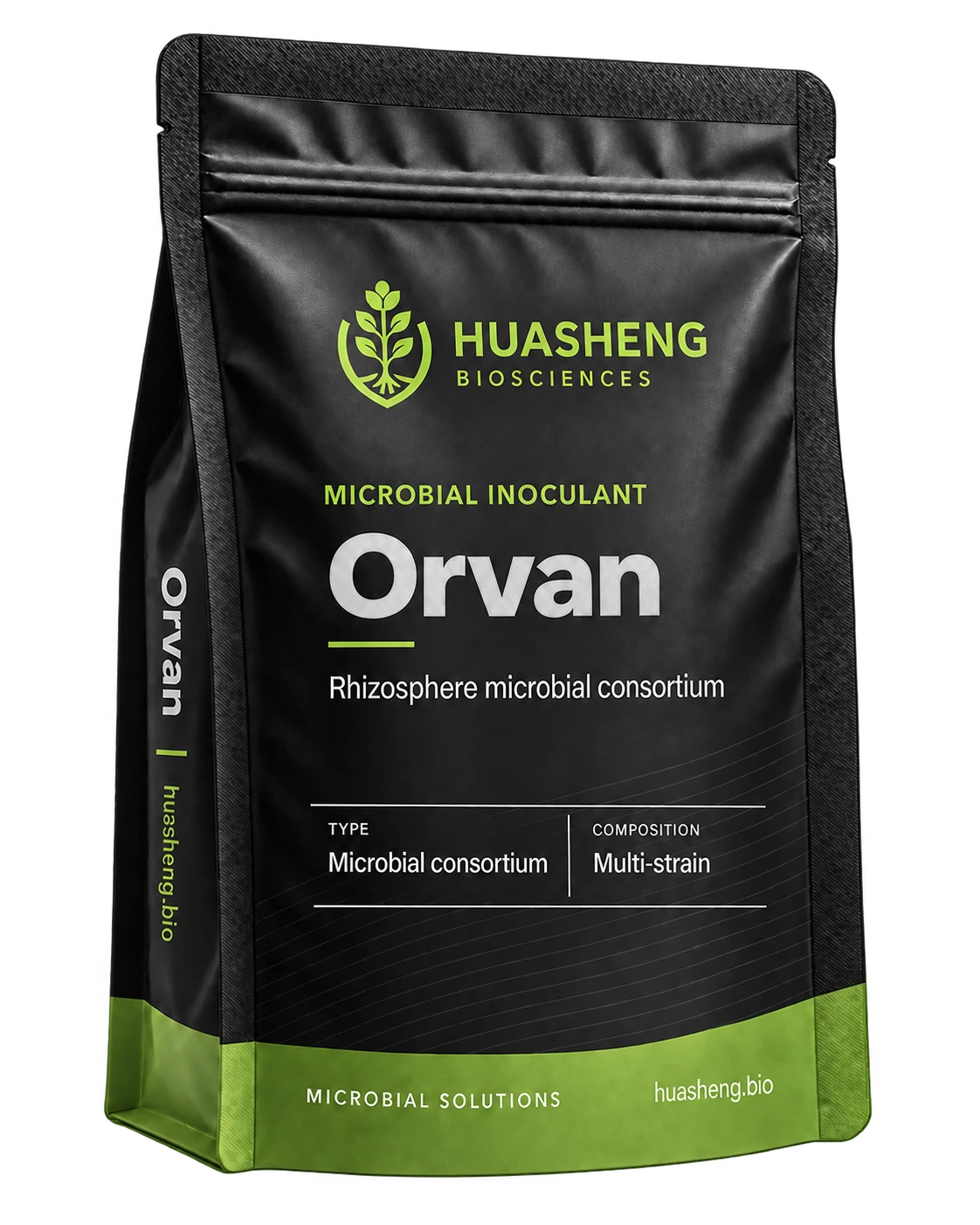
Orvan — Rhizosphere consortium

Orvan

Rhizosphere consortium

Nodulation & nitrogen fixation

Components
Bacillus velezensis · Brevibacillus laterosporus · Paenibacillus mucilaginosus
Crops
Peanut · Soybean · Common bean · Cowpea · Pigeon pea · Mung bean · Black gram · Alfalfa

HUASHENG BIO

Good products. Lasting partnerships.

Tell us about your crop, market or technology. Our product and technical teams will help shape the next step.

Contact Huasheng