Nodu, Vigor & Orvan: product technical records
Research, crop-specific field data and methodology for these three inoculant products. Each record refers to the named product, crop and evaluation conditions.
Evidence by technology
Each of our three technologies is validated in its own multi-site field programme. Orvan™ carries the deepest dataset; Nodu™ and Vigor™ are validated across hundreds of sites in their own right.
Orvan™ field data — all eight legumes
Our deepest dataset, by crop. Nodu™ and Vigor™ field data are summarised on each technology page.
| Crop | Avg. yield | Nodules | Nitrogenase | N fixed / other | Sites |
|---|---|---|---|---|---|
| Peanut | +19.9% | up to 8.5× | up to 10.7× | >80% soil A. flavus ↓ | 405 / 19 prov. |
| Soybean | +16.1% | up to 3.7× | up to 4.8× | + isoflavone | 253 / 18 prov. |
| Common bean | +14.2% | up to 4.6× | up to 5.0× | ≤60 kg N/ha | 62 / 6 prov. |
| Cowpea | +13.8% | up to 5.2× | up to 4.4× | ≤115 kg N/ha | 48 / 5 prov. |
| Pigeon pea | +12.6% | up to 4.1× | up to 3.8× | ≤140 kg N/ha | 36 / 4 prov. |
| Mung bean | +15.3% | up to 4.8× | up to 4.5× | ≤55 kg N/ha | 54 / 5 prov. |
| Black gram | +11.9% | up to 4.3× | 38–41/plant | ≤55 kg N/ha | 30 / 4 prov. |
| Alfalfa | +15.2% | up to 6.1× | up to 5.6× | 150–250+ kg N/yr | 96 / 4 reg. |
In dedicated trials over three consecutive years, Orvan™-treated fields held a >10% yield gain even with 20–40% less synthetic nitrogen.
Where the upside is largest: these multi-site results were measured in mature, long-cultivated regions where effective native rhizobia are already common. Response to inoculation is typically greater on first-time legume ground and on saline-alkali, acid, low-fertility, or degraded soils — where compatible rhizobia are sparse and the soil is more limiting — so these figures are best read as a conservative baseline.
Results disclaimer: performance data were collected by OCRI-CAAS and partners in field or laboratory studies. Variables — soil, climate, crop variety, and management — affect performance; results may vary and should be validated through local trials.
How we run and report trials
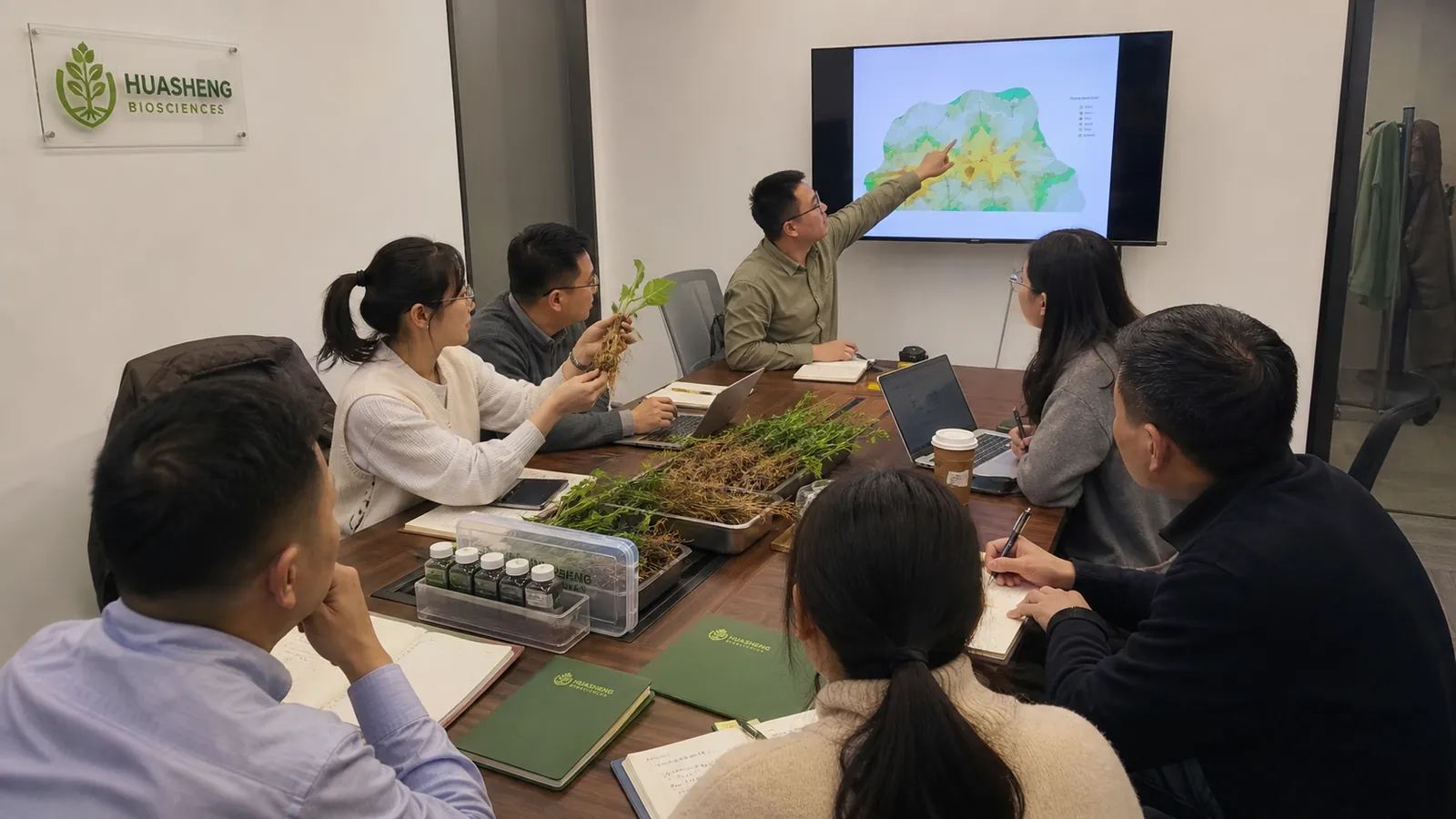
A yield figure is only worth the protocol behind it. This is how the numbers on this page were produced, and what each of them does and does not mean.
Who runs them
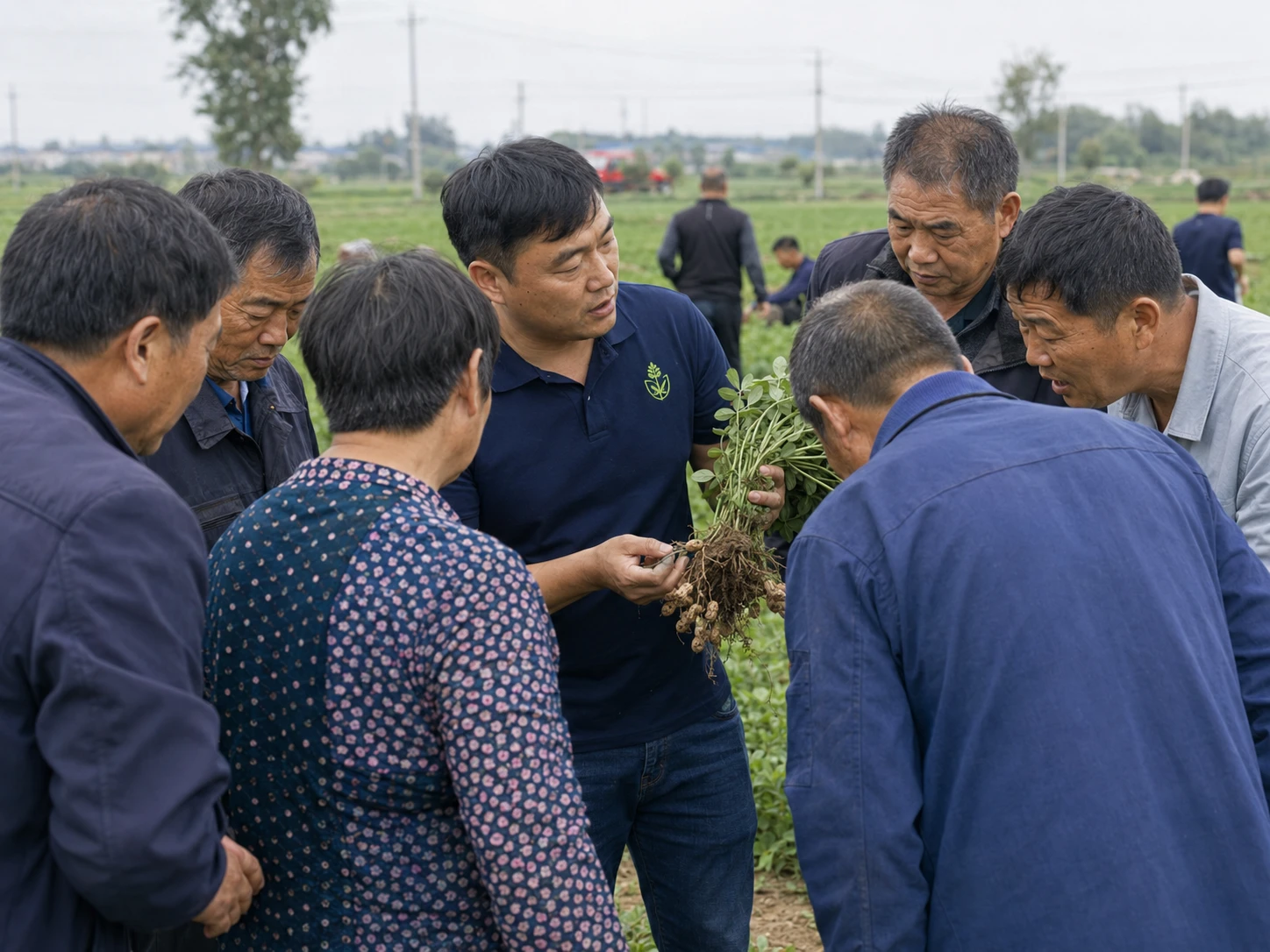
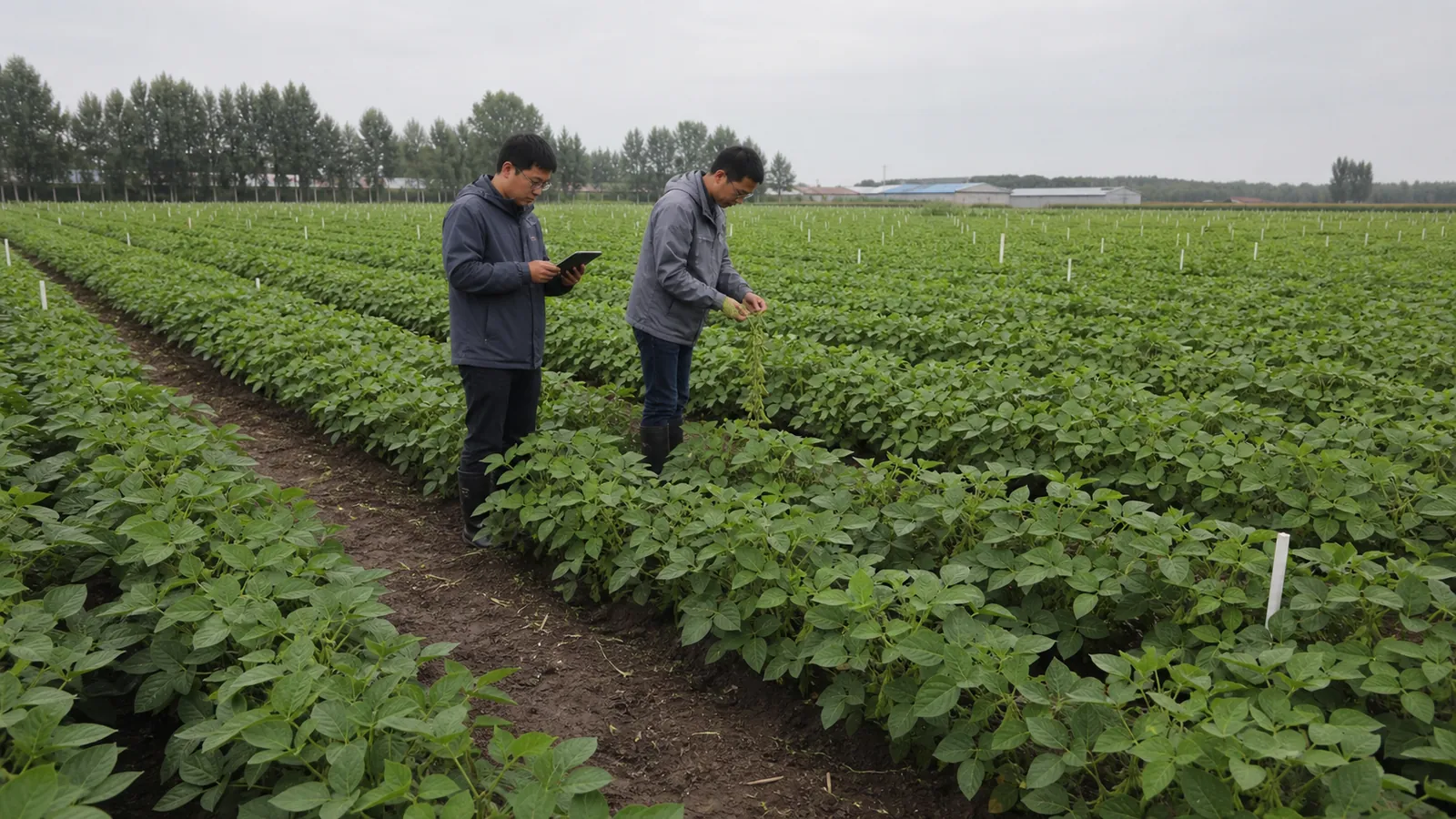
The core programmes are run by OCRI-CAAS and by partner institutes and provincial extension stations, on their own sites and using their own measurement methods. Demonstration harvests are measured on site by an expert panel convened for the purpose, not by us.
What is compared
Every figure is a treated plot against an untreated control on the same field, in the same season, with the same variety, sowing date and management. The only deliberate difference is the inoculant. Where a product is quoted on its own — Nodu™ or Vigor™ standalone yield — it was applied without the other two.
What the numbers mean
Yield percentages are the mean across all sites in that crop’s programme, not the best site. Fold-changes written “up to” are the opposite: the highest response observed, which is why they sit well above the average and should be read as the ceiling rather than the expectation. Site and province counts are cumulative across seasons.
What we do not claim
On peanut we measured Aspergillus flavus in the soil, so that is what we report. We do not state a reduction in aflatoxin in the kernel, and no figure on this site should be read that way. Whether the lower soil counts and the stronger symbiosis are causally linked is still being worked out.
What you can ask for
Per-site data, protocols and the underlying reports are available to qualified partners under NDA, and we would rather you validated the biology on your own ground than relied on an average from Chinese trials. We help set up and read a local trial as part of any serious evaluation.
Publications
- Peer-reviewed studies on rhizobial inoculation and legume yield response.
- Peer-reviewed research on microbial coupling and nodulation enhancement.
- Full citations and complete data packages shared with qualified partners under NDA.
Recognition
- 2019 — First registered as a microbial fertiliser (MARA)
- 2023 — National Recommended Agricultural Technology & Agricultural Spark Technology
- 2024 — One of China's Top 10 Major Leading Agricultural Technologies (MARA)
Research collaborations







From the field
Representative demonstrations across legumes and provinces.
Peanut — Liaoning, 2024
Whole-plant comparison: Orvan™-treated plots showed denser pods and abundant pink nodulation versus untreated control (CK); part of the 405-site programme.
Soybean — Heilongjiang, 2023
Stronger Bradyrhizobium nodulation and higher yield with Nodu™ SY + Orvan™.
Common bean — Yunnan, 2022
On low-nitrogen hill soils, the largest relative nodulation and yield response.
Mung bean — Jilin, 2023
Fast early nodulation matched to the short cycle.
Alfalfa — Gansu, 2024
Sinorhizobium meliloti inoculation lifted nodulation and stand establishment on alkaline soil, with higher hay yield and crude protein.
More named grower and regional cases are published as the programme expands.
Want the full data package?
Peer-reviewed publications are public; full data packages are available to qualified partners under NDA.