The aflatoxin–nitrogen opportunity
Two of the costliest problems in legume farming — and the biology to solve both at once.
The aflatoxin problem
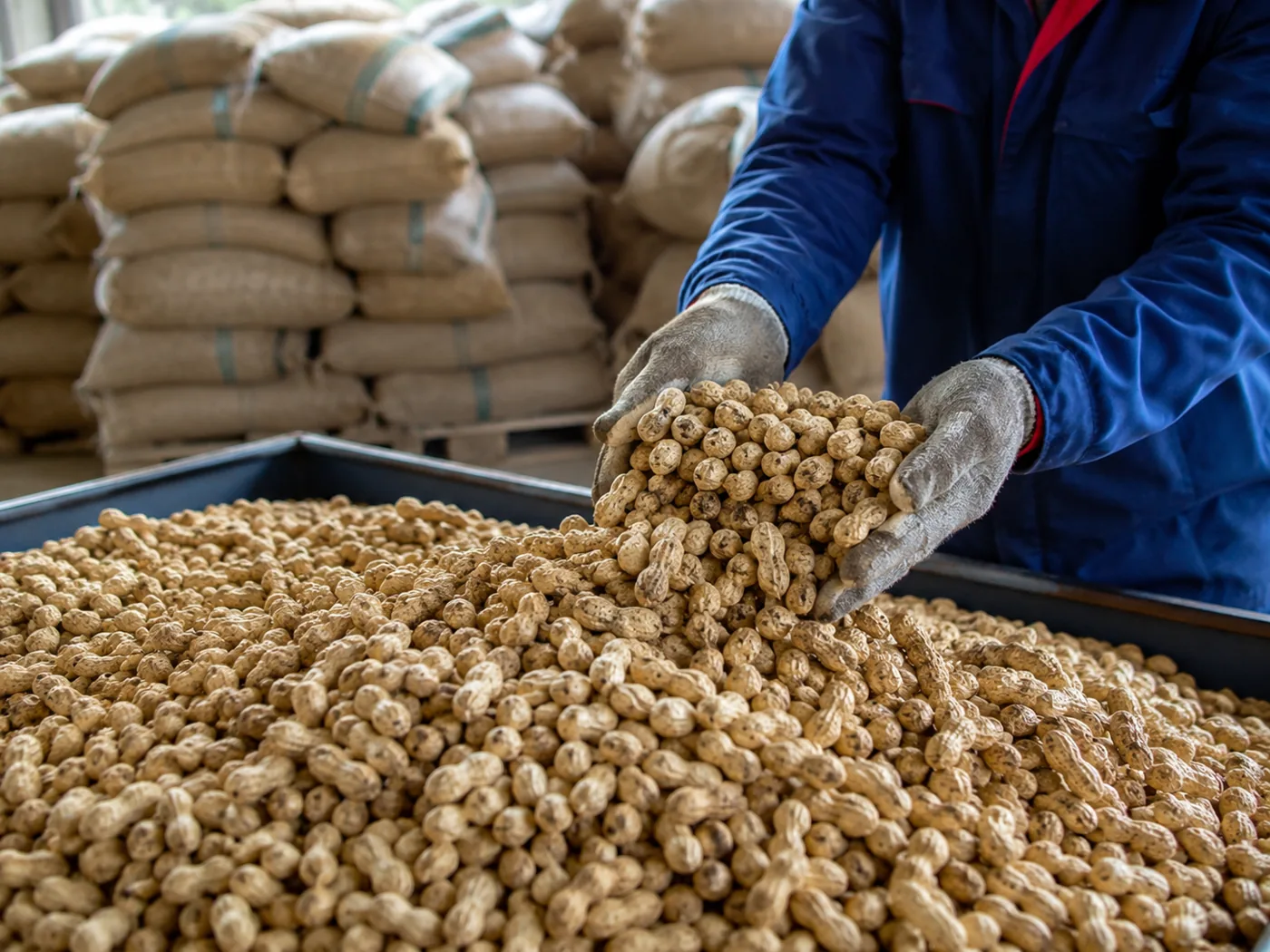
In peanut — the legume most exposed to it — Aspergillus flavus contaminates kernels with aflatoxin, a potent mycotoxin limited to just 4 ppb at EU entry and 20 ppb in the US. In 2022 alone, aflatoxin drove over 110 border rejections of peanut shipments into Europe — lost crops, costly testing, and downgraded harvests.
The nitrogen problem
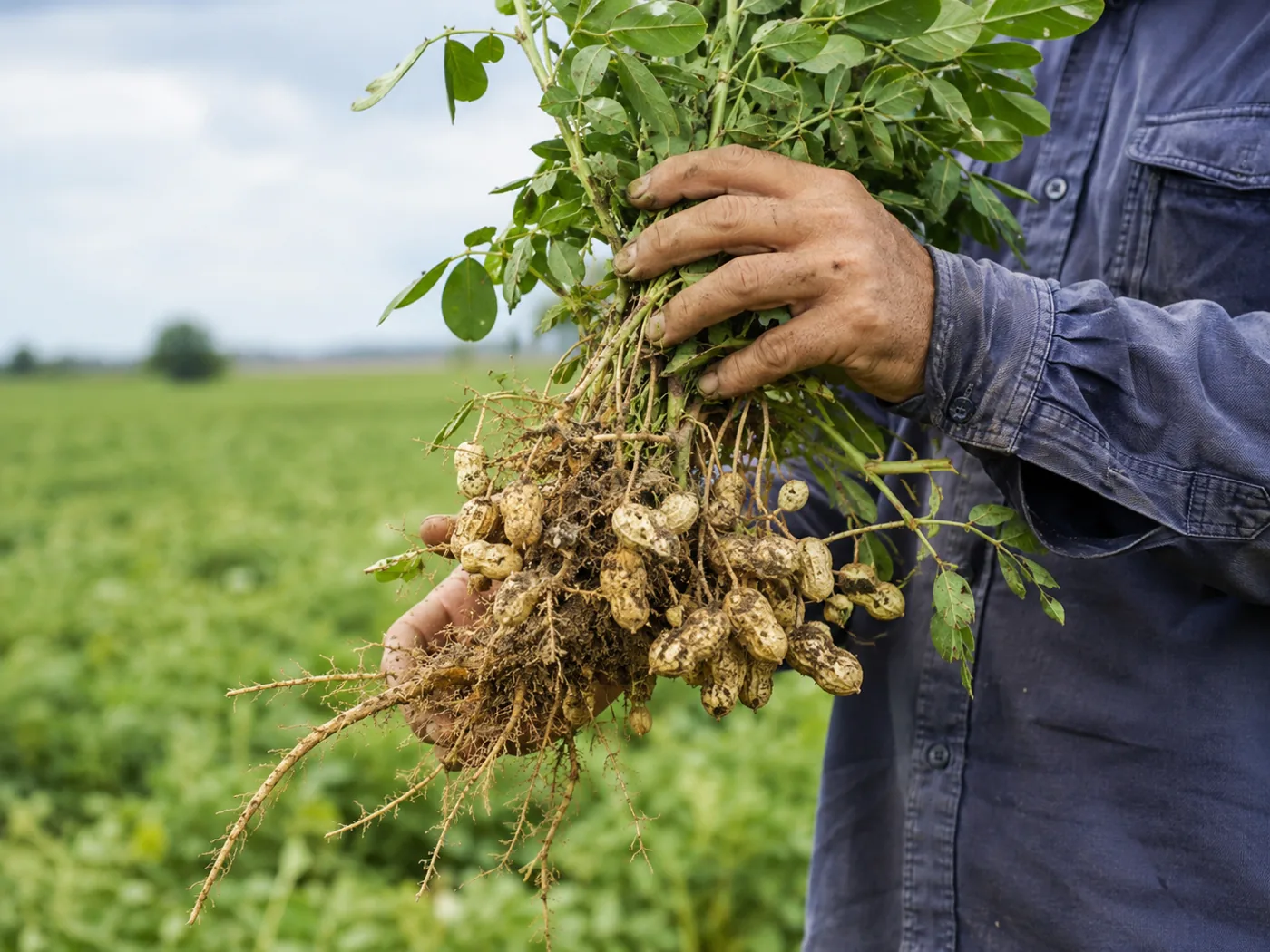
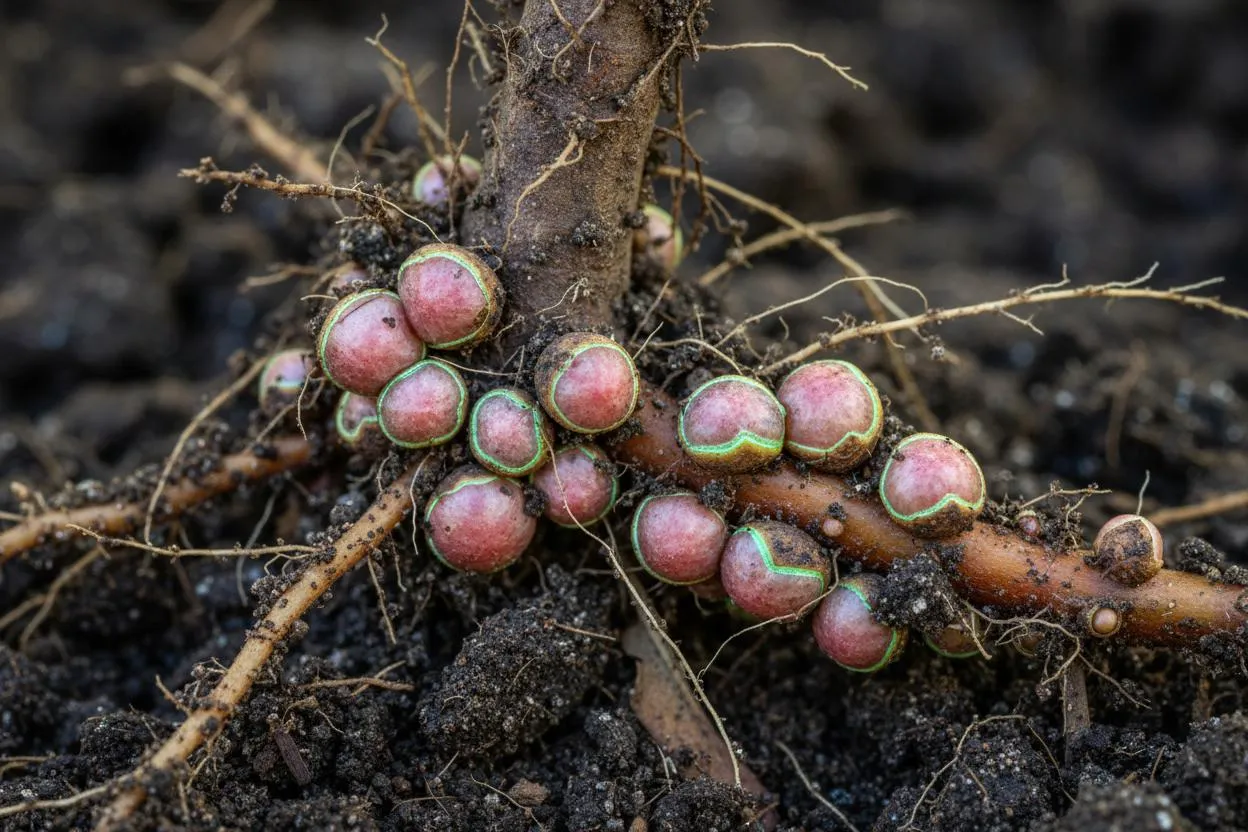
At the same time, nitrogen is expensive — yet most legume crops capture far less of it than they could. Legumes can fix their own nitrogen through rhizobia, from ~30 kg N/ha in pulses to over 200 kg in soybean and alfalfa, but weak or poorly-matched nodulation leaves much of that potential uncaptured, forcing growers to buy fertiliser they shouldn't need.
The opportunity — solve both with biology
Two problems, two separate costs — until now. Our biology addresses both at once. In OCRI-CAAS field trials, Orvan™-treated peanut showed markedly lower soil Aspergillus flavus alongside stronger nitrogen fixation. Nodu™ supplies region-matched rhizobia and Vigor™ builds roots and soil health, together forming a complete programme across eight legume crops.