Herbicide mode of action groups: HRAC codes, weed resistance and rotation rules
How the HRAC numeric codes and legacy letters group herbicides by mode of action, how weeds become resistant, where resistance is documented, and the rotation and mixture rules published by HRAC, WSSA and university extension.
Author: Chen Zhiyuan, Senior AgronomistTechnical review: Wang Liqun, Researcher
Products in this article
A herbicide's mode of action is its overall interaction with essential processes in the plant; its site of action is the specific binding site, such as an enzyme [1]. Repeated use of a herbicide, or of any other with the same site of action, selects the same resistant plants [1], so the group number on a label shows which products cannot stand in for each other when a weed survives. The classification published by the Herbicide Resistance Action Committee (HRAC) is a tool for planning mixtures and rotations: it is not a recommendation of which herbicide to use, and it does not rank resistance risk [1]. This guide explains the current codes, how resistance develops, where it is documented, and the rotation and mixture rules published by HRAC, the Weed Science Society of America (WSSA) and university extension.
1. How the HRAC classification works
In 2020 Global HRAC harmonised the classification with the regional HRACs, CropLife International, CropLife Australia and weed science societies such as WSSA, and moved from alphabetical to numerical codes [2]. CropLife International members committed to show mode of action groups on all crop protection labels by 2023, and HRAC supported the legacy letters during the transition while aiming to complete the change by the end of 2023 [2]. HRAC has since confirmed that it will keep the numerical system, noting that Hindu Arabic numerals are understood almost everywhere, including in China [3].
The current edition is the 2026 classification. It added five new active ingredients, took 41 actives with low sales off the poster while keeping them in the master list, and renamed two groups: Group 3 is now inhibition of microtubule assembly at alpha tubulin, and Group 23 is microtubule interference with an unclear site of action [3]. The 2026 poster shows 230 actives [3]. Each number is printed with its legacy letter, for example 1 (A), 2 (B), 9 (G) and 27 (F2). Group 5 now covers the former C1 and C2, and herbicides with an unknown mode of action keep the legacy code Z [4].
The full list of actives is published as a spreadsheet [5]. A few actives carry two codes: bromoxynil is listed as 6/24, quinclorac as 4/29 and the new active rimisoxafen as 12/32 [5]. When a label or an older guide shows only a letter, convert it with the HRAC list before comparing products.
2. How weed resistance develops
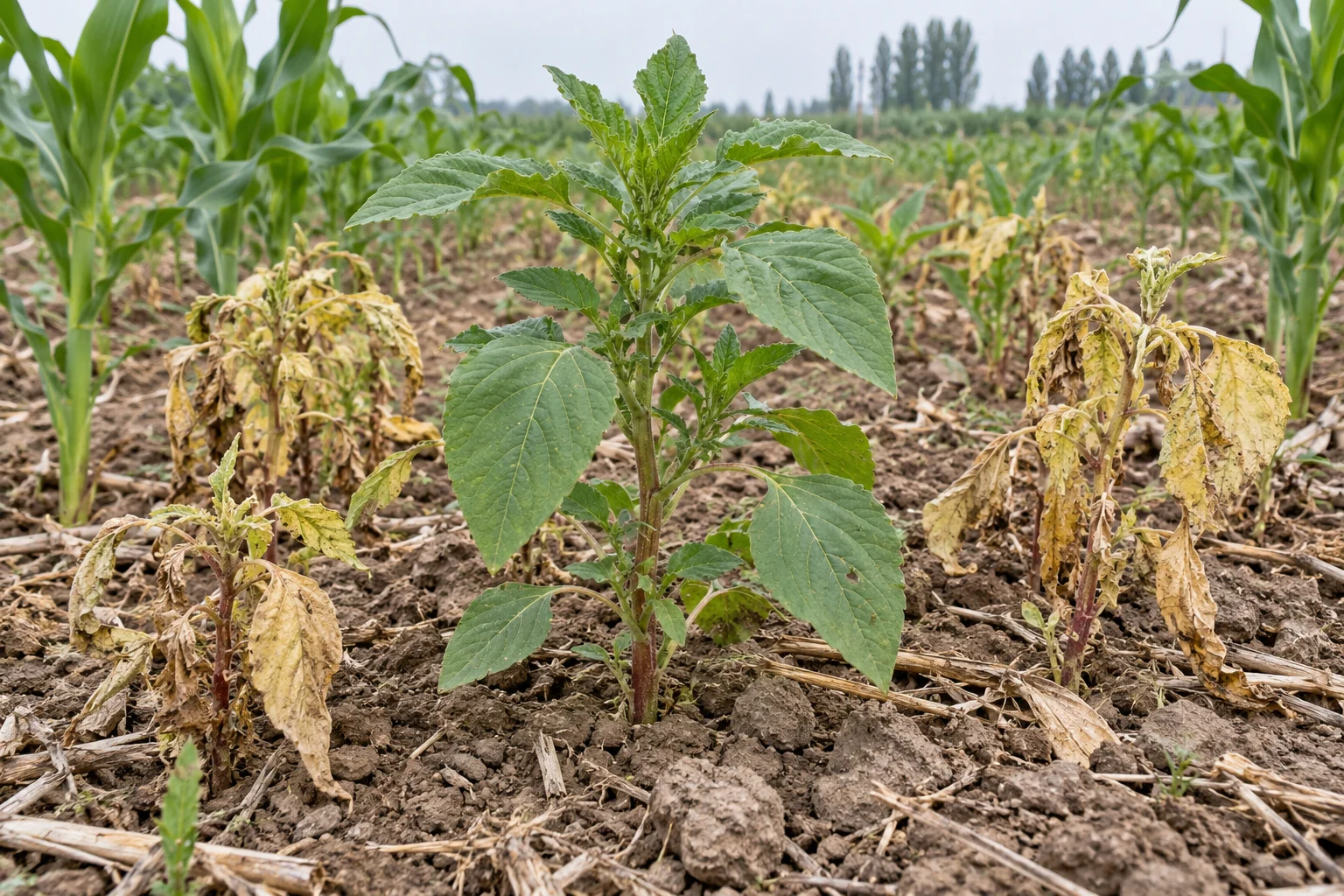
HRAC defines resistance as the inheritable ability of some plants in a weed population to survive a treatment that, at the recommended rate and in appropriate conditions, would control them [1]. Tolerance is different: it is the inherent ability of a whole species to survive a herbicide [6]. Resistance comes from naturally occurring mutations, and resistant individuals are assumed to be present in all weed populations before a herbicide is ever used [1][6]. Repeated use of one site of action kills susceptible plants and lets the resistant ones set seed; after several seasons they dominate the population and the soil seed bank [6][7]. Because resistance declines more slowly than it evolves, it can stay at a relatively high frequency once it is in a field [6].
There are two kinds of mechanism [1][6]. Target site resistance changes the target protein so that the herbicide binds less well, or raises the amount of target protein through higher expression or extra gene copies. Nontarget site resistance reduces the amount of herbicide that reaches the target, through lower uptake or translocation, faster metabolic detoxification, or sequestration of the herbicide where it cannot act. Cross resistance means that one mechanism protects a plant against two or more herbicides; multiple resistance means that a population survives herbicides with different modes of action [1].
Risk rises with weed density, with species that outcross and produce many seeds, and above all with frequent use of herbicides that share a site of action, cropping systems that rely mainly on herbicides and a lack of nonchemical control [1]. A failure is often not resistance: HRAC advises reviewing the application, rate, weed stage and weather with an adviser first, and then sampling plants or seed from the suspected population for a confirmation test [1].
3. Documented resistant weeds
The International Herbicide-Resistant Weed Database, maintained by Ian Heap, compiles confirmed cases worldwide [7][8]. On 26 October 2026 it listed 548 unique cases (species by site of action) in 275 species, 156 dicots and 119 monocots. Weeds had evolved resistance to 21 of the 31 known sites of action and to 168 herbicides, in 102 crops in 76 countries [8]. Sources differ on when resistance was first seen: WSSA dates the first reports to the 1950s and HRAC the first case to 1964 [1][7].
Resistance is concentrated in a few groups. By number of resistant species, ALS inhibitors (Group 2) rank first, followed by PSII inhibitors (Group 5), EPSPS inhibitors (Group 9) and ACCase inhibitors (Group 1) [9]; the counts for catalogue groups are in the table in section 4.
China
In rice fields in Jiangsu Province, 38 of 46 Chinese sprangletop (Leptochloa chinensis) populations tested in a whole plant bioassay showed significant resistance to cyhalofop-butyl (Group 1). The resistant populations were cross resistant to fenoxaprop-P-ethyl, another Group 1 herbicide, but remained susceptible to the other herbicides tested, such as pyraclonil and benzobicyclon, and ACCase gene mutations were identified as a crucial mechanism [13]. The authors link the problem to the spread of direct seeded rice and prolonged, exclusive use of herbicides [13].
Latin America
In Brazil, glyphosate is the main herbicide in soybean, maize and cotton, and 11 species had glyphosate resistant biotypes in 2021, including three Conyza species, sourgrass (Digitaria insularis), goosegrass (Eleusine indica), Italian ryegrass and Palmer amaranth [14]. An Embrapa survey over the 2018/2019 and 2019/2020 seasons found resistant biotypes widely spread across the main grain regions, with Conyza and sourgrass the most widespread [14].
Australia and North America
Rigid ryegrass (Lolium rigidum) in South Australia first evolved multiple resistance to six sites of action in 1982, in barley and wheat [10]. In Illinois, waterhemp populations have survived herbicides they had never been exposed to; in every case so far the cause was a nontarget site mechanism, usually enhanced metabolism [11].
4. HRAC groups with catalogue examples
The table lists the groups that include active ingredients in Huasheng's catalogue. Group numbers and legacy letters follow the 2026 HRAC list [4][5]; resistant species are the counts for each site of action in the database on 26 October 2026 [9].
HRAC groups, catalogue examples and resistant species recorded
| HRAC group (legacy) | Mode of action | Catalogue examples | Resistant species recorded |
|---|---|---|---|
| 1 (A) | ACCase inhibition | Cyhalofop-butyl, fluazifop-P-butyl, haloxyfop-P-methyl | 56 |
| 2 (B) | ALS inhibition | Nicosulfuron, imazethapyr, imazapic | 176 |
| 3 (K1) | Microtubule assembly inhibition, alpha tubulin | Pendimethalin | 12 |
| 4 (O) | Auxin mimics | Fluroxypyr | 44 |
| 5 (C1, C2) | PSII inhibition, serine 264 binders | Tebuthiuron | 89 |
| 6 (C3) | PSII inhibition, histidine 215 binders | Bentazone | 5 |
| 9 (G) | EPSPS inhibition | Glyphosate | 62 |
| 10 (H) | Glutamine synthetase inhibition | Glufosinate | 7 |
| 15 (K3) | Very long chain fatty acid (VLCFA) synthesis inhibition | Pyroxasulfone | 10 |
| 27 (F2) | HPPD inhibition | Mesotrione, tembotrione | 8 |
The table describes HRAC groups and documented resistance. It is not a list of registered uses or a ranking of products: which herbicide may be used on which crop, at what rate and timing, is set by each country's registration and by the product label. Groups without catalogue examples also carry resistance, for example PPO inhibitors (Group 14, 18 species) and PSI electron diverters (Group 22, 33 species) [9].
5. Rotation and mixture rules
HRAC's general guideline for using chemical groups [1]:
- Avoid continued use of the same herbicide, or of herbicides with the same site of action, in the same field unless it is integrated with other control practices.
- Limit the number of applications of a single site of action in one growing season.
- Where possible, use mixtures or sequences of herbicides with different sites of action that are active on the same target weeds.
- Combine preemergence and postemergence herbicides.
- Use nonselective herbicides on early flushes before crop emergence and on escapes.
WSSA adds that programmes should use multiple modes of action with overlapping weed spectrums in rotation, sequences or mixtures, apply the full recommended rate at the right timing for the hardest weed present, scout after application, and stop weeds from setting seed or spreading vegetatively. In annual crops it advises starting clean with a burndown or tillage combined with a preemergence residual herbicide where appropriate [7].
A mixture helps only when both active ingredients give high control of the target weed and come from different sites of action [1]. In 105 Illinois grain fields, glyphosate resistant waterhemp was most common where glyphosate was used often and where modes of action changed from year to year but few were used each year; mixing modes of action at the time of application reduced the likelihood of resistance [12]. A field using 2.5 modes of action per application was 83 times less likely to select glyphosate resistant waterhemp than one using 1.5, while simply rotating modes of action increased resistance [11]. Mixing may delay resistance but is unlikely to prevent it [12], and the result was based on target site resistance; there are no similar data for metabolic resistance [11].
HRAC reaches the same conclusion: rotation of herbicides alone is not enough, and where metabolic resistance is present the site of action may not be the most relevant factor, so such cases need individual assessment [1]. Its risk checklist rates a system as low risk when it uses more than two modes of action, combines cultural, mechanical and chemical control, uses a site of action once per season and rotates crops fully; one mode of action, chemical control only, many uses per season and no crop rotation indicate high risk [1].
6. A practical sequence
- Record the weeds in each field and the herbicide history by HRAC group number, converting any legacy letters [4][5].
- Check local resistance records for those weeds and groups before choosing products [8].
- Plan at least two effective groups for each target weed, applied together or in sequence, and keep applications of any one group to a minimum [1][7].
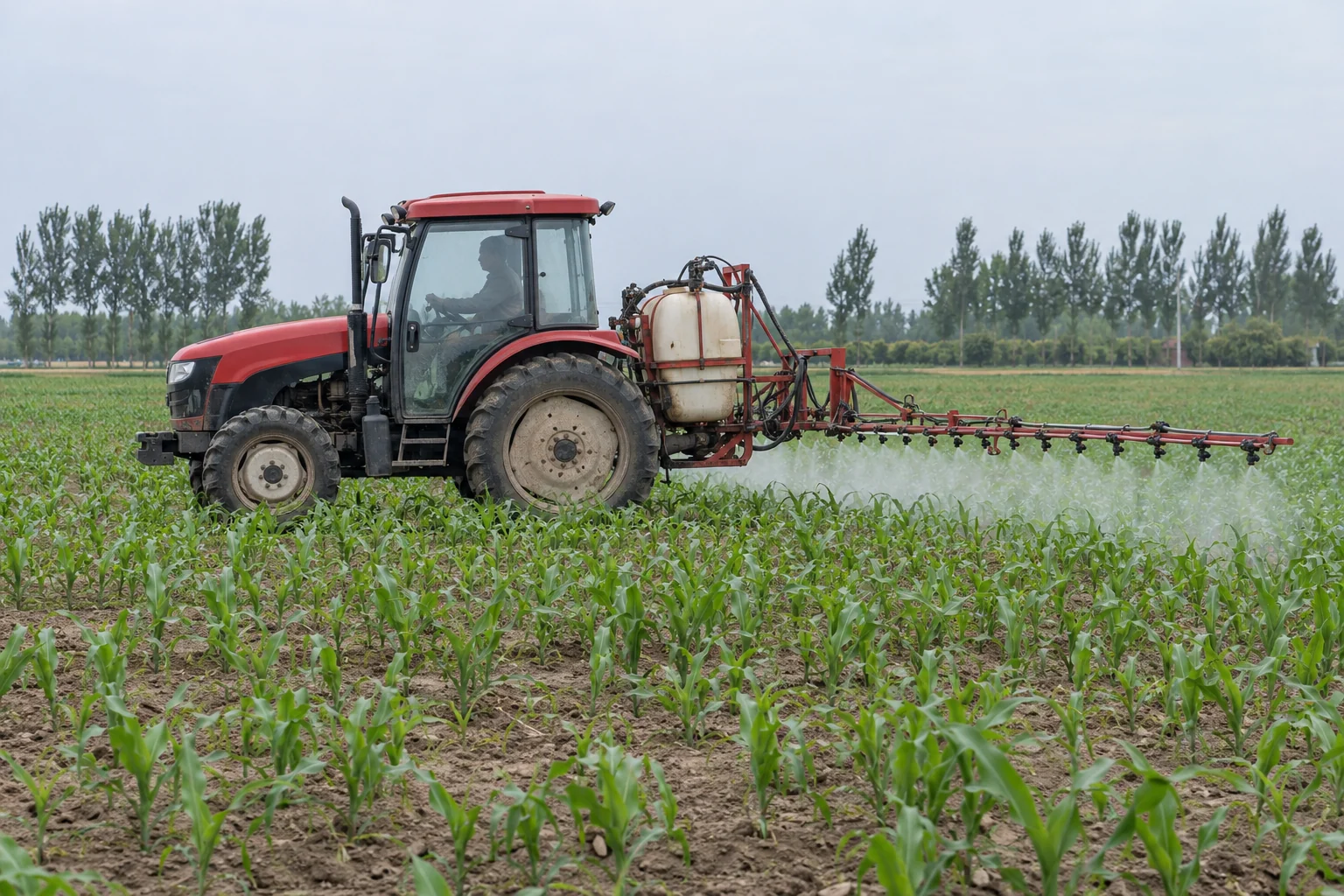
- Start clean with a burndown or tillage plus a preemergence residual herbicide, then follow with postemergence products from other groups [1][7].
- Use the full label rate at the right weed stage and scout after every application [7].
- Stop survivors from setting seed, clean equipment between fields and add crop rotation and other nonchemical measures [1][7].
- When control fails, rule out application problems, then have the population tested before changing products [1].
Frequently asked questions
What are herbicide mode of action groups?
They group herbicides by the plant process and the site of action they target. HRAC numbers each group, for example Group 2 for ALS inhibitors and Group 9 for EPSPS inhibitors such as glyphosate [1][4].
What is the difference between HRAC group numbers and letters?
The letters are the legacy codes. In 2020 HRAC moved to numbers harmonised with WSSA and other bodies, and it will keep them; Group 1 was A, Group 2 was B and Group 27 was F2 [2][3][4].
Which HRAC group are glyphosate and glufosinate?
Glyphosate is Group 9 (legacy G), an EPSPS inhibitor. Glufosinate ammonium is Group 10 (legacy H), a glutamine synthetase inhibitor [4][5].
How many weeds are resistant to herbicides?
On 26 October 2026 the International Herbicide-Resistant Weed Database listed 275 resistant species and 548 unique cases in 76 countries [8].
Is rotating herbicides enough to prevent resistance?
No. HRAC states that rotation alone is not enough [1]. In Illinois, mixing effective modes of action reduced glyphosate resistant waterhemp, while simply rotating them increased resistance [11][12].
How can I prevent herbicide resistance?
Use several effective groups per weed in mixtures or sequences, the full label rate at the right timing, preemergence plus postemergence products, scouting, and nonchemical measures that stop seed set [1][7].
Further reading
- Enquire about glyphosate, nicosulfuron, pyroxasulfone and mesotrione
- Glyphosate: formulations and supply
- Glufosinate: formulations and supply
- Nicosulfuron: formulations and supply
- Cyhalofop-butyl: formulations and supply
- Pyroxasulfone: formulations and supply
- Mesotrione: formulations and supply
- Herbicides: sourcing from Huasheng
- [1] HRAC. Best management practices (prevention and management of herbicide resistance).
- [2] HRAC (2020). 2020 HRAC Global Herbicide MoA Classification: transition from letters to numbers.
- [3] Global HRAC MoA Classification Working Group (2025). Working Group Report, version December 2025.
- [4] HRAC (2026). HRAC Mode of Action Classification 2026 (poster).
- [5] HRAC (2026). 2026 Herbicide MoA Classification Master List (spreadsheet).
- [6] HRAC. Herbicide resistance overview.
- [7] Weed Science Society of America. Herbicide resistance.
- [8] Heap I. (2026). The International Herbicide-Resistant Weed Database. Home page, accessed 26 October 2026.
- [9] Heap I. (2026). Herbicide resistant weeds by site of action summary table. International Herbicide-Resistant Weed Database, accessed 26 October 2026.
- [10] Heap I. (2026). Multiple resistant Lolium rigidum from Australia, South Australia. International Herbicide-Resistant Weed Database, accessed 26 October 2026.
- [11] Hager A. (2023). Recommendations to manage herbicide-resistant weeds: it's not as easy as some believe. Department of Crop Sciences, University of Illinois.
- [12] Evans J. A., Tranel P. J., Hager A. G., Schutte B., Wu C., Chatham L. A., Davis A. S. (2016). Managing the evolution of herbicide resistance. Pest Management Science 72(1): 74-80.
- [13] Xu P., Wang K., Ju Y., Fu Y., Zhu A., Cao K., Wang H. (2025). Herbicide resistance in Leptochloa chinensis (L.) Nees populations from different regions of Jiangsu Province, China: sensitivity differences and underlying mechanisms. Frontiers in Plant Science 16: 1535877.
- [14] Silva A. F., Karam D., Vargas L., Adegas F. S., Gazziero D. L. P., Ikeda F. S., Cavalieri S. D., Costa A. G. F., Perina F. J. (2021). Monitoramento de plantas daninhas resistentes a glifosato no Brasil. Embrapa Milho e Sorgo, Boletim de Pesquisa e Desenvolvimento 234.