Glyphosate vs glufosinate: how two nonselective herbicides differ in action, resistance and regulation
A side by side comparison of glyphosate and glufosinate: modes of action, movement in the plant, the conditions each needs, documented resistance, regulatory status in the EU, the United States and China, and their role in burndown and fallow.
Author: Chen Zhiyuan, Senior AgronomistTechnical review: Wang Liqun, Researcher
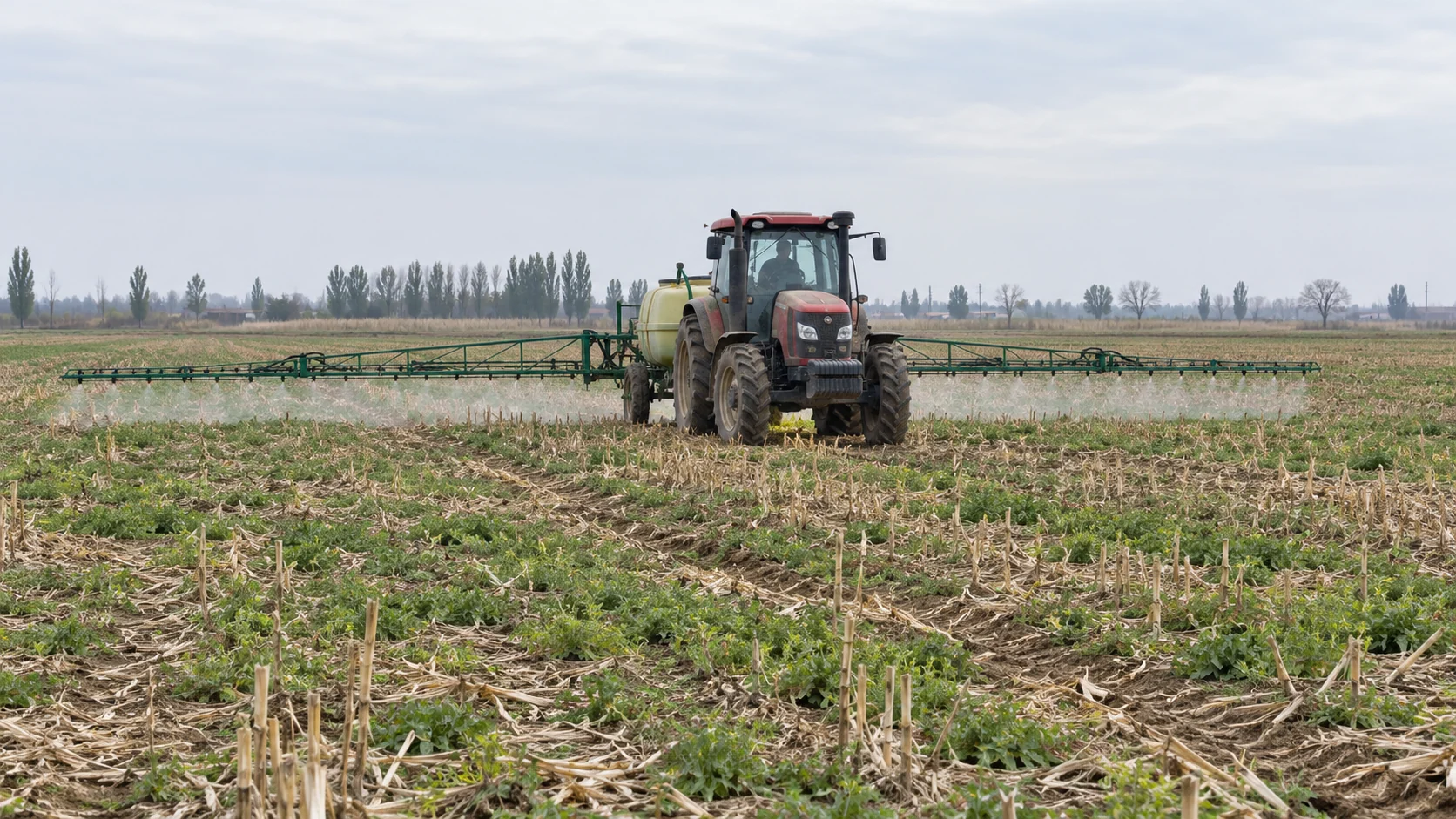
Glyphosate and glufosinate are nonselective foliar herbicides: both kill most plants they contact, and both are used selectively in crops made tolerant to them [2]. Glufosinate is a key tool against glyphosate resistant weeds, yet the area it treats is far smaller than that of glyphosate, partly because its field performance is less consistent [3]. This guide compares their modes of action, movement in the plant, the conditions each needs, resistance, regulatory status and use in burndown and fallow.
1. Two different target enzymes
Glyphosate is in HRAC Group 9 (legacy G), inhibition of EPSP synthase; glufosinate ammonium is in Group 10 (legacy H), inhibition of glutamine synthetase [1]. EPSP synthase is involved in making the aromatic amino acids tyrosine, tryptophan and phenylalanine [2]. Glutamine synthetase lets the plant convert ammonia into other nitrogen compounds; when it is blocked, ammonia accumulates and glutamine falls [2]. The rapid injury caused by glufosinate was long attributed to ammonia, but recent studies show that its contact activity comes from the accumulation of reactive oxygen species and lipid peroxidation, because it disrupts both photorespiration and the light reactions of photosynthesis [3].
2. Movement in the plant and speed of action
Glyphosate is absorbed through the foliage and moves in the phloem to the growing points; phloem mobile herbicides that move down into roots and rhizomes give the best perennial weed control [2]. Its symptoms appear 3 to 5 days after treatment and plants die slowly [2]. Glufosinate is highly hydrophilic and does not translocate well, so it generally gives poor control of grasses and perennial species [3]. It causes foliar burn within several hours, and large weeds often regrow from axillary buds [2].
Neither product works through the soil. Glyphosate is inactive in soil because it is adsorbed [2]; glufosinate has no soil activity and is rapidly degraded by soil microorganisms [2][3]. Both therefore control only weeds that have emerged when the spray is applied [4].
3. Conditions that affect performance
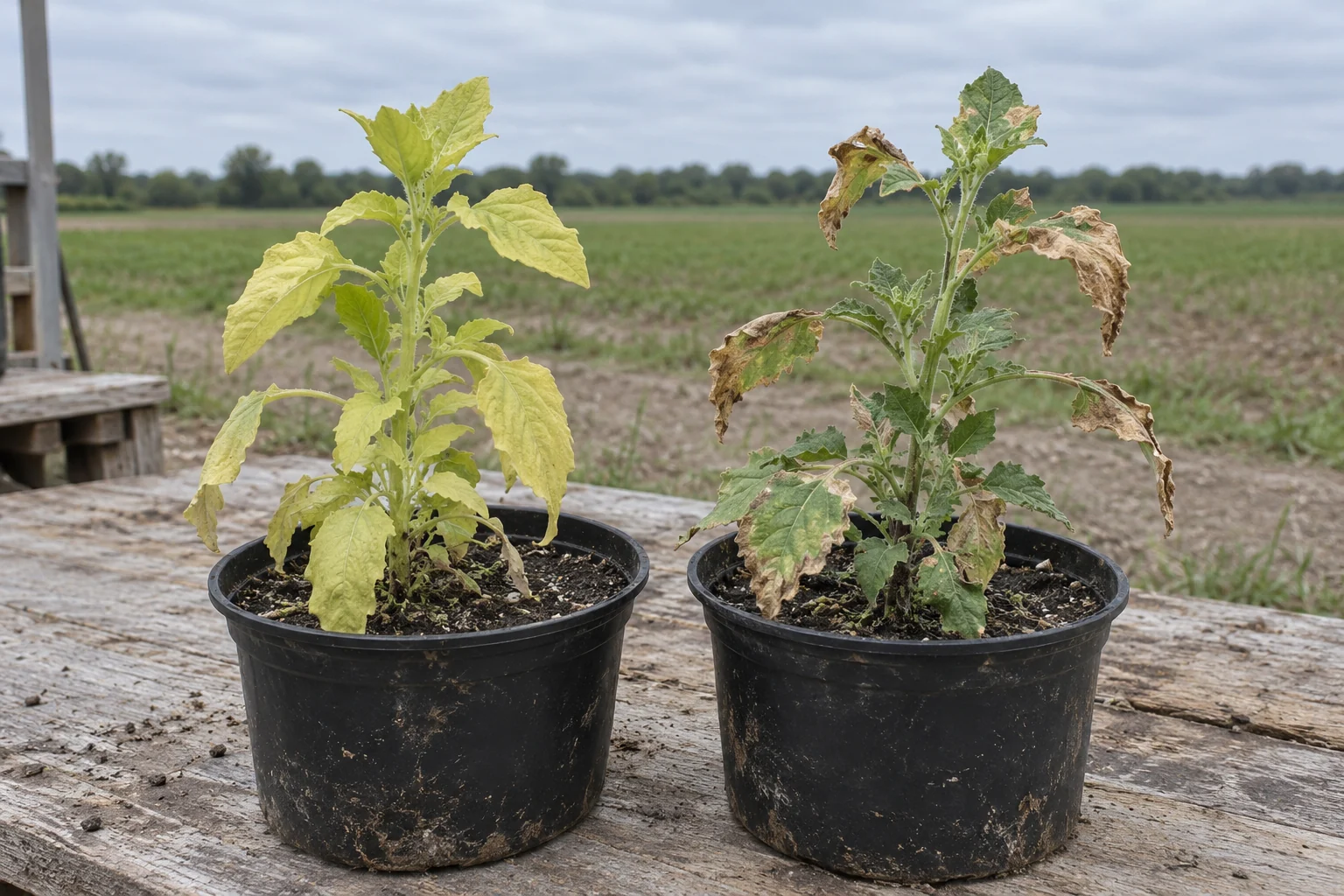
Takano and Dayan attribute glufosinate's inconsistent field results to environmental conditions, application technology and weed species [3]. Extension specialists at the University of Minnesota and North Dakota State University advise spraying small, actively growing weeds, preferably under 3 inches (about 8 cm), because taller plants regrow from their lower growing points [4]. They note that warm temperature, high humidity and bright sunlight improve performance, and that low humidity is thought to dry droplets quickly and reduce absorption [4]. Because glufosinate needs sunlight, they advise avoiding dawn and dusk and spraying from 3 to 4 hours after sunrise until 3 to 4 hours before sunset [4]. As a contact herbicide it also needs thorough coverage [2].
Glyphosate, like other foliar herbicides, works best on small, actively growing plants; drought stressed weeds, with thicker cuticles and slower growth, are controlled less well [2].
4. Side by side
Glyphosate and glufosinate compared
| Feature | Glyphosate | Glufosinate |
|---|---|---|
| HRAC group (legacy) | 9 (G), EPSPS inhibition [1] | 10 (H), glutamine synthetase inhibition [1] |
| Movement in the plant | Absorbed by foliage, moves in the phloem to growing points [2] | Limited translocation; acts as a contact herbicide [2][4] |
| Speed of symptoms | 3 to 5 days, slow death [2] | Foliar burn within several hours [2] |
| Grasses and perennials | Phloem movement gives good control of certain perennials [2] | Generally poor on grasses and perennial species [3] |
| Soil activity | Inactive in soil because of adsorption [2] | None; rapidly degraded by soil microorganisms [3] |
| What favours control | Small, actively growing weeds [2] | Small weeds, thorough coverage, warm, humid and bright conditions, daytime spraying [2][4] |
| Species with resistance recorded | 62 [5] | 7 [5][6] |
| EU status | Approved until 15 December 2033, with conditions [9] | Approval expired on 31 July 2018 [10] |
Resistance counts are those in the International Herbicide-Resistant Weed Database on 26 October 2026. The table is not a list of registered uses: crops, timings, rates and intervals are set by each country's registration and by the product label.
5. Resistance status
On 26 October 2026 the database listed 62 species resistant to EPSPS inhibitors, 29 dicots and 33 monocots, and 7 resistant to glutamine synthetase inhibitors [5]. K-State notes that glyphosate resistance appears to come from an altered EPSPS gene or from duplication of the gene, which raises production of the enzyme [2].
In Brazil, where glyphosate is the main herbicide in soybean, maize and cotton, 11 species had glyphosate resistant biotypes by 2021, and an Embrapa survey found resistant Conyza and Digitaria insularis widely spread across the main grain regions [7]. In Kansas, glyphosate resistance in kochia was first confirmed in 2007 and has spread to at least ten US states and three Canadian provinces; in a fallow trial there, glyphosate alone gave no more than 40% kochia control [8].
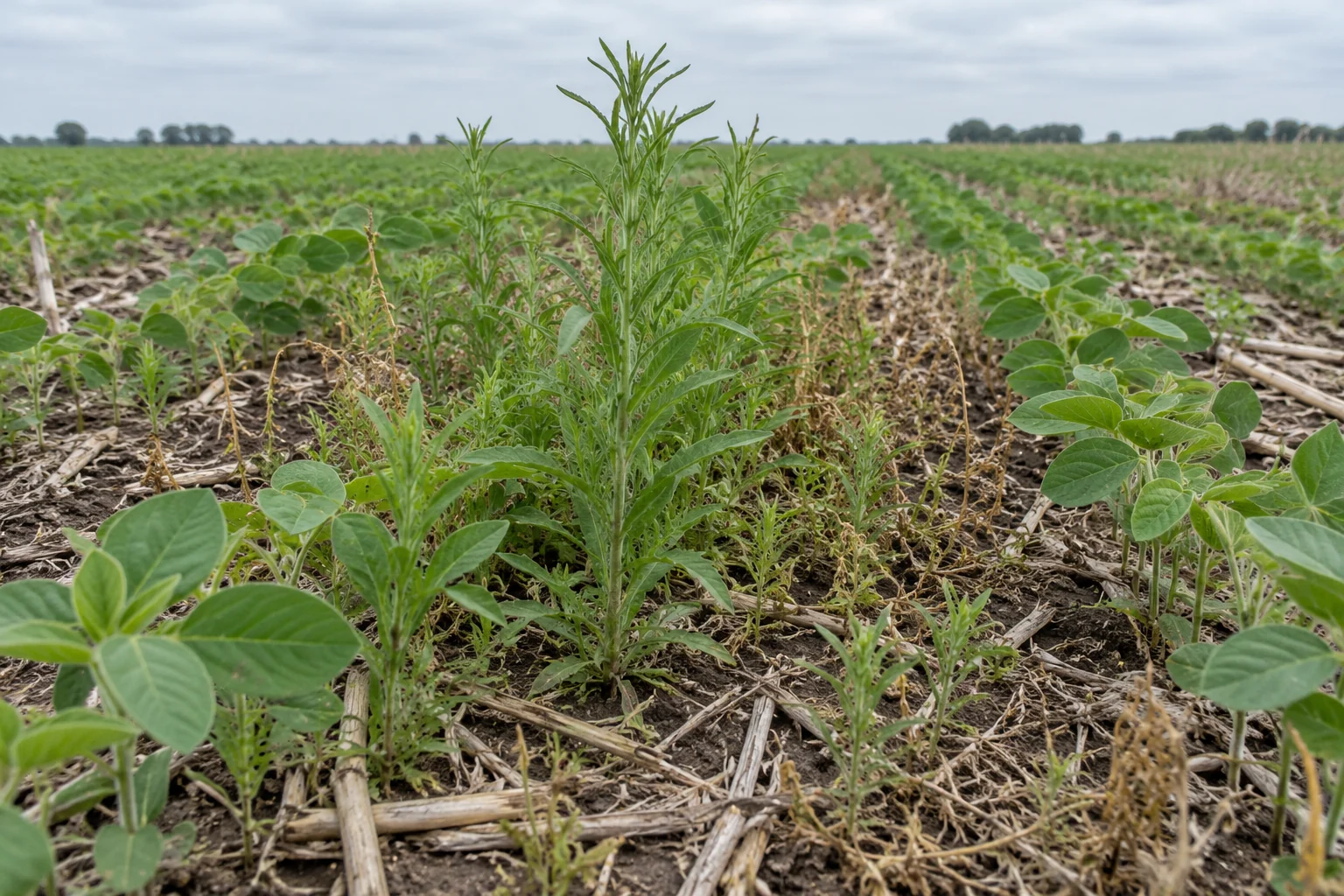
Very few weed species have evolved glufosinate resistance in the field, and the mechanisms are generally not well understood [3]. The seven species recorded are Palmer amaranth (Arkansas 2020, North Carolina 2022), tall waterhemp (Illinois 2025), goosegrass (Malaysia 2009), perennial ryegrass (New Zealand 2015), Italian ryegrass (Oregon 2010, later New Zealand and California), rigid ryegrass (Greece 2017) and annual bluegrass (Tennessee 2017); several of these populations have multiple resistance [6]. HRAC notes that rotating herbicides alone is not enough to prevent resistance, and advises mixtures or sequences of herbicides with different sites of action that are each active on the target weeds [15].
6. Regulatory status
European Union
Glyphosate is approved in the EU until 15 December 2033, subject to conditions and restrictions, following an assessment from 2019 to 2023 by Member State authorities, EFSA and ECHA; products are authorised nationally, and uses for desiccation to time harvest or to optimise threshing are not permitted [9]. The Commission has asked ECHA and EFSA to obtain and evaluate the raw data of a study published in 2025 [9]. The EU approval of glufosinate expired on 31 July 2018: a renewal application had been submitted but was withdrawn before the assessment report was finalised, and maximum residue levels based on former EU uses need to be lowered to the limit of quantification [10].
United States
EPA is reevaluating glyphosate under registration review and expects to complete its updated human health risk assessment in late 2026 [11].
China
China's Catalogue for Guiding Industrial Structure Adjustment (2024 edition), in force since 1 February 2024 [12], lists production plants for glyphosate, glufosinate, paraquat and diquat in the restricted category, which covers capacity that needs upgrading and may not be newly built, and lists glyphosate aqueous solutions with less than 30% content among obsolete products to be eliminated [13]. Under a 2012 joint announcement, registrations of paraquat aqueous solutions were revoked from 1 July 2014, except for export, and domestic sale and use stopped on 1 July 2016 [14].
7. Burndown and fallow
The European Commission notes that glyphosate products are typically applied before crops are sown, and that removing weeds without moving the soil can reduce or replace ploughing in zero tillage systems [9]. Glufosinate is used for burndown before planting and over the top of glufosinate tolerant crops [4]. HRAC lists nonselective herbicides for early weed flushes before crop emergence and for escapes as part of resistance management [15], and WSSA advises pairing a burndown with a preemergence residual herbicide where appropriate [16].
Glyphosate has long been important in fallow, but resistant kochia has pushed growers towards other modes of action. In the Kansas fallow trial, the best kochia control came from a mixture of pyraflufen, paraquat and sulfentrazone, the only treatment above 95% at 28 days [8]. Paraquat and diquat (Group 22) are the other main nonselective options; they are light activated contact herbicides, are irreversibly adsorbed in soil with no soil activity, and can be a significant risk to humans if inhaled or ingested [1][2].
8. A practical sequence
- Identify the weeds present and check local resistance records for Groups 9 and 10 before choosing a product [5][6].
- For established perennials, rely on phloem movement (glyphosate); for small annual weeds where glyphosate resistance is present, a different mode of action such as glufosinate can be used [2][3].
- Spray glufosinate on small weeds in daylight, under warm and humid conditions, with thorough coverage [2][4].
- Neither product gives residual control: pair the burndown with a preemergence residual herbicide from another group [2][16].
- Use mixtures or sequences with other effective groups instead of simply switching between the two [15].
- Prevent survivors from setting seed and keep field records of every application [15][16].
- Check the approval status in the destination market before planning a programme; the EU example shows how status differs [9][10].
Frequently asked questions
What is the difference between glyphosate and glufosinate?
Glyphosate (Group 9) inhibits EPSP synthase and moves through the phloem, acting slowly; glufosinate (Group 10) inhibits glutamine synthetase, moves little and acts within hours [1][2].
Is glufosinate systemic or contact?
It is treated as a contact herbicide: it translocates poorly, so it needs thorough coverage of small weeds [2][3][4].
Which works faster, glyphosate or glufosinate?
Glufosinate. It causes foliar burn within several hours, while glyphosate symptoms take 3 to 5 days to appear [2].
Does glufosinate control glyphosate resistant weeds?
It acts on a different target and is a key tool against glyphosate resistant weeds [3], but resistance to glufosinate is also recorded in seven species [6].
Is glyphosate banned in the EU?
No. It is approved until 15 December 2033 with conditions and restrictions, and desiccation uses are not permitted [9].
Is glufosinate still approved in the EU?
No. Its EU approval expired on 31 July 2018 after the renewal application was withdrawn [10].
Further reading
- Enquire about glyphosate and glufosinate
- Glyphosate: formulations and supply
- Glufosinate: formulations and supply
- Herbicides: sourcing from Huasheng
- [1] HRAC (2026). 2026 Herbicide MoA Classification Master List (spreadsheet).
- [2] Lancaster S., Jugulam M., Falk Jones J. (2021). Herbicide mode of action. Kansas State University Research and Extension, C715 (revised).
- [3] Takano H. K., Dayan F. E. (2020). Glufosinate-ammonium: a review of the current state of knowledge. Pest Management Science 76(12): 3911-3925. Abstract record, Europe PMC.
- [4] Sarangi D., Stahl L., Ikley J., Peters T., Singh N. (2024, reviewed 2026). Best practices for using glufosinate (Liberty) herbicide. Minnesota Crop News, University of Minnesota Extension.
- [5] Heap I. (2026). Herbicide resistant weeds by site of action summary table. International Herbicide-Resistant Weed Database, accessed 26 October 2026.
- [6] Heap I. (2026). Weeds resistant to inhibition of glutamine synthetase, HRAC Group 10, by species and country. International Herbicide-Resistant Weed Database, accessed 26 October 2026.
- [7] Silva A. F., Karam D., Vargas L., Adegas F. S., Gazziero D. L. P., Ikeda F. S., Cavalieri S. D., Costa A. G. F., Perina F. J. (2021). Monitoramento de plantas daninhas resistentes a glifosato no Brasil. Embrapa Milho e Sorgo, Boletim de Pesquisa e Desenvolvimento 234.
- [8] Currie R. S., Geier P. W. (2019). Vida alone and in tank mixtures for kochia control in fallow. Kansas Agricultural Experiment Station Research Reports 5(7).
- [9] European Commission (n.d.). Glyphosate: status of glyphosate in the EU. Food Safety, Plants, Pesticides.
- [10] EFSA (2024). Call for data to submit data covering residue and toxicological data gaps for glufosinate.
- [11] US Environmental Protection Agency (n.d.). Glyphosate. Ingredients used in pesticide products.
- [12] National Development and Reform Commission of China (2023). Order No. 7: Catalogue for Guiding Industrial Structure Adjustment (2024 edition). Central People's Government of the PRC.
- [13] National Development and Reform Commission of China (2023). Catalogue for Guiding Industrial Structure Adjustment (2024 edition), full text (PDF).
- [14] Ministry of Agriculture, Ministry of Industry and Information Technology, General Administration of Quality Supervision, Inspection and Quarantine of China (2012). Announcement No. 1745 on restrictive measures for paraquat. FAOLEX.
- [15] HRAC (n.d.). Best management practices (prevention and management of herbicide resistance).
- [16] Weed Science Society of America (n.d.). Herbicide resistance.
Products in this article