In the field in Hubei: bio-coupling lifts soybean and peanut yields
At a national field day in Tianmen, independently measured yields showed the bio-coupling approach — the science behind our Orvan™ range — raising soybean and peanut yields well above those of untreated fields, despite two months of heat and drought.
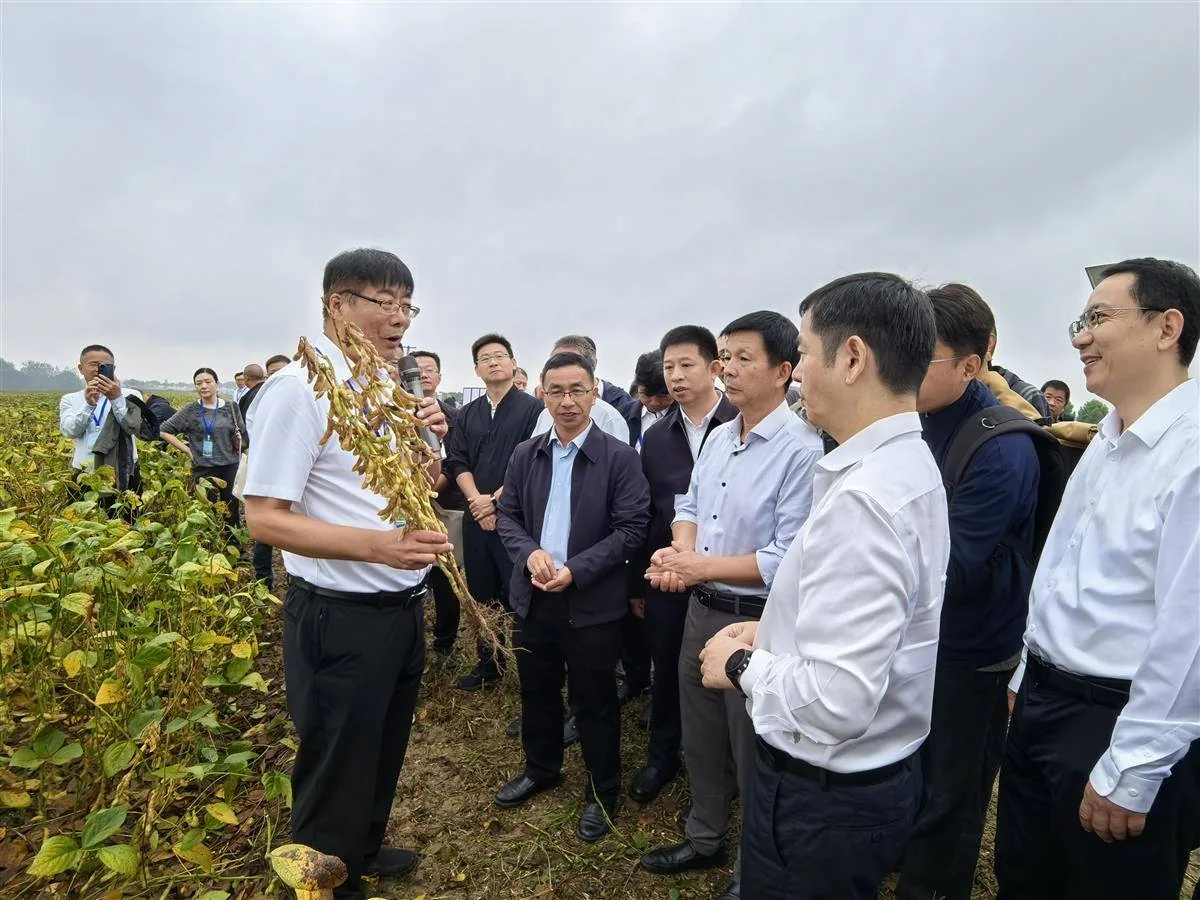
On 22 September 2025, the Chinese Academy of Agricultural Sciences (CAAS) held a national field-observation and technical seminar in Tianmen, Hubei, to showcase results from its soybean and oil-crop production-capacity programme. At its centre was the bio-coupling technology — first developed by the CAAS Oil Crops Research Institute, and the same coupling science that our Orvan™ range brings to growers commercially. After a season that included two consecutive months of heat and drought, the independently measured results were notable.
What the measured yields showed
An expert panel measured yields by mechanised harvest at two demonstration sites, comparing the integrated package — bio-coupling with an improved variety, precision sowing, environmentally friendly crop management and low-loss harvesting — against the same variety without the bio-coupling, and against local conventional practice.
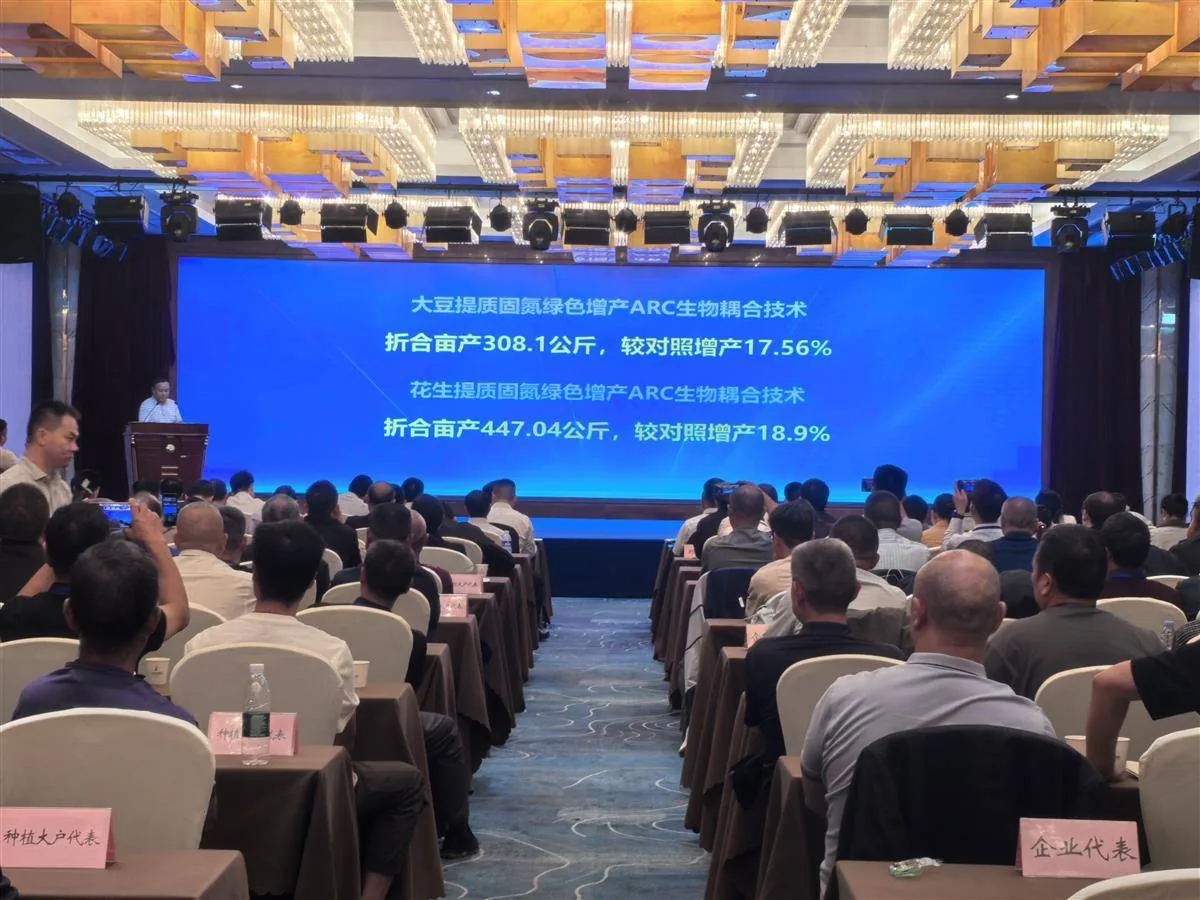
Measured yields, Tianmen demonstration, September 2025
| Crop (site) | Measured yield | vs same variety, no bio-coupling | vs local conventional |
|---|---|---|---|
| Soybean · Huangtan (bio-coupling + Zhongdou 63) | 308.1 kg/mu (~4.6 t/ha) | +17.56% | +36.9% |
| Peanut · Duobao (bio-coupling + Zhonghua 16) | 447.04 kg/mu (~6.7 t/ha) | +18.9% | +51.23% |
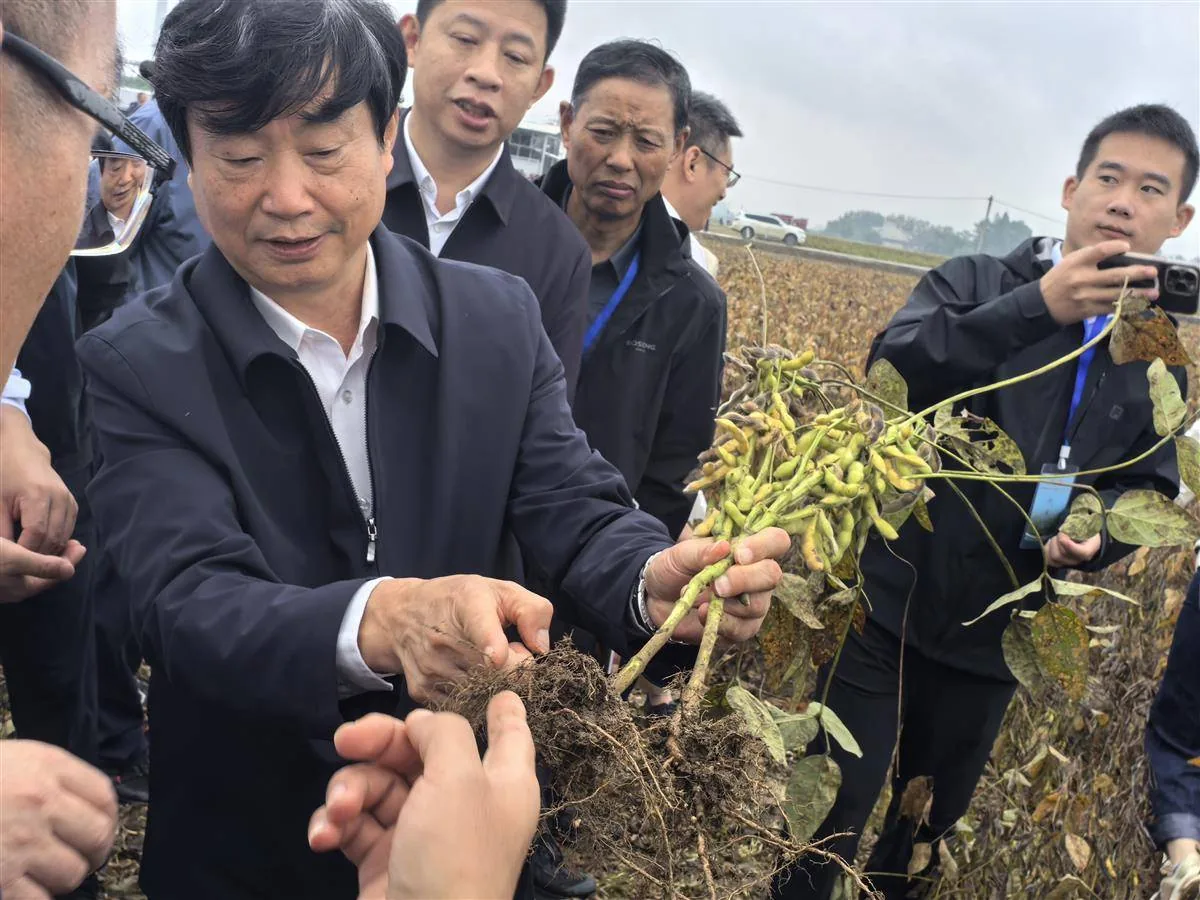
In other words, pairing the bio-coupling with an improved variety added roughly 18% over the same variety grown without it, and raised yield by more than a third on soybean and over half on peanut compared with local conventional practice. The panel also noted markedly stronger nodulation on the treated plots — the visible sign of the coupling at work, and a gain that also builds soil fertility for the crops that follow.
Why the bio-coupling delivers two gains in one pass
Aspergillus–Rhizobia Coupling treats the toxigenic soil fungus and the nitrogen-fixing symbiosis as one linked question in the root zone: shift the balance in the rhizosphere and the environment for nodulation improves, so a single application amplifies nodulation and nitrogen fixation while our research examines the aflatoxin side. This is the coupling that our Orvan™ range is built to deliver. The Tianmen demonstration shows, at scale, what it does in a difficult season — and the strong nodulation the panel observed reflects the same mechanism around which our product is designed.
The varieties, and the fertiliser–microbe pairing
The demonstration paired the bio-coupling with two CAAS-bred varieties. Zhongdou 63 is a high-yielding, widely adapted soybean noted for heat, drought and humidity tolerance, suited to the Yangtze basin, the southwest, the Huang-Huai-Hai region and coastal saline-alkali land, and selected as one of CAAS’s 100 landmark agricultural achievements. Zhonghua 16 is a high-yield, high-oil peanut with resistance to drought, lodging, leaf spot and rust, and has been named a national leading variety four times. The programme also showed the value of combining biology with nutrition: a dedicated crop-specific fertiliser carrying the bio-agent (developed with Xinyangfeng) delivered a combined fertiliser-and-microbe effect greater than the sum of its parts.
A national priority — and where we fit
Central policy has prioritised soybean and oil-crop capacity for four consecutive years, and CAAS leaders presented the day as part of integrating good land, good seed, good machinery and good methods into results growers can actually use. That last step — turning validated science into a product a grower can put in the furrow — is where we work. Our Orvan™ range exists to bring this coupling technology to farms at scale: the Tianmen results show what the approach can do, and our task is to make it repeatable, season after season, on commercial farms.
Products in this article