Bacillus biofungicides: species, lipopeptides and how to read the label
Which Bacillus species are used against plant diseases and how their names have changed, how iturins, fengycins and surfactins work alongside competition and induced resistance, where foliar and root uses are supported, and how to read a viable count, a formulation code and a storage instruction.
Author: Liu Xiaomin, AgronomistTechnical review: Zhao Guohua, Researcher
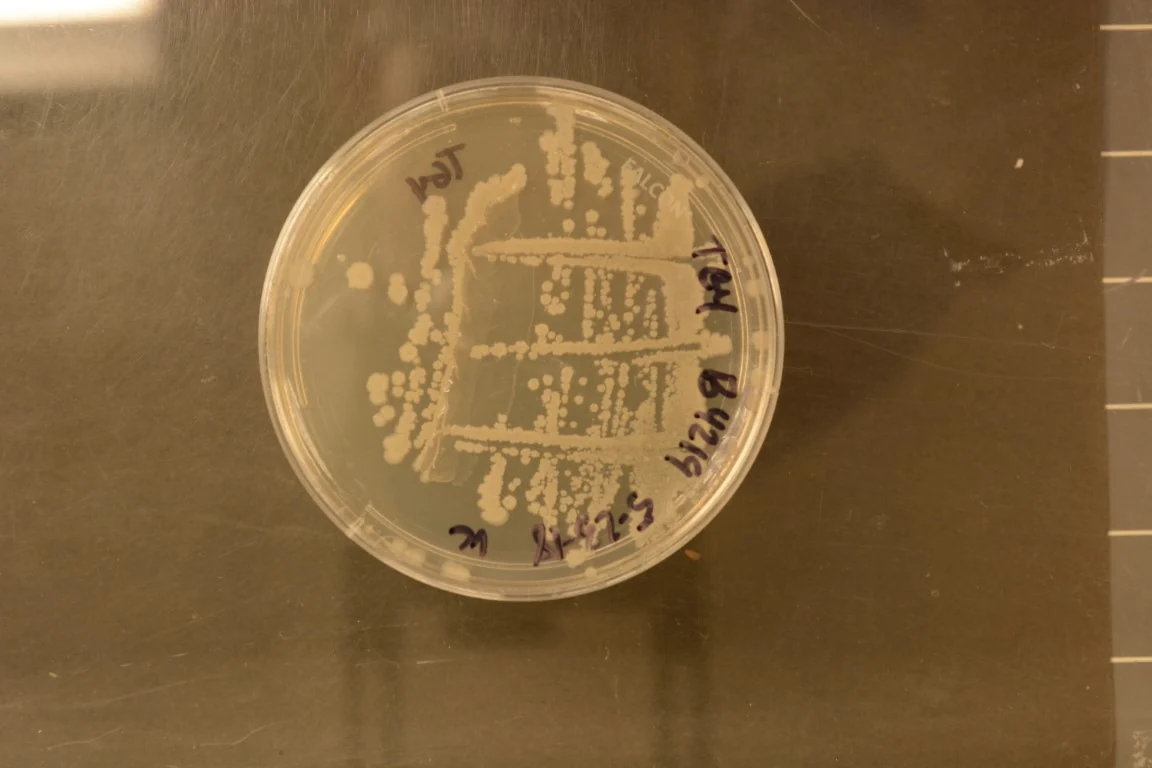
Formulations based on endospore forming Bacillus are by far the most widely used agents on the biopesticide market [1]. Commercial preparations worldwide contain strains of B. subtilis, B. amyloliquefaciens, B. velezensis, B. pumilus and B. licheniformis, among others [2]. FRAC, the Fungicide Resistance Action Committee, places Bacillus strains in Group BM02, microbial biologicals with multiple modes of action, with resistance not known [3]. This article covers the species and their names, the modes of action, supported uses, and the practical reading of a product specification.
1. Species used and how their names changed
Bacillus taxonomy has moved several times, and product documents do not always keep up. Until 2020, FRAC coded Bacillus amyloliquefaciens strains as Group 44 under cell membrane disruptors; they were then reclassified to BM02 [3], although some extension tables still show the code 44 [4]. FRAC also notes that B. subtilis and B. subtilis var. amyloliquefaciens are previous names for B. amyloliquefaciens [3].
Phylogenetic analysis has reclassified several Bacillus strains as B. velezensis; strain FZB42, first described as B. amyloliquefaciens, is one example [5]. Researchers have proposed an operational group made up of B. amyloliquefaciens, B. siamensis and B. velezensis, and B. velezensis is the main source of the bioformulations increasingly used in agriculture [1]. B. halotolerans has been identified by phylogenomics among endophytes active against Fusarium [6], and an isolate that reduced wheat crown rot produced iturin, surfactin and fengycin [7]. Because names move, compare products by species and strain code together, as FRAC lists them [3].
Bacillus species in biofungicides and what the sources say
| Species | What the sources say |
|---|---|
| B. amyloliquefaciens | BM02 strains listed by FRAC, including D747; previous names include B. subtilis [3] |
| B. velezensis | Several strains reclassified into this species [5]; main source of agricultural bioformulations [1]; BM02 strains listed by FRAC [3] |
| B. subtilis | BM02 strains listed by FRAC [3]; induces systemic resistance, forms a protective endospore and is used against fungal leaf spots [8] |
| B. pumilus, B. licheniformis | Found in commercial preparations [2]; B. pumilus products are listed among grape powdery mildew biologicals in California [4] |
| B. halotolerans | Research isolates active against Fusarium, Botrytis cinerea, Alternaria and Phytophthora [6]; an isolate reduced wheat crown rot in seedlings and produced iturin, surfactin and fengycin [7] |
2. Modes of action
Bacillus inhibits pathogens through competition for nutrients and space, antibiotics, hydrolytic enzymes, siderophores and induced systemic resistance [2]. Among the effects FRAC lists for BM02 is membrane disruption by fungicidal lipopeptides [3].
Lipopeptides
Cyclic lipopeptides are the most thoroughly studied antibiotic compounds of Bacillus, and the most important belong to the surfactin, iturin and fengycin families [2]. Many strains produce more than one family; the crown rot isolate above produced all three [7].
The three main lipopeptide families
| Family | Reported role | Sources |
|---|---|---|
| Iturins (including bacillomycin D) | Strong antifungal activity, and induce defence responses in plants; produced by members of the B. subtilis group | [9][10] |
| Fengycins | Antifungal activity against a broad spectrum of filamentous fungi, thought to act by interacting with the cell membrane and altering its permeability | [10] |
| Surfactins | Together with biofilm formation, protected Arabidopsis roots from a bacterial pathogen in one study; also trigger induced systemic resistance, and a surfactin deficient mutant was impaired in triggering it in lettuce | [1][10] |
Research examples include iturin and fengycin from B. subtilis acting against Pythium ultimum, and surfactin, iturin and fengycin from B. amyloliquefaciens acting against Sclerotinia sclerotiorum [2].
Competition and colonisation
The ability to form biofilms is essential for colonising root surfaces [1]. Siderophores compete for iron and reduce its availability to pathogens [2], and B. amyloliquefaciens colonises the rhizosphere, stimulating plant growth and suppressing competing pathogens [8].
Induced systemic resistance
Induced systemic resistance from rhizobacteria depends mostly on jasmonate and ethylene signalling [2]. It starts when the plant recognises elicitors from the bacteria, including cyclic lipopeptides, siderophores and flagellin, and volatiles such as acetoin and 2,3-butanediol can also stimulate it [5].
3. Foliar and root uses supported by sources
Many bacterial biofungicides are labelled mainly for soilborne diseases, but some are also labelled for foliar diseases such as leaf spots, powdery mildew and downy mildew [11]. B. subtilis is used against fungal leaf spots, and growers can alternate Bacillus with copper against bacterial diseases to reduce the phytotoxicity that repeated copper sprays may cause [8].
Examples of uses reported in extension and review sources
| Use | Targets | What the sources say |
|---|---|---|
| Soil and seedling | Damping off and root rots (Pythium, Rhizoctonia, Fusarium, Phytophthora) | Bacterial biofungicides are labelled mainly for soilborne diseases [11]; extension tables list Bacillus products for damping off caused by Pythium, Phytophthora, Rhizoctonia and Fusarium [8]; iturin and fengycin act against Pythium ultimum in bean damping off [2] |
| Foliar, grapevine | Powdery mildew | In California, begin before disease onset or while pressure is low; Bacillus biologicals are not recommended once the UC Davis risk index reaches 60 [4] |
| Foliar, vegetables and ornamentals | Leaf spots, powdery mildew, downy mildew | Some bacterial products are labelled for these foliar diseases [11]; B. subtilis is used against fungal leaf spots [8] |
| Field crops, research | Fusarium head blight of wheat, white mould of bean, wheat crown rot | Reported in reviews and trials for B. subtilis, B. amyloliquefaciens and B. halotolerans [2][7] |
These are research and extension findings, not registered uses. The label registered in each country sets crops, targets and rates.
4. Conditions that affect results
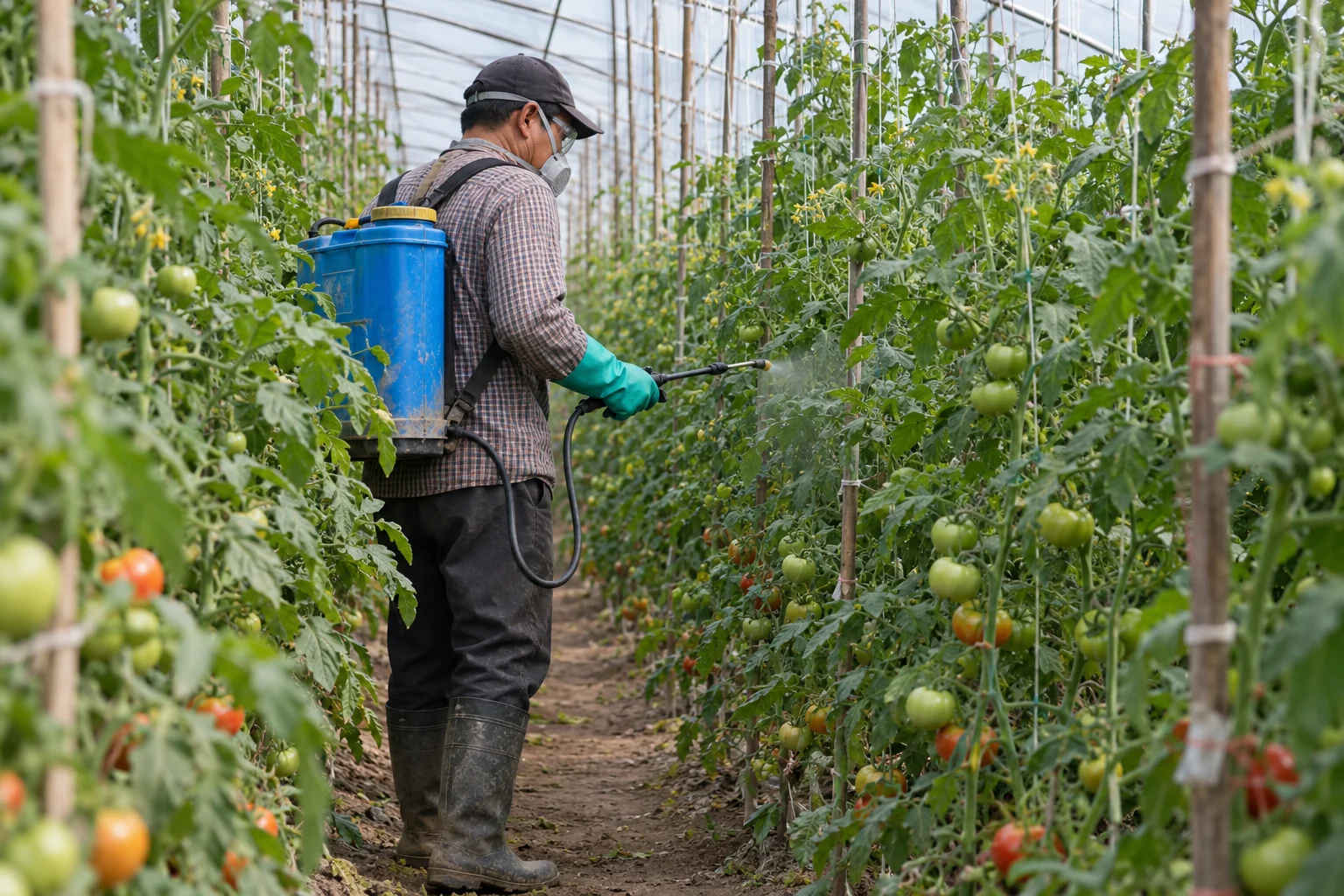
Performance varies: humidity, temperature and competition with native soil and plant microbes can reduce efficacy [12]. Timing matters most. Biological fungicides are preventive and will not cure diseased plants [8], and on foliage they must be in place before infection and be reapplied to protect new growth [11]. In California vineyards, UC IPM advises dropping soft products, biologicals included, when disease pressure is high, because alone they will not give adequate control [4].
Check compatibility before mixing [8]. Biologicals can affect each other too: in a Brazilian laboratory test, a bionematicide based on B. amyloliquefaciens reduced germination of Trichoderma afroharzianum conidia to below 9% [13].
5. Reading a viable count
The content of a Bacillus product is given as colony forming units (CFU), per millilitre for liquids and per gram for powders and granules. In an EU assessment, for example, the liquid product was described by a CFU per mL range and the agent as manufactured by a minimum and maximum CFU per gram [14]. Bacillus forms endospores that survive heat and desiccation and can be formulated into stable dry powders with long shelf lives [5], and endospores survive all processing phases during production [2].
When comparing offers, check four points together: species and strain, the unit (per gram or per millilitre), the guaranteed minimum, and the expiry date with its storage condition [3][8][14]. A count per millilitre of a liquid and a count per gram of a granule are not directly comparable.
Bacillus biofungicides supplied by Huasheng (catalogue specifications)
| Product | Component | Form | Declared content |
|---|---|---|---|
| Baciva™ | Bacillus amyloliquefaciens D747 | Suspension concentrate (SC) | ≥ 1 × 10¹⁰ CFU/mL |
| Botria™ | Bacillus velezensis BJ-1 | Water dispersible granules (WG) | ≥ 2 × 10¹⁰ CFU/g |
| Vitaria™ | Bacillus halotolerans BJ-3 | Water dispersible granules (WG) | ≥ 2 × 10¹⁰ CFU/g |
6. Formulation forms: SC, WG and WP
Most Bacillus products are stabilised liquid suspensions or dried formulations made from durable endospores [1]. The international coding system defines the common forms [15]:
- SC, suspension concentrate: a stable suspension of the active ingredient in water, diluted with water before use [15].
- WG, water dispersible granules: granules applied after disintegration and dispersion in water [15].
- WP, wettable powder: a powder applied as a suspension after dispersion in water [15].
Bacillus can be formulated into stable dry powders with long shelf lives [5]. Liquid forms such as SC carry their count per millilitre, and dry forms per gram [14].
7. Storage and shelf life
Biofungicides are living organisms with a limited shelf life. Do not stockpile them, watch the expiry date, and keep most products cool and dry [8]. Shelf lives listed for Bacillus based greenhouse products in one extension table range from one to three years [8]. Apply immediately after mixing with water [8].
8. Place in a disease programme
FRAC regards BM02 biologicals as low or very low resistance risk and sets no limit on number, timing or sequence of applications beyond the label and local rules [16]. Biologicals can be rotated with conventional fungicides to reduce resistance risk to single site products [8].
- Start before disease onset or while pressure is low [4].
- Use soil and seed applications for root diseases and preventive sprays for foliar diseases [11].
- Rely on other fungicide groups when disease pressure is high [4].
- Check compatibility with fungicides, copper and other biologicals before mixing [8][13].
- Store cool and dry, use within the expiry date and apply soon after mixing [8].
Frequently asked questions
What is a Bacillus biofungicide?
A product based on living Bacillus bacteria, usually as endospores, that suppresses plant pathogens. FRAC places these strains in Group BM02 [3], and they are the most widely used agents on the biopesticide market [1].
How do iturin, fengycin and surfactin work?
Iturins are strongly antifungal and induce plant defences [9]; fengycins act on the membranes of filamentous fungi [10]; surfactins support biofilm formation and trigger induced resistance [1][10].
Is Bacillus velezensis the same as Bacillus amyloliquefaciens?
No. They are separate species placed in one proposed operational group, and several strains first named B. amyloliquefaciens have been reclassified as B. velezensis [1][5]. Compare products by species and strain code [3].
Can Bacillus biofungicides be sprayed on leaves?
Some are labelled for foliar diseases such as leaf spots, powdery mildew and downy mildew, while most are labelled mainly for soilborne diseases [11]. On foliage they must be applied before infection [11].
What does CFU per mL mean on a Bacillus product?
Colony forming units per millilitre, the viable count of a liquid product; powders and granules are given per gram [14].
How long can Bacillus biofungicides be stored?
It depends on the product and its storage condition; one extension table lists one to three years for Bacillus based products [8]. Keep them cool and dry and use them within the expiry date [8].
Further reading
- Enquire about Baciva™, Botria™ and Vitaria™
- Baciva™ (Bacillus amyloliquefaciens D747)
- Botria™ (Bacillus velezensis BJ-1)
- Vitaria™ (Bacillus halotolerans BJ-3)
- Biopesticides: sourcing and supply
- [1] Fan B., Wang C., Song X., Ding X., Wu L., Wu H., Gao X., Borriss R. (2018). Bacillus velezensis FZB42 in 2018: the Gram positive model strain for plant growth promotion and biocontrol. Frontiers in Microbiology 9: 2491.
- [2] Miljaković D., Marinković J., Balešević-Tubić S. (2020). The significance of Bacillus spp. in disease suppression and growth promotion of field and vegetable crops. Microorganisms 8(7): 1037.
- [3] FRAC (2026). FRAC Code List 2026: fungal control agents sorted by cross resistance pattern and mode of action.
- [4] UC IPM (2014). Grape: powdery mildew (Erysiphe necator). UC ANR Publication 3448. University of California.
- [5] Rabbee M. F., Ali M. S., Choi J., Hwang B. S., Jeong S. C., Baek K. (2019). Bacillus velezensis: a valuable member of bioactive molecules within plant microbiomes. Molecules 24(6): 1046.
- [6] Slama H. B., Cherif-Silini H., Chenari Bouket A., Qader M., Silini A., Yahiaoui B. et al. (2019). Screening for Fusarium antagonistic bacteria from contrasting niches designated the endophyte Bacillus halotolerans as plant warden against Fusarium. Frontiers in Microbiology 9: 3236.
- [7] Li S., Xu J., Fu L., Xu G., Lin X., Qiao J., Xia Y. (2022). Biocontrol of wheat crown rot using Bacillus halotolerans QTH8. Pathogens 11(5): 595.
- [8] UConn Extension Integrated Pest Management Program (2024). Biological fungicides. University of Connecticut.
- [9] Dunlap C. A., Bowman M. J., Rooney A. P. (2019). Iturinic lipopeptide diversity in the Bacillus subtilis species group: important antifungals for plant disease biocontrol applications. Frontiers in Microbiology 10: 1794.
- [10] Fazle Rabbee M., Baek K. H. (2020). Antimicrobial activities of lipopeptides and polyketides of Bacillus velezensis for agricultural applications. Molecules 25(21): 4973.
- [11] Dicklow M. B., Madeiras A. (2014, updated 2018). Biofungicides. UMass Extension Greenhouse and Floriculture Program, University of Massachusetts Amherst.
- [12] Kenfaoui J., Dutilloy E., Benchlih S., Lahlali R., Ait-Barka E., Esmaeel Q. (2024). Bacillus velezensis: a versatile ally in the battle against phytopathogens, insights and prospects. Applied Microbiology and Biotechnology 108: 439.
- [13] Marques E., Silva M. R., Soares W. M., de Castro K. H. M., da Silva J. G., da Silva K. C. et al. (2025). Compatibility of Brazilian strains of Trichoderma afroharzianum with various agricultural inputs under in vitro conditions. Journal of Fungi 11(11): 812.
- [14] EFSA (2024). Peer review of the pesticide risk assessment of the active substance Bacillus velezensis RTI301. EFSA Journal 22(9): e8988.
- [15] CropLife International (2022). Catalogue of pesticide formulation types and international coding system. Technical Monograph No. 2, 8th edition.
- [16] FRAC (n.d.). Fungicide resistance management with and of multisite fungicides, biological control agents and plant defence inducers.