Trichoderma biofungicides: how they work, where they fit and what affects performance
How Trichoderma protects roots through competition, mycoparasitism, antibiosis and induced resistance, which diseases reviews and extension services support, and how temperature, soil conditions, fungicides and storage change the result.
Author: Liu Xiaomin, AgronomistTechnical review: Zhao Guohua, Researcher
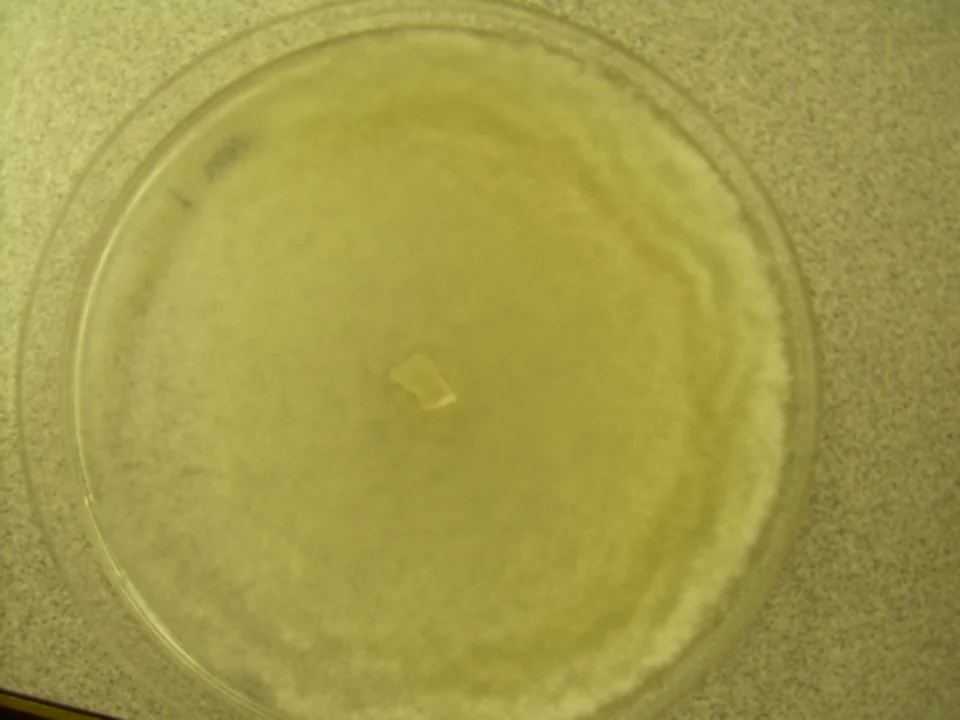
Products in this article
Trichoderma is a genus of filamentous fungi isolated from soil, decaying wood and plant organic matter, and several species are sold as biological fungicides [1]. The genus is a dominant part of many soil fungal communities and is known for its ability to colonise plant roots [2]. Reviews describe it as mainly used against soilborne diseases, with some use against leaf and panicle diseases [3]. FRAC, the Fungicide Resistance Action Committee, places Trichoderma strains in Group BM02, microbial biologicals with multiple modes of action, and records resistance as not known [4]. This article explains how Trichoderma works, which diseases the evidence supports, which conditions change performance, and how to read the viable count on a label.
1. What Trichoderma is and how it is classified
Commercial products use species such as T. harzianum, T. virens, T. asperellum and T. gamsii. Dormant spores are applied; they germinate, and the mycelium grows around the roots and forms a barrier to infection [1]. Trichoderma also stimulates root growth, which gives the fungus more root surface to colonise [1].
Names are changing. In its 2026 Code List, FRAC lists strain T-22 under Trichoderma afroharzianum and records a nomenclature change from Trichoderma harzianum [4], while extension tables published in 2024 still list T-22 under T. harzianum [1]. Expect both names in technical files and registration documents.
2. Four modes of action
FRAC lists the effects described for microbial biologicals as competition, mycoparasitism, antibiosis, membrane disruption by lipopeptides, lytic enzymes and induced plant defence, noting that not every effect applies to every group [4]. For Trichoderma, reviews name mycoparasitism, competition and antibiosis as the main direct strategies, alongside indirect effects through improved plant growth and stress tolerance [5].
How Trichoderma suppresses pathogens
| Mode of action | What happens | Sources |
|---|---|---|
| Competition | Trichoderma competes with pathogens for nutrients such as carbon, nitrogen and iron, and for infection sites and space on the root; it also uses seed and root exudates that would otherwise stimulate pathogen germination | [5][6] |
| Mycoparasitism | Directed growth towards the host fungus, contact and binding, coiling around its hyphae, penetration and degradation, with cell wall degrading enzymes such as glucanases, chitinases and proteases | [5][6] |
| Antibiosis | Secondary metabolites inhibit or kill the pathogen; peptaibols, for example, insert into membranes and form ion channels and pores | [5][7] |
| Induced resistance | Root colonisation primes plant defences, so resistance appears at sites away from the fungus; Trichoderma induced systemic resistance is regulated by jasmonic acid and ethylene signalling | [6][8] |
Work at Cornell on strain T-22 shows mycoparasitism in practice. Trichoderma secretes an enzyme that dissolves the cell walls of other fungi, then enters and consumes them, and T-22 secretes more of the key enzyme, endochitinase, than wild strains [9].
3. Root colonisation decides the result
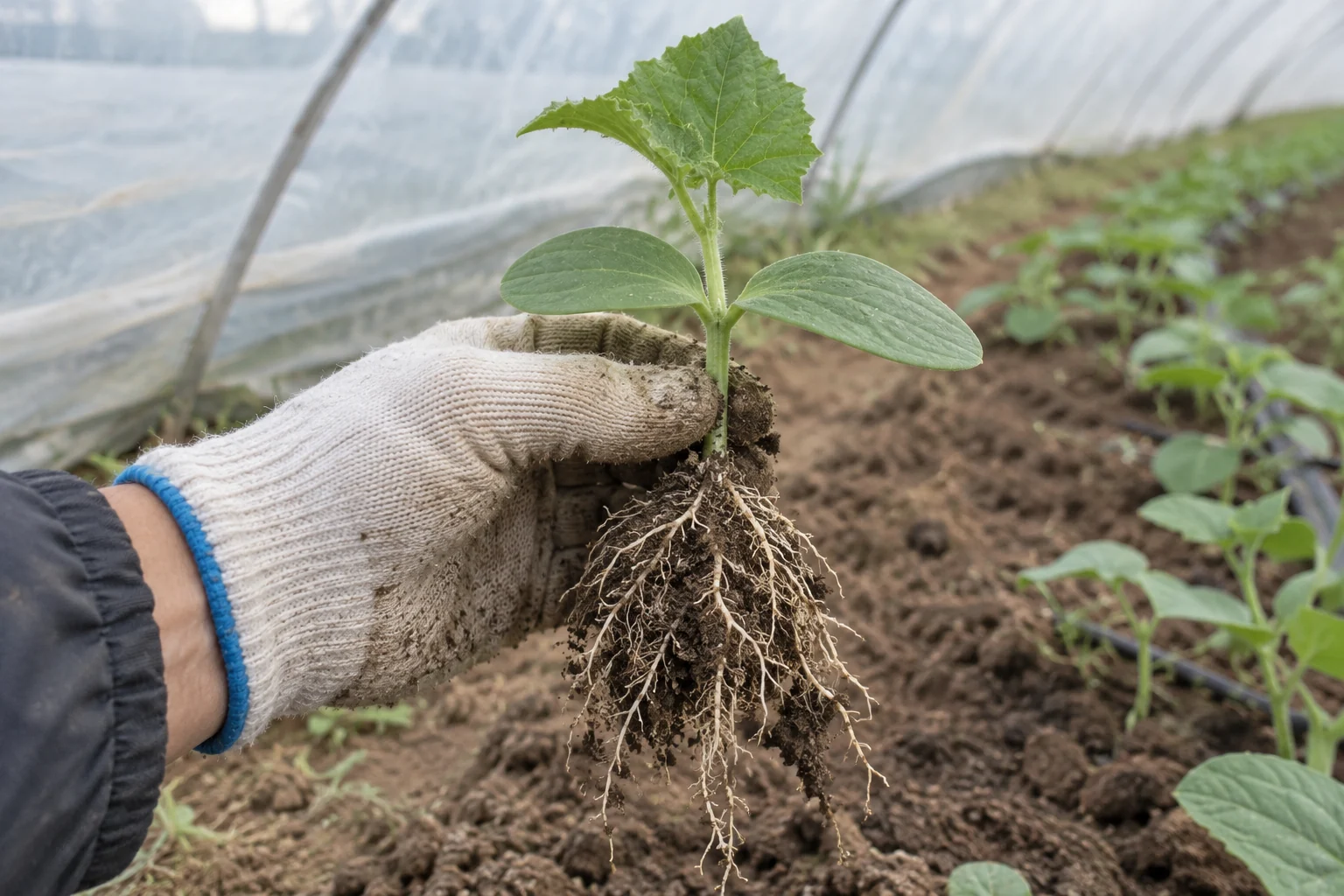
The most successful biocontrol strains show rhizosphere competence, the ability to colonise and grow in association with roots, and can colonise entire root surfaces for several months [6]. Colonisation of the root epidermis and cortex is linked to the production of plant cell wall degrading enzymes [2].
Most microbes introduced to fields fail because the native soil microflora has the competitive advantage; T-22 was bred for the rarer ability to colonise roots under field conditions [9]. In Cornell trials, T-22 grew on the root surface and lived mostly on compounds secreted by the root. Because it multiplies, a small inoculum spread with the roots and protected the whole root system through the season, whereas seed applied chemicals protect only the seed, for a few weeks at most [9]. The yield response was seen mainly when plants were weakened or stressed, not in crops already growing at their potential [9].
4. Target diseases supported by reviews and extension
Trichoderma is mainly used against soilborne diseases, and greenhouse use centres on root and crown diseases; reviews also report some use against leaf and panicle diseases [3][6].
Diseases for which reviews and extension services report Trichoderma use
| Disease group | Pathogens or diseases | What the sources say |
|---|---|---|
| Root rots and damping off | Pythium, Rhizoctonia, Fusarium | T-22 kills these major root rot fungi by mycoparasitism [9]; UMass Extension lists T. harzianum products for Rhizoctonia, Pythium, Fusarium, Cylindrocladium and Thielaviopsis in greenhouse crops [6] |
| Oomycete root diseases | Pythium aphanidermatum, Phytophthora | Combining T. harzianum with T. virens suppresses P. aphanidermatum and gives more benefit against Phytophthora than T. harzianum alone [1] |
| Wilts and other soilborne diseases | Verticillium wilt of cotton, melon wilt, potato dry rot, tobacco root rot | Listed among diseases for which Trichoderma has been widely used [3] |
| Grey mould and foliar diseases | Botrytis grey mould of tomato and other crops | Listed among diseases for which Trichoderma has been widely used [3]; related Trichoderma forms are effective on grey mould in strawberries [9] |
| Seed rot | Early seed decay | T-22 is effective against root rots but does not control seed rot, so seed applied fungicides remain useful [9] |
These are findings from research and extension programmes, not a list of registered uses. The label registered in each country sets the crops, targets and rates.
5. Conditions that affect performance
Temperature
In culture, Trichoderma grows slowly below about 16 °C (60 °F). In sweet corn, T-22 colonised roots well at 16 °C or above, colonisation was lower than desired with soil at 13 °C (55 °F) at sowing, and at 10 °C (50 °F) neither the crop nor the fungus established well. Early sown crops and overwintering crops are therefore likely to give unsatisfactory colonisation [9]. Optimum temperatures differ by species and isolate: about 30 °C for T. harzianum [8], and 24.6 to 29.4 °C for three isolates taken from commercial products in a Brazilian study [10].
Soil moisture, aeration and pH
T-22 did not work in flooded or crusted fields, because roots and fungus both need air to grow. Extremely well drained soils are the most difficult for wild Trichoderma, although T-22 populations there were still high enough to be effective, and roots in soils high in calcium were better colonised [9]. In a Brazilian study, isolates taken from commercial products tolerated pH 5 to 9 [10]. For spray applications, formulation carriers are chosen partly to protect conidia against UV radiation and washout [11].
Timing
Biological fungicides are preventive. They will not cure diseased plants, must be in place before infection when used on foliage, and need reapplication to protect new growth [1][6]. They also work best alongside sanitation and clean planting material [1].
Chemical fungicides
Trichoderma species are relatively tolerant of toxins produced by soil microbes, plant antimicrobial compounds and even some chemical fungicides [6], and a Chinese review notes that this tolerance allows combined programmes [12]. Tolerance is not universal. In a Brazilian laboratory study, 16 of 32 agricultural inputs inhibited mycelial growth of T. afroharzianum by more than 67%, although 12 of those 16 did not reduce conidial germination in a simulated spray solution; picoxystrobin plus benzovindiflupyr and a Bacillus based bionematicide sharply reduced germination, and mixtures of picoxystrobin plus prothioconazole and trifloxystrobin plus tebuconazole affected strains differently [13]. In another study, azoxystrobin plus difenoconazole and boscalid reduced growth of three isolates by up to 50% [10]. The Brazilian authors call for field validation of these results [13]. Check the manufacturer's compatibility information before mixing, and apply immediately after mixing with water [1]. In Cornell work, applying T-22 to seed in the planter box let the fungus largely escape long term exposure to seed applied fungicides [9].
6. How viable content is expressed
The content of a Trichoderma product is the number of living propagules it carries, usually given as colony forming units (CFU) per gram, and sometimes as conidia or spores per gram. Concentrations in biocontrol products typically range from 1 × 10⁵ to 1 × 10⁹ CFU per gram [11]. When comparing offers, read the unit, the guaranteed minimum and the expiry date together, since viability falls during processing and storage [1][11].
Triva™, supplied by Huasheng, is a Trichoderma harzianum T-22 wettable powder declared at no less than 3 × 10⁸ CFU/g.
7. Storage and shelf life
Because biofungicides are living organisms, they have a limited shelf life and need proper storage. Do not stockpile them, watch the expiry date, and store most products under cool, dry conditions [1]. Dry formulations prolong shelf life and avoid the need for low storage temperatures, whereas liquid and gel formulations, with higher water activity, are harder to stabilise because conidia may germinate in the pack [11]. Listed shelf lives of Trichoderma products on the European market show the effect of temperature: one wettable powder lists two years at 4 °C but six months at 15 to 20 °C [11]. Conidia kept in plain water lose viability through imbibition damage [11], and extension advice is to apply immediately after mixing [1].
8. Fitting Trichoderma into a disease programme
FRAC regards microbial biologicals in BM01 and BM02 as low or very low resistance risk. They can be used alone or in mixtures, with no limits on number, timing or sequence of applications beyond the label and local regulations [14]. Extension services also list rotation with conventional fungicides as a way to reduce the risk of resistance to single site products [1].
- Apply before disease appears, in the growing medium, at sowing or at transplanting, so that roots are colonised from the start [6].
- Match timing to soil temperature; cold soils slow colonisation [9].
- Avoid flooded or crusted soil, where T-22 did not work because roots and fungus both need air [9].
- Check compatibility data before mixing with fungicides or other inputs [1][13].
- Keep sanitation, clean planting material and other cultural measures in place [1].
- Store cool and dry, and use within the expiry date [1].
- Leave some plants untreated as a check when testing a product on your own farm [1].
Frequently asked questions
What is Trichoderma used for in agriculture?
Mainly against soilborne diseases, with some use on leaf and panicle diseases [3]. Extension work supports its use against root rots caused by Pythium, Rhizoctonia and Fusarium [6][9].
How does Trichoderma work as a biofungicide?
Through competition for nutrients and space, mycoparasitism with cell wall degrading enzymes, antibiosis, and induced resistance in the plant [5][6][8].
Can Trichoderma be mixed with chemical fungicides?
Trichoderma tolerates some fungicides [6], but laboratory studies show that some products and mixtures inhibit growth or germination, with differences between strains [10][13]. Check compatibility data before mixing [1].
Does Trichoderma cure infected plants?
No. Biological fungicides are preventive and will not cure diseased plants [1].
What does CFU per gram mean on a Trichoderma product?
It is the number of colony forming units, the living propagules, per gram. Trichoderma products typically range from 1 × 10⁵ to 1 × 10⁹ CFU per gram [11], and the count falls if storage is poor [1][11].
How should Trichoderma products be stored?
Cool and dry, without stockpiling, and within the expiry date [1]. Temperature matters: one listed product keeps two years at 4 °C but six months at 15 to 20 °C [11].
Further reading
- Enquire about Triva™
- Triva™ (Trichoderma harzianum T-22)
- Biopesticides: sourcing and supply
- [1] UConn Extension Integrated Pest Management Program (2024). Biological fungicides. University of Connecticut.
- [2] Tyśkiewicz R., Nowak A., Ozimek E., Jaroszuk-Ściseł J. (2022). Trichoderma: the current status of its application in agriculture for the biocontrol of fungal phytopathogens and stimulation of plant growth. International Journal of Molecular Sciences 23(4): 2329.
- [3] Yao X., Guo H., Zhang K., Zhao M., Ruan J., Chen J. (2023). Trichoderma and its role in biological control of plant fungal and nematode disease. Frontiers in Microbiology 14: 1160551.
- [4] FRAC (2026). FRAC Code List 2026: fungal control agents sorted by cross resistance pattern and mode of action.
- [5] Sood M., Kapoor D., Kumar V., Sheteiwy M. S., Ramakrishnan M., Landi M., Araniti F., Sharma A. (2020). Trichoderma: the "secrets" of a multitalented biocontrol agent. Plants 9(6): 762.
- [6] Dicklow M. B., Madeiras A. (2014, updated 2018). Biofungicides. UMass Extension Greenhouse and Floriculture Program, University of Massachusetts Amherst.
- [7] Alfiky A., Weisskopf L. (2021). Deciphering Trichoderma plant pathogen interactions for better development of biocontrol applications. Journal of Fungi 7(1): 61.
- [8] Guzmán-Guzmán P., Kumar A., de los Santos-Villalobos S., Parra-Cota F. I., Orozco-Mosqueda M. C., Fadiji A. E., Hyder S., Babalola O. O., Santoyo G. (2023). Trichoderma species: our best fungal allies in the biocontrol of plant diseases, a review. Plants 12(3): 432.
- [9] Bjorkman T. (1999, reviewed 2012). Trichoderma for control of soil pathogens. Cornell University; published by UConn Integrated Pest Management.
- [10] Cavalcante A. L. A., Negreiros A. M. P., Melo N. J. A., Santos F. J. Q., Soares Silva C. S. A., Pinto P. S. L., Khan S., Sales I. M. M., Sales Júnior R. (2025). Adaptability and sensitivity of Trichoderma spp. isolates to environmental factors and fungicides. Microorganisms 13(7): 1689.
- [11] Martinez Y., Ribera J., Schwarze F. W. M. R., De France K. (2023). Biotechnological development of Trichoderma based formulations for biological control. Applied Microbiology and Biotechnology 107: 5595.
- [12] Wei X., Cao C., Huang D., Yao J., Yuan Q. (2024). Research progress on biocontrol mechanism and synergistic disease prevention of Trichoderma. Journal of Agricultural Science and Technology (China) 26(11): 126. In Chinese.
- [13] Marques E., Silva M. R., Soares W. M., de Castro K. H. M., da Silva J. G., da Silva K. C. et al. (2025). Compatibility of Brazilian strains of Trichoderma afroharzianum with various agricultural inputs under in vitro conditions. Journal of Fungi 11(11): 812.
- [14] FRAC (n.d.). Fungicide resistance management with and of multisite fungicides, biological control agents and plant defence inducers.