The forms an inoculant comes in — and how the world uses them
Peat, liquid, granule, or on the seed — the form a live inoculant takes determines how it stores, how it is applied, and how many bacteria reach the root. A guide to the formats, our own range, and how usage differs from Brazil to Australia and Africa.
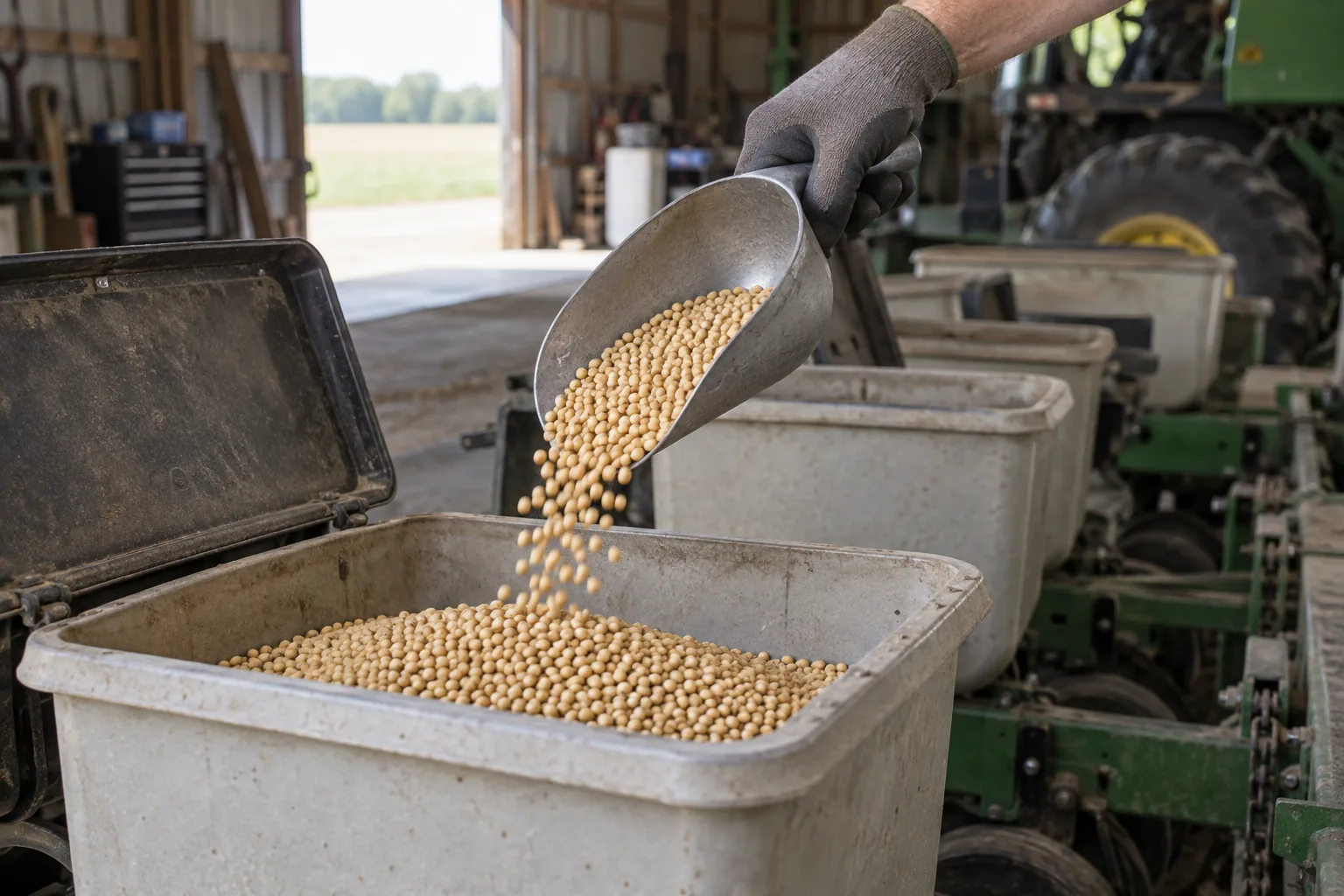
An inoculant consists of living bacteria, so — unlike a chemical — it cannot simply be poured from a container and forgotten. The bacteria have to be carried from the factory all the way to the root, sheltered from heat, sun, and drying, and the “form” a product takes is that carrier. The form is not a packaging detail: it determines how long the product lasts, how it is applied, whether it survives contact with seed treatments, and ultimately how many live cells reach the seedling. This guide covers the main forms, our own range, and how growers around the world choose between them.
The main forms
Almost every legume inoculant on the market is a variation on four forms. They differ in cost, convenience, the dose they deliver, and how well they protect the bacteria — and each suits some situations better than others.
The main inoculant forms
| Form | What it is | Strengths | Watch-outs |
|---|---|---|---|
| Peat / powder | Freeze-dried rhizobia in sterilised peat, slurried onto seed | Low cost, proven, protects cells well | Sensitive to heat and UV; sow promptly |
| Liquid | Live bacteria in a nutrient carrier, on seed or in-furrow | Easy, even coverage, standard equipment | Shorter shelf life; often needs cool storage |
| Granular | Bacteria in a clay or polymer prill, placed in the furrow | Highest dose; avoids seed chemistry; resists drying | Costs more; needs a granule applicator |
| Seed-coat / pre-inoculated | Applied and encapsulated on seed commercially | Convenient; longer on-seed shelf life | Check the date; re-inoculate old seed |
In general, the cheaper seed-applied forms (peat and liquid) work well in easy conditions, while granular in-furrow application costs more in exchange for a larger dose and a way around hostile seed coatings — which is why it is the safer choice on treated seed and on difficult or first-time ground.
Huasheng inoculant formats
Our products come in the same family of forms, so the format can be matched to the planter rather than the other way round. Each carries a guaranteed live count to expiry, stated per formulation on the product pages. The Orvan™ strains are spore-forming, which gives its dry formats genuine heat and desiccation tolerance without a cold chain. Shelf life ranges from about 6 months for the rhizobial and PGPR liquids to 18 months for the Orvan™ granule, and longer still for the freeze-dried form.
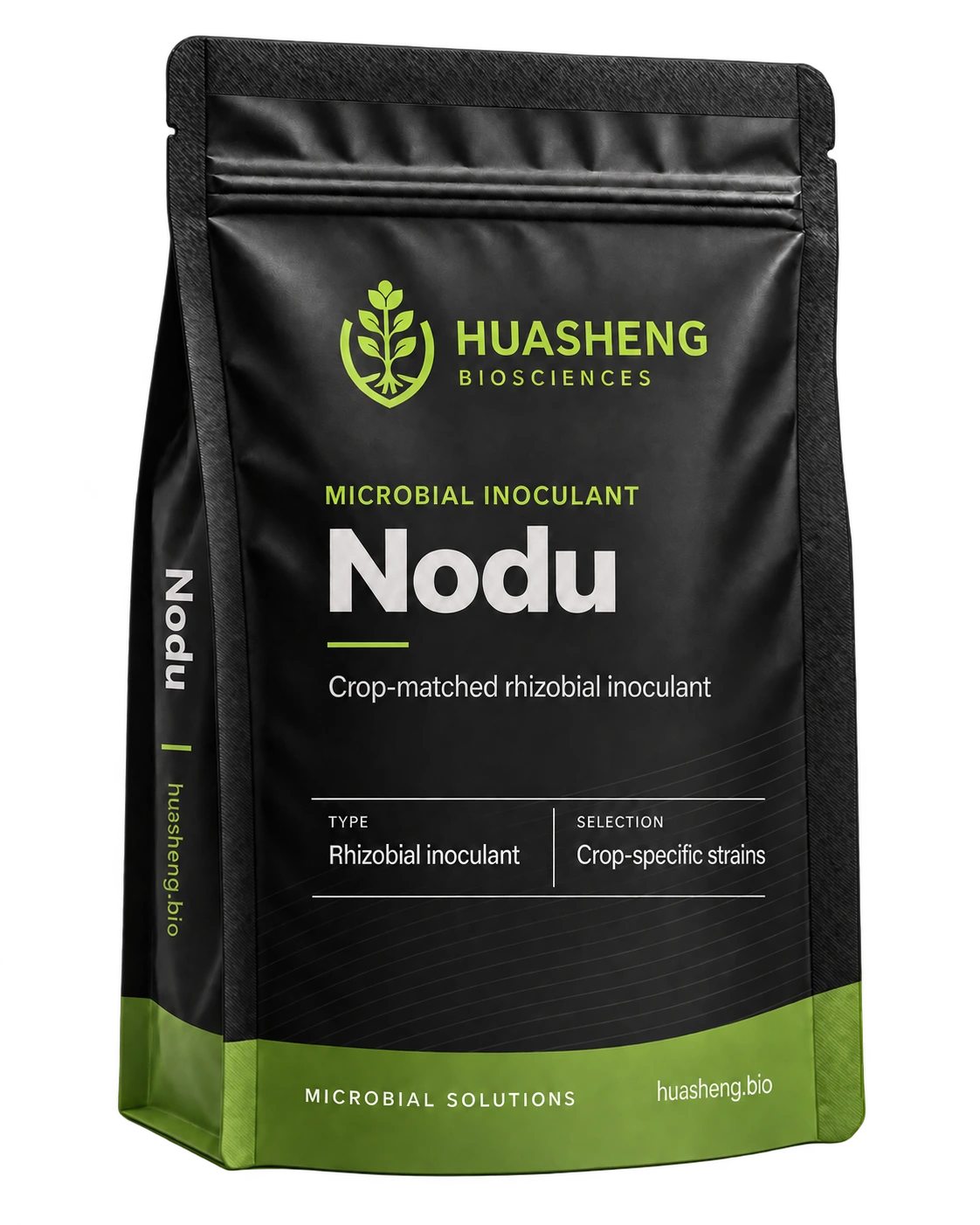
Our formats and application rates
| Format | Form | Rate |
|---|---|---|
| Base | Granule (2–4 mm) | 30–60 kg/ha, broadcast or banded |
| Coat | Liquid seed concentrate | 2.5 mL/kg seed |
| Root | Water-soluble powder | 30–60 kg/ha, dissolved, in-furrow |
How inoculant forms are used around the world
Which form dominates depends as much on geography, climate, and market maturity as on agronomy. An overview by region:
Common inoculant forms by region
| Region | Mainstay | Notes |
|---|---|---|
| Brazil & Argentina | Peat, increasingly liquid | Among the world’s largest soybean-inoculant markets; peat carriers established in Brazil since the late 1990s, now moving to liquid and industrial on-seed treatment |
| North America & Europe | Liquid, commercial seed treatment | Liquid widely available; a strong shift to professionally applied seed treatment |
| Australia | Peat slurry, plus liquid and granule | Finely milled, sterilised peat on seed is the mainstay for grain legumes; liquid is routine on soybean and winter pulses; granules where a harsh seed fungicide is used |
| Sub-Saharan Africa & South Asia | Peat | Low-cost peat dominates, but weak cold chains and hot storage make survival — and adoption — harder; robust handling matters most here |
The common thread is that hotter climates and weaker cold chains put a premium on formulation robustness — spore-forming strains, protective carriers, and forms that resist heat and drying — which is what we design for.
Which form should you choose?
Start from the seed and the planter. If the seed is treated with a fungicide, or the ground is new or stressful, choose a granular in-furrow form that carries a large dose and never touches the coating. For the simplest, lowest-cost route on untreated seed, peat or liquid applied to the seed does the job. High-throughput mechanised farms often prefer liquid or microgranules for even, fast application; pre-inoculated seed is the most convenient, provided the date is checked. The form may change, but the goal does not: living bacteria, in sufficient numbers, delivered to the root at sowing.