Skip to content
Peanut

Crop application data

Peanut Arachis hypogaea

A leading oilseed and food legume worldwide, and the crop most exposed to aflatoxin — judged against some of the strictest safety limits in the food trade.

Peanut — Arachis hypogaea

>80%

Less soil A. flavus on Orvan™-treated peanut in OCRI-CAAS field trials — alongside +19.9% average yield.

The challenge

Two of peanut’s costliest problems strike at once: Aspergillus flavus contaminates kernels with aflatoxin, while nitrogen use stays inefficient, so growers pay for fertilizer and still lose value to contamination and trade rejection.

01

A high-value crop, uniquely exposed

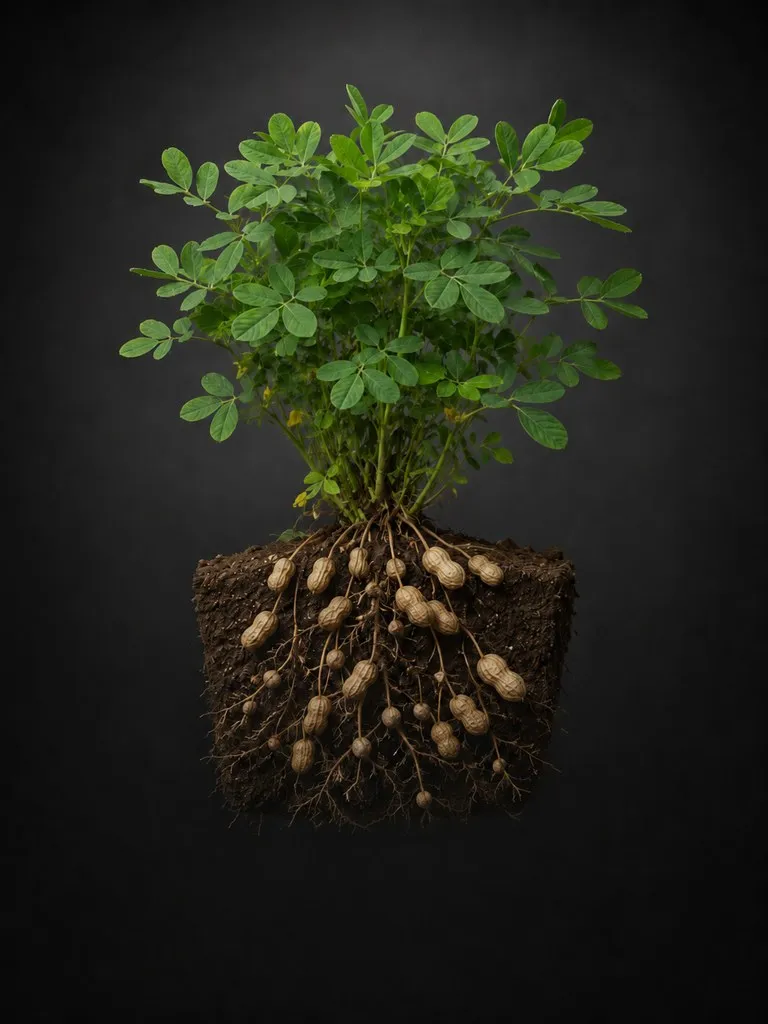
Peanut is a leading oilseed and food legume — but its biology puts it in harm’s way. The pods ripen underground, in direct contact with the soil, so the crop meets Aspergillus flavus exactly where the fungus lives, and the end-of-season heat and drought that stress the plant are when the fungus makes the most toxin.

02

Aflatoxin — a food-safety and trade barrier

Aflatoxin is a potent carcinogen, and the thresholds are unforgiving. A single contaminated lot can be downgraded or turned away at the border, so what is at stake is not a few points of yield — it is the value of the whole crop.

03

Nitrogen — paid for, and often wasted

Peanut can fix much of its own nitrogen, but only when effective rhizobia are present and nodulation is strong. Where they are missing or weak — common on new ground — growers fall back on fertilizer, an added cost that, applied heavily, suppresses the very fixation it is meant to replace.

The Peanut program

A crop-matched program led by the Orvan™ coupling, backed by a region-specific rhizobium (Nodu™) and phosphate-solubilizing, stress-tolerance PGPR (Vigor™). Each is field-proven and available on its own.

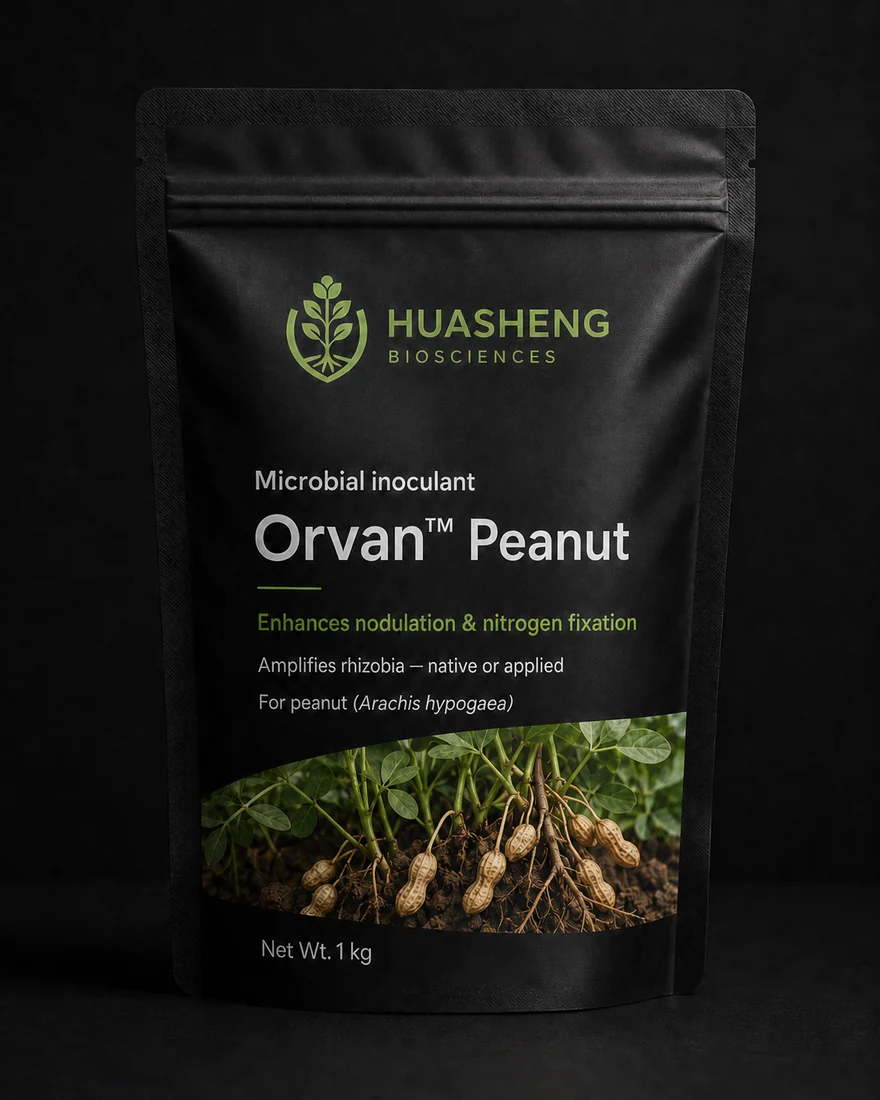
Orvan™ Peanut

Rhizosphere coordination consortium

Orvan™ Peanut

Aflatoxin–nitrogen coupling — applied alongside your rhizobial inoculant. Orvan™ carries no rhizobia of its own; it amplifies the ones already adapted to your soil.

Field-proven (vs untreated control)
+19.9% yield · up to 8.5× more nodules · >80% less soil A. flavus (trials)
Strains
B. velezensis · Brevibacillus laterosporus · P. mucilaginosus
Trial network
405 sites / 19 provinces
Available as
Base · Coat · Root
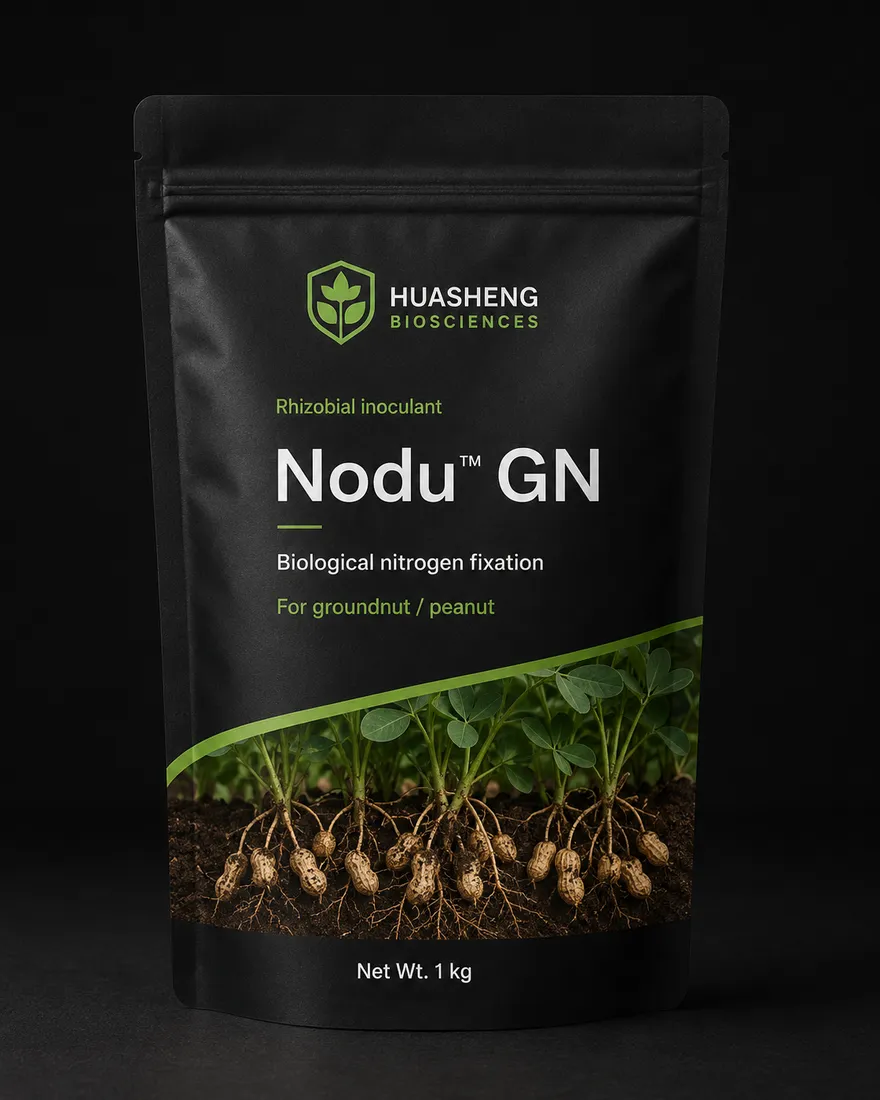
Nodu™ GN

Rhizobial inoculant

Nodu™ GN

The region-matched, nitrogen-fixing rhizobia your crop needs — so it fixes more of its own nitrogen and you buy less.

Field-proven (standalone, vs control)
+9.8% yield · 70 sites
Rhizobium
Bradyrhizobium (Arachis group)
Nitrogen
Leaves ~96 kg N/ha for the following cereal
Available as
Peat · Liquid · Coat · Granule · FD · Duo
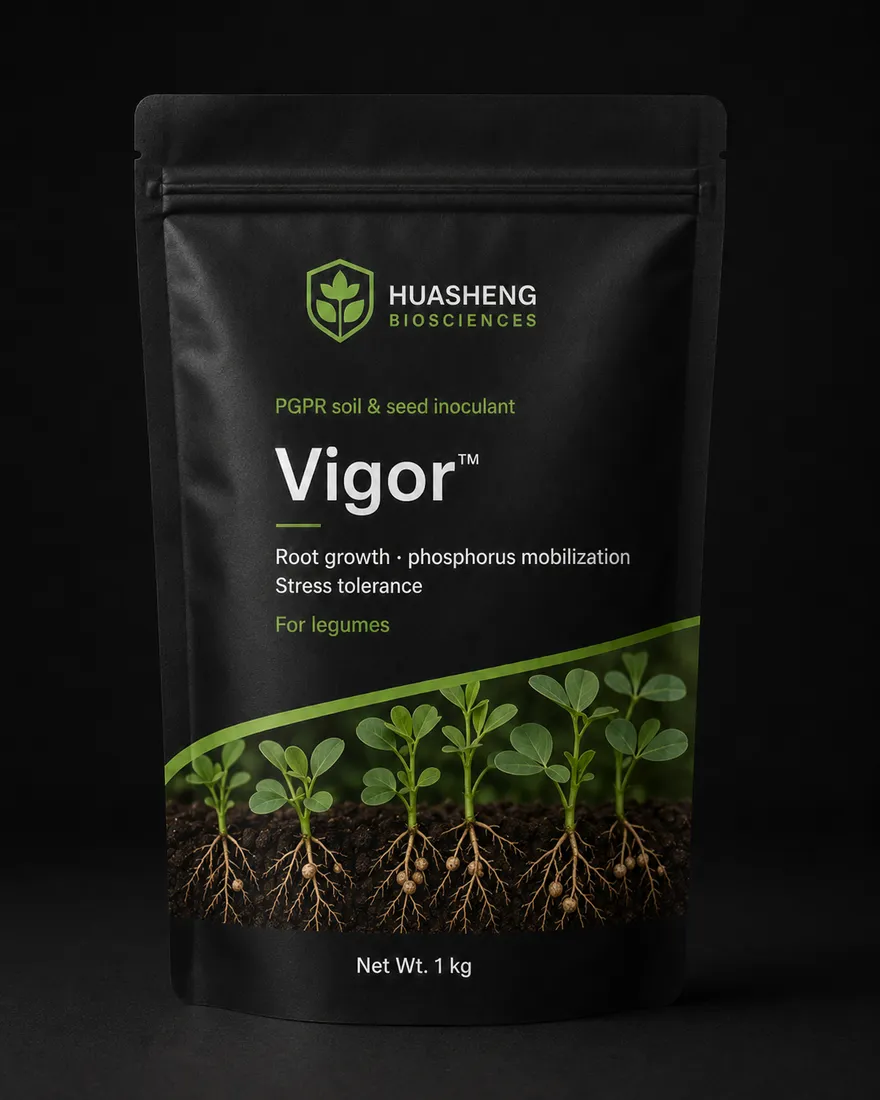
Vigor™

PGPR — phosphorus & stress

Vigor™

Frees bound soil phosphorus, builds stronger roots, and buffers drought and salinity stress — the second leg of the consortium.

Field-proven (standalone, vs control)
+7.3% yield · 44 sites
Strains
B. subtilis · P. fluorescens · B. megaterium · A. brasilense (Ab-V5 / Ab-V6-type)
Measured
up to 25% less applied P · +12% root biomass
Available as
Granule · Liquid · WDG · Seed

Packaging and label information may vary by product version and market.

Orvan™ field trials · Peanut · vs. untreated control

Field-proven · +19.9% average yield

Across 405 sites in 19 provinces (Henan, Shandong, Liaoning; 2021–2025): +19.9% average yield, >80% less soil A. flavus, up to 8.5× more nodules, and nitrogenase activity up to 10.7× — largest where native rhizobia are scarce or the variety is susceptible. A well-nodulated peanut crop can also leave nitrogen worth ~96 kg N/ha for the following cereal.

Run an on-farm trial on Peanut.