Root-knot nematodes: protect establishment and productivity
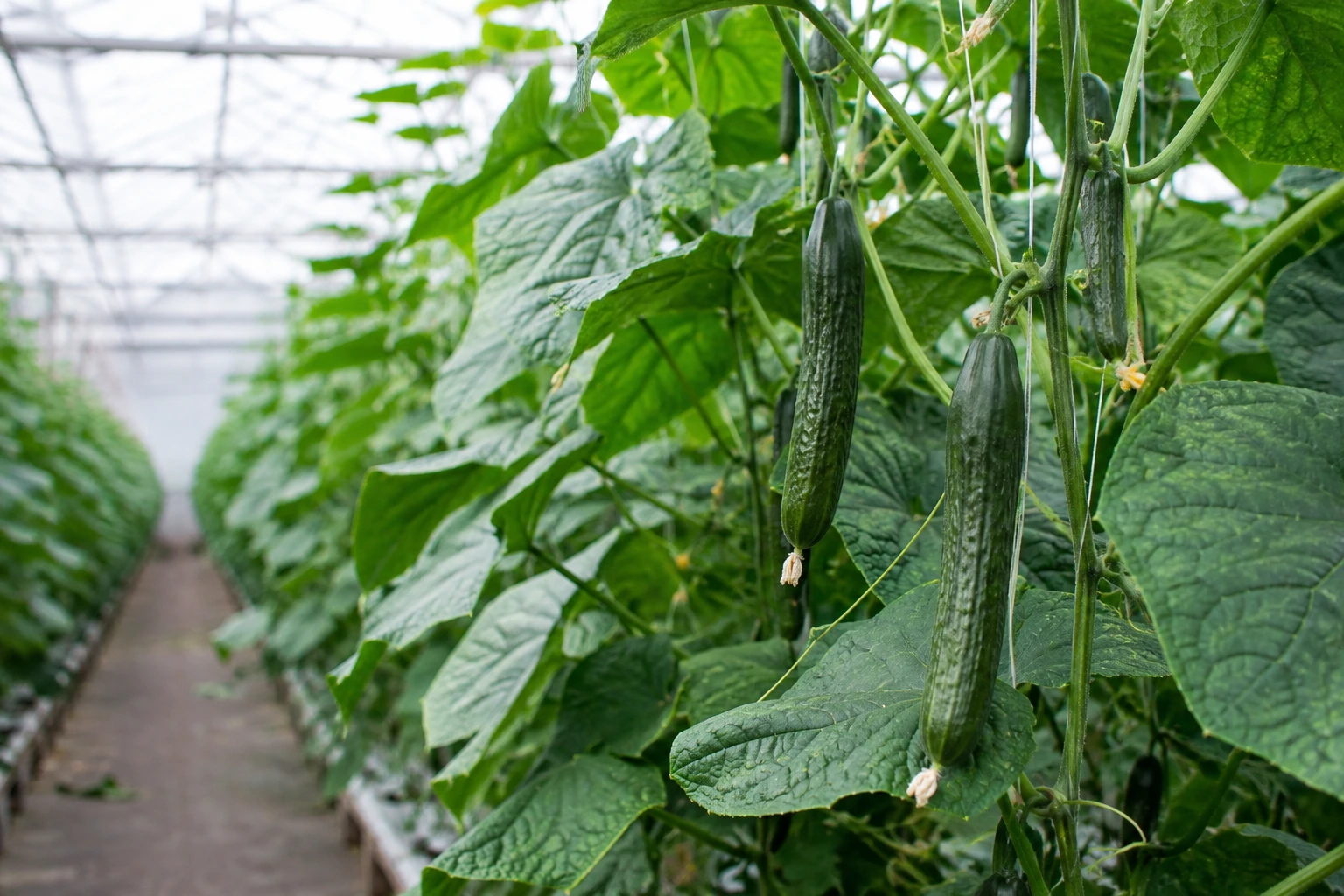
Root-knot nematodes can impair cucumber establishment and reduce yield and fruit quality. Uneven growth or wilting should prompt root-health assessment and diagnostic confirmation. Use cropping history and nematode identification to plan the next crop, then evaluate management through plant survival, root condition and marketable harvest.
View biological products →Discuss this crop challenge →Fusarium wilt & crown rot: diagnose crop decline
Fusarium crown rot and wilt are among the possible causes of cucumber decline. Similar aboveground symptoms can arise from other root diseases or irrigation problems, so diagnosis is central to selecting a response. Track affected plants and recurring areas; integrate healthy planting material and root-zone management with a disease-specific programme.
View biological products →Discuss this crop challenge →Powdery & downy mildew: protect productive leaves
White powdery growth and angular yellow leaf lesions indicate different diagnostic pathways. Powdery and downy mildew require distinct disease-management decisions. Maintain regular canopy checks and follow local disease alerts; assess healthy leaf area and harvest continuity when reviewing crop protection.
View biological products →Discuss this crop challenge →Water, salinity & the nutrient balance
Rapid fruit growth needs consistent moisture, while protected soils can accumulate nutrients and soluble salts. Review root-zone conductivity, irrigation-water information and harvest load before changing nutrition. Interpret fruit shape alongside cultivar, pollination and environmental conditions.
Discuss this crop challenge →Separate reproductive habit from product response
Pollination-dependent and parthenocarpic cucumbers need different fruit-set management. Temperature, pollination and mechanical injury can each affect fruit shape. Record cultivar and growing system alongside harvest quality before attributing a change to a nutrition or biostimulant product.
Discuss this crop challenge →