Root rot & drainage
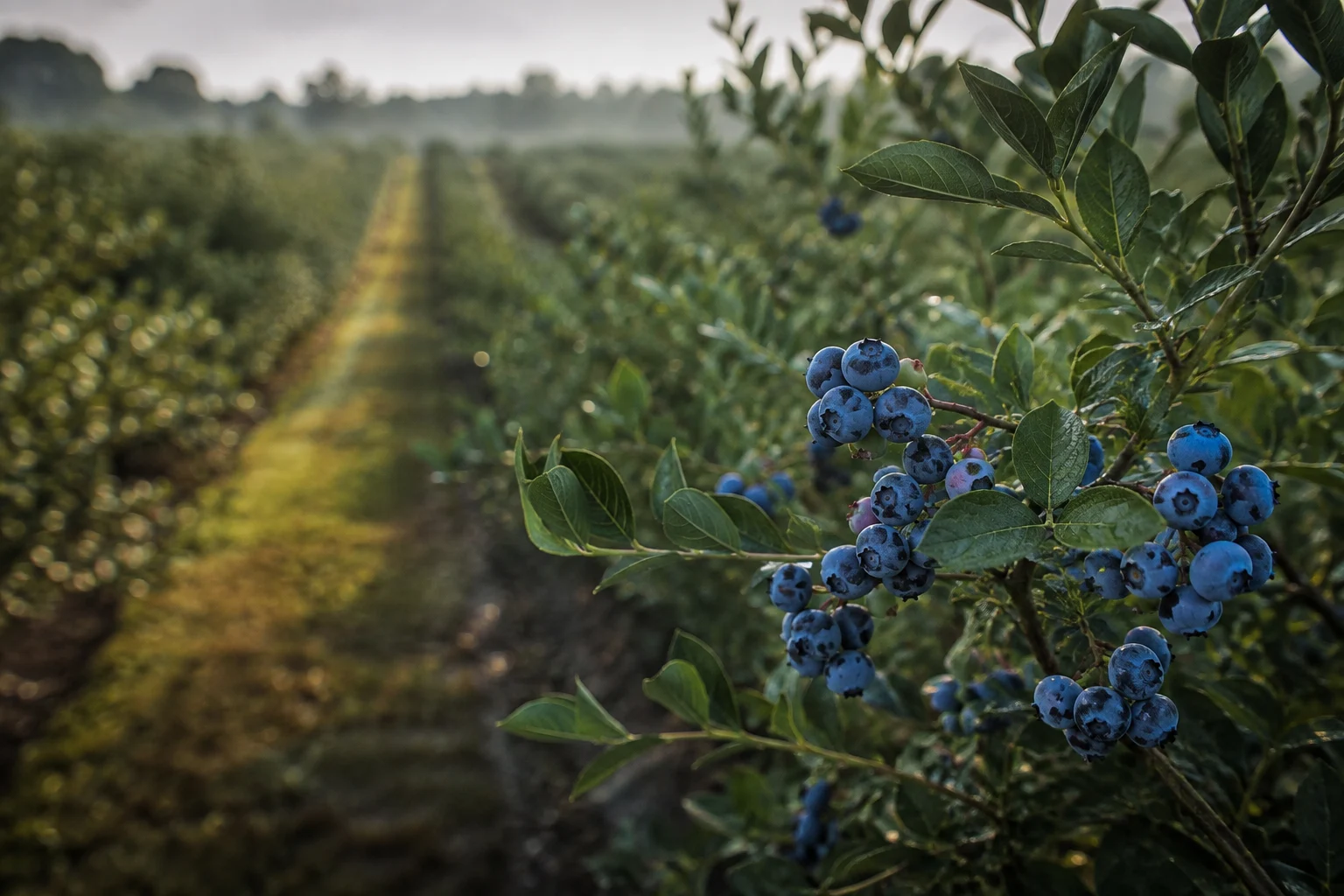
Blueberries are sensitive to poorly drained soils, and susceptible cultivars can develop root rot. Weak growth should prompt a review of drainage and root condition alongside nutrition. Site selection, healthy planting stock and irrigation that maintains adequate root aeration are fundamental decisions for both new and established plantings.
View biological products →Discuss this crop challenge →Botrytis blossom blight & fruit rot
Botrytis can damage blossoms and fruit, with susceptibility varying by cultivar and season. Inspect flowers and fruiting wood, maintain an open canopy and avoid prolonged wetting of flowers and berries. Harvest maturity, careful handling and prompt cooling also influence the amount of marketable fruit retained after picking.
View biological products →Discuss this crop challenge →A distinct root environment
Blueberries have fine, shallow roots and require an acidic, porous growing environment. A substrate that looks rich is not necessarily suitable. Review acidity, drainage, water quality and nutrient availability together; adding a biological product cannot correct a persistently unsuitable root environment.
View biological products →Discuss this crop challenge →Identify the mycorrhizal relationship
Blueberry roots associate with ericoid mycorrhizal fungi. This relationship differs from the arbuscular mycorrhizal products commonly used in many other crops. Any inoculant assessment must establish the fungal group, host compatibility and relevant evidence. A general mycorrhiza label is insufficient to select a product for blueberry.
Discuss this crop challenge →Nutrition without unnecessary loading
A useful nutrient programme accounts for the nutrient form, growing medium and existing supply. Leaf yellowing can reflect poor availability under an unsuitable pH rather than a simple shortage in the fertiliser programme. Compare root condition, growth and fruit quality, and continue observations into the post-harvest period.
Discuss this crop challenge →