Skip to content
All crops

Field & forage crops

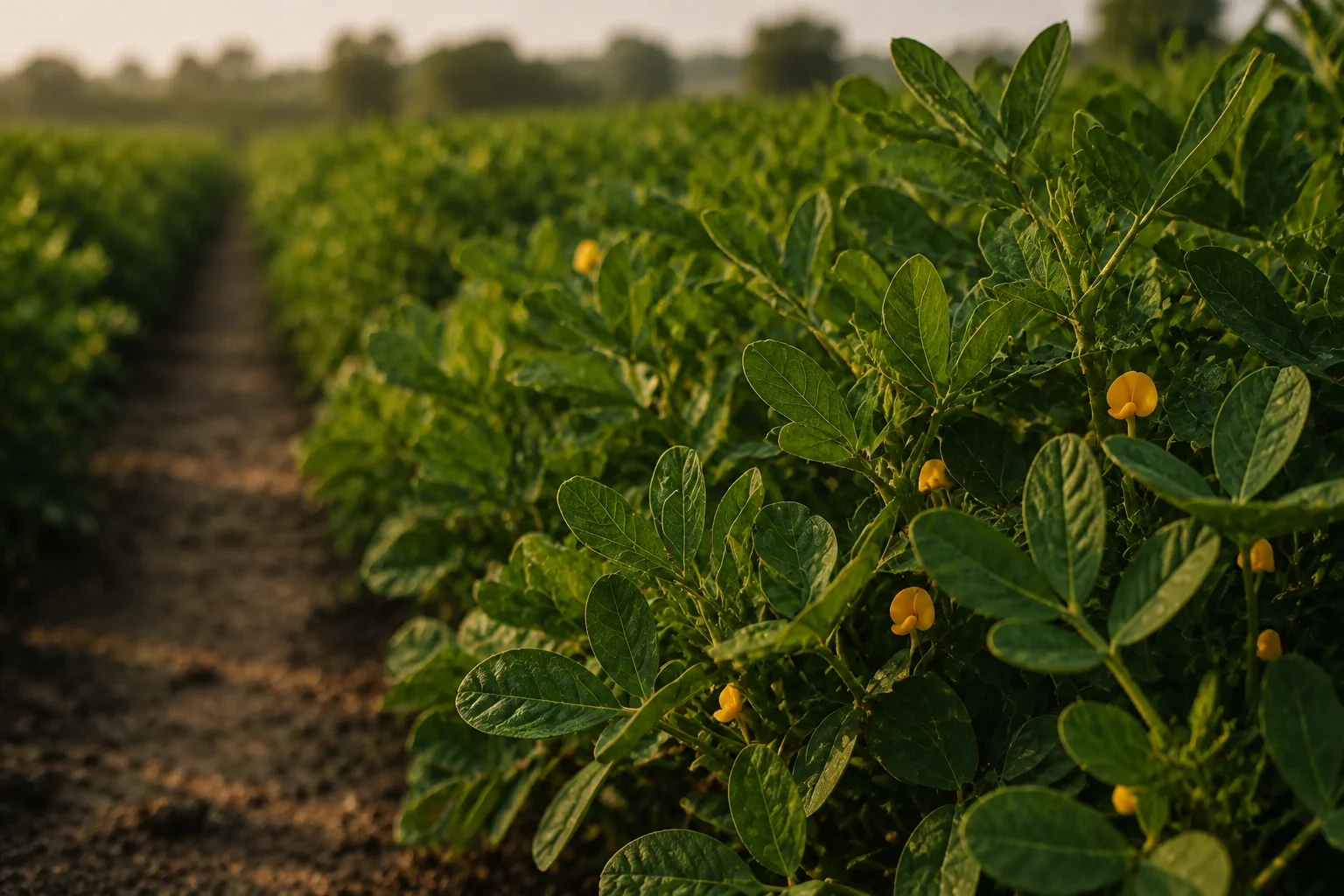
Peanut

Rhizosphere biology and nutrition, working through the season.

Peanut

CROP PRIORITIES

Start with the key crop challenges.

Pests, diseases and growing conditions can produce similar symptoms. Connect field history and diagnosis with the crop stage before choosing an input.

Aflatoxin contamination & crop quality

Aflatoxin contamination affects peanut food safety and marketability. Biological prevention belongs within an integrated field-to-storage quality programme. The ARC research associated with Orvan reports reduced peanut aflatoxin contamination alongside improved nodulation; toxin measurements and fungal abundance are distinct evidence endpoints.

Discuss this crop challenge

Peanut root-knot nematode

Nematode problems require species-specific decisions: peanut root-knot and southern root-knot do not have identical host ranges. Investigate uneven growth and root damage with a diagnostic service. Where peanut root-knot is established, locally suitable resistant varieties and rotation choices should form the basis of an integrated management programme.

View biological productsDiscuss this crop challenge

Southern stem rot

Southern stem rot, also called white mold in peanut production, can cause localised wilting and plant loss. Review field history and inspect the lower canopy rather than judging crop health only from leaf colour. Management should follow regional disease guidance and combine preventive cultural measures with an appropriate protection programme.

Discuss this crop challenge

THROUGH THE SEASON

Follow the crop. Focus each decision.

From establishment to harvest or renewal, the purpose of crop management changes with each stage.

  1. Sowing

    Match the product format to the crop and existing sowing system. Seed, root-zone and in-furrow products have different roles and supporting documentation.

  2. Establishment

    Root establishment and nodulation should be considered together. Native rhizobia and crop history influence the biological starting point.

  3. Flowering & pegging

    Flowering and pegging connect vegetative growth with pod production. Keep root-zone and mineral-nutrition roles distinct.

  4. Pod filling

    During pod development, maintain the full crop-management programme. Orvan field results retain the specific crop and trial context.

BIOLOGICAL INPUTS

A defined role for each product.

These products have distinct roles in nutrition, root development and crop management. For a pest or disease, product selection also requires evidence for the identified target and applicable market label.

Explore biological crop protection
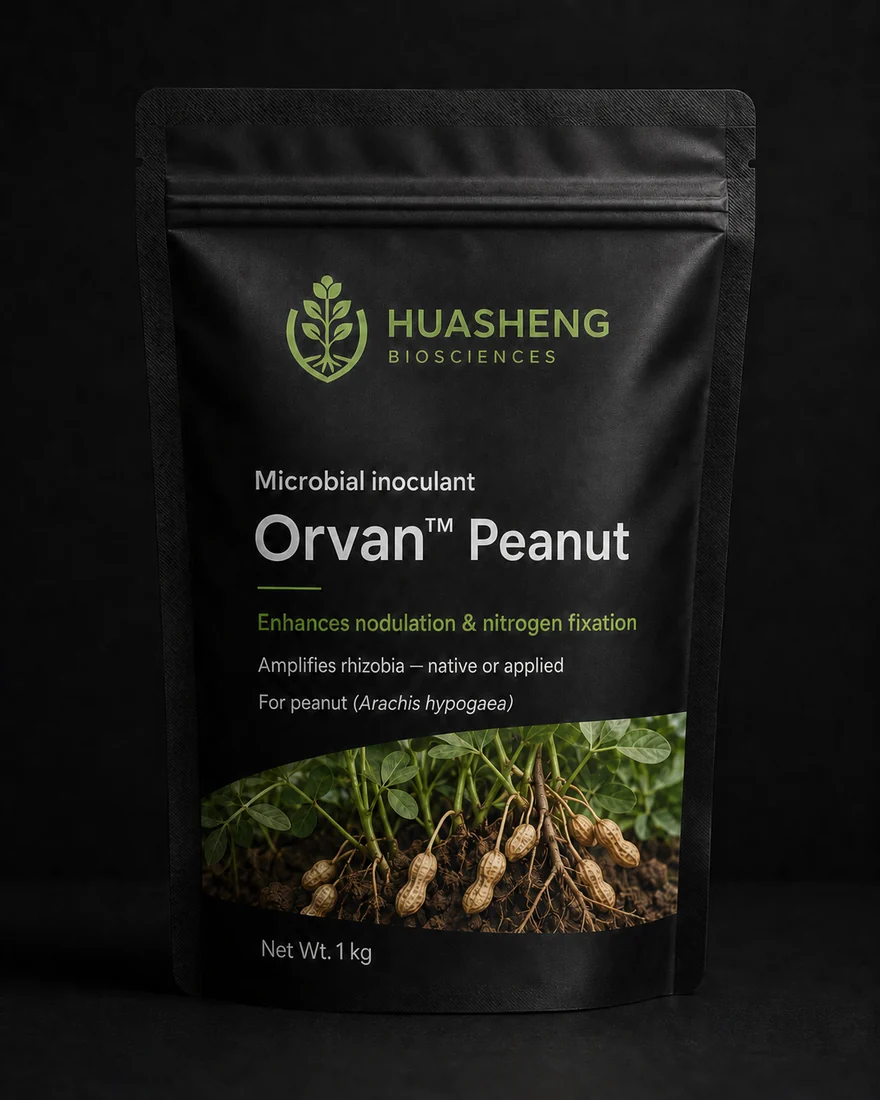
Orvan — Rhizosphere consortium

Orvan

Rhizosphere consortium

Aflatoxin risk management & nodulation

Developed from ARC research with OCRI-CAAS. Published peanut trials report reduced aflatoxin contamination alongside enhanced nodulation and nitrogen fixation. View research

Components
Bacillus velezensis · Brevibacillus laterosporus · Paenibacillus mucilaginosus
Baciva — Bacillus biological protection

Baciva

Bacillus biological protection

Soilborne & root diseases · Sclerotinia diseases

Components
B. amyloliquefaciens D747

Peanut

Let’s discuss your crop programme.

Share your growing region, crop stage and management priorities with our team.

Contact Huasheng